

Maddy summaryAB 309 creates legal immunity for Wisconsin 911 call centers and dispatchers who transfer callers to the national 988 Suicide and Crisis Lifeline (or its successor number). The bill shields these entities from civil lawsuits related to outcomes of such transfers, unless the injury resulted from the dispatcher's gross negligence or willful misconduct. This directly affects public safety answering points statewide by reducing liability risks when connecting individuals in crisis to the 988 service. The law defines "national crisis hotline" as 988 or its successor under federal program 42 USC 290bb-36c.
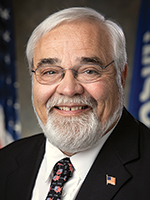
Rep. Jeff Mursau
Sponsored bills
Maddy summaryAB 486 limits how Wisconsin public colleges and technical schools can reduce their own gift aid (like institutional scholarships) when students receive small private scholarships ($5,000 or less from Wisconsin-based groups). Schools must first attempt to adjust loans or work-study before cutting gift aid, and must inform students they can request a cost-of-attendance reassessment. This applies to all public universities and technical colleges in Wisconsin, ensuring students aren’t automatically penalized for external scholarships while preventing aid from exceeding financial need.
Maddy summaryAB 128 requires specific first responders - including firefighters, law enforcement officers, emergency medical personnel, correctional officers, and conservation wardens - to complete training on recognizing severe allergic reactions (anaphylaxis), safely storing and administering epinephrine delivery systems, and following up after use. The bill mandates that all qualifying first responders must have an epinephrine delivery system available during duty and be trained on all required subjects. The state department must compile and maintain a list of approved training organizations and may distribute epinephrine systems using existing funds. This legislation directly affects over 30,000 first responders across multiple agencies who respond to medical emergencies.
Maddy summaryAB 398 requires schools, child care centers, and nursery schools to include specific information about immunization waiver processes in their enrollment or admission materials. This means parents and guardians would see clear details on how to request waivers when signing up their children, rather than learning about it later. The bill standardizes this information across all covered institutions to improve transparency. It directly affects families during enrollment and the institutions managing those applications.
Maddy summaryAB 30 prohibits foreign adversaries (defined as foreign governments or entities deemed a threat to U.S. security by the federal Commerce Secretary) from acquiring, owning, or holding any agricultural or forestry land in the state. It also imposes a 640-acre ownership limit for non-resident aliens, foreign corporations, and certain entities with foreign ownership. Owners exceeding these limits must divest the excess land within four years or forfeit it to the state. The bill directly affects foreign governments/entities designated as adversaries and current landowners who violate the ownership limits. It creates new enforcement mechanisms but does not apply to land acquired before July 1, 1982.
Maddy summaryAB 31 gives farmers and businesses who buy or lease new farm equipment clear rights when warranty issues can't be fixed. If a farm implement has a warranty problem that remains unresolved after four repair attempts or 30 total days out of service, the buyer or lessee can choose a replacement machine or a full refund. The bill requires manufacturers to cover related costs like alternative equipment rentals during repairs. This applies to new equipment purchased from authorized dealers or leased under written agreements, directly affecting agricultural equipment consumers.
Maddy summaryAB 363 creates a no-interest loan program for dairy farms operating 50-714 cows that meet strict criteria, including 98% in-state payroll, no recent environmental or safety violations, and legal workforce compliance. Funds can be used to adopt technology improving milk production efficiency, animal health, milk quality, or reducing environmental impacts from manure management. Priority is given to projects creating jobs, enhancing manure management practices, or lowering environmental effects per gallon of milk produced. The program aims to support sustainable dairy operations while ensuring local economic benefits through targeted financial assistance.
Maddy summaryAB 587 requires ticket sellers (including operators, resellers, and online platforms) to clearly display all fees during purchase and prohibits reselling tickets above face value without event operator approval. It applies to all commercial ticket resales, with small sellers earning under $10,000 annually exempt. Violations incur $1,000 fines per violation plus forfeiture of profits from illegal sales. The bill aims to increase transparency and prevent price gouging in entertainment ticket markets.
Maddy summaryAB 585 designates the wild turkey (*meleagris gallopavo*) as Wisconsin's official state game bird and the ruffed grouse (*bonasa umbellus*) as the state upland game bird. The bill amends Wisconsin statutes to add these specific designations to the list of official state symbols included in the Wisconsin Blue Book. This is a ceremonial, non-regulatory change that formally recognizes these birds as state symbols without altering laws or affecting public policy. The bill does not impose new requirements, fund programs, or impact citizens or wildlife management. It follows standard procedure for designating state symbols through legislative action.
Maddy summaryAB 432 regulates prior authorization processes for health insurance plans in Wisconsin. It requires insurance companies to follow specific transparency rules when denying coverage for medical services (called "adverse determinations"), mandating that these decisions be made by qualified health providers like physicians or nurse practitioners under medical directors' oversight. The bill defines key terms like "prior authorization" (pre-approval for services) and "urgent health care service" (requiring faster decisions), and sets deadlines for non-urgent cases. It directly affects health insurance plans, self-insured employer plans, and enrollees who seek covered services. The law aims to make the approval process clearer and more timely for patients.