

Maddy summaryAB 292 allows courts to use artificial intelligence or machine-assisted translation services instead of or alongside human interpreters in both civil and criminal court proceedings. It also updates rules to permit telephone or live audiovisual interpretation in criminal trials (beyond just non-trial stages) and clarifies that using AI translation does not require a waiver that would normally be needed for alternative interpretation methods. This bill directly affects court proceedings involving language barriers, expanding options for language assistance without mandating AI use. The law amends specific statutes to implement these changes, focusing on procedural flexibility for courts.
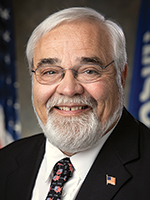
Rep. Jeff Mursau
Sponsored bills
Maddy summaryAB 177 exempts diapers and feminine hygiene products from state sales tax. The bill defines "diapers" as absorbent garments for people with incontinence and "feminine hygiene products" to include tampons, pads, menstrual cups, and similar items (excluding grooming products like soap or toothpaste). It adds these categories to the list of tax-exempt items under Wisconsin’s sales tax code (77.54(75)), directly affecting consumers who purchase these essential products. The exemption applies to both retail sales and use of these items, removing a tax burden on these daily necessities.
Maddy summaryAB 93 modifies the labeling and distribution requirements for fertilizers and soil or plant additives created from animal or vegetable manure, specifically compost and vermicompost. The bill allows producers of these manure-based products to use a "typical analysis" of their contents on labels and invoices, instead of a "guaranteed analysis" or "grade," if the claims are scientifically validated. It also exempts mixed fertilizers made from manure-based compost or vermicompost from minimum nutrient content requirements. Additionally, the bill prohibits the state department from requiring controlled experimental field tests for compost-based soil or plant additives when substantiating claims for permits.
Maddy summaryAB 66 restricts prosecutors from dismissing or amending certain criminal charges without court approval. It applies to specific "covered crimes," including domestic abuse violations, certain violent offenses (like those under s. 940.198 or 941.29), and crimes listed in Chapter 948. Prosecutors must seek court approval for any dismissal or amendment, and courts can only approve if the action aligns with deterring these crimes. The bill also prohibits deferred prosecution agreements for individuals charged with covered crimes. This policy change directly affects prosecutors, courts, and defendants facing charges for the listed offenses.
Maddy summaryAB 300 creates a state grant program to help local law enforcement agencies purchase automated license plate reader systems (high-speed cameras that scan plates and convert data for law enforcement use). The program requires at least half of the grant funds to go to agencies in rural areas (defined as cities/towns under 20,000 population, at least 15 miles from larger cities). Agencies must submit a spending plan to the Department of Justice for review before receiving grants, which are limited to public safety and crime prevention purposes. The bill does not apply to state-level agencies or require specific outcomes, focusing solely on funding access for local rural and urban law enforcement.
Maddy summaryAB 231 creates a 25% tax credit for film production companies in Wisconsin covering eligible expenses (like wages, equipment, and location costs) and capital investments for accredited productions. It directly affects film production companies operating in Wisconsin that meet minimum spending thresholds ($50,000 or $100,000 depending on production length) and excludes news, sports, or corporate content. The bill establishes a State Film Office to administer the program, requiring accredited productions to include a state acknowledgment in the final film and mandating annual reports on credit allocations. It caps annual tax credits at $10 million statewide and $1 million per company, with strict eligibility rules and third-party audit requirements to ensure compliance.
Maddy summaryAB 139 creates a $10,000 tax credit for residents of Los Angeles County, California, or North Carolina who relocated to this state due to Hurricane Helene (2024) or the Los Angeles wildfires (January 2025). It directly affects individuals who lived in those areas before the disasters, moved to this state because of them, and filed income tax returns in LA County or North Carolina for 2022-2023. To qualify, claimants must not have a felony conviction and must file the credit within the timeframe specified in tax law. The credit applies against state income tax for taxable years 2025, up to the full amount of the tax liability.
Maddy summaryAJR 8 proposes a constitutional amendment to limit the governor's partial veto power on budget bills. It would prevent the governor from rejecting small parts of a bill (like single words or sentences) and require that any vetoed section must be a complete, standalone law that can function independently. The bill specifically targets appropriation bills, restricting the governor to vetoing entire sections that are capable of separate enactment. This is a proposed constitutional change, not a law, and would need voter approval to take effect. The amendment aims to reduce the governor's ability to alter budget bills through partial vetoes.
Maddy summaryAB 286 redirects $172 million in interest earned from unused coronavirus state and local fiscal recovery funds to the general state fund. It applies to funds held under specific state appropriations (section 20.505(1)(mb)) that were not spent by the deadline. The bill transfers this interest directly to the general fund on its effective date, rather than allowing it to remain in the recovery fund. This is a procedural adjustment to reallocate existing interest earnings, not a new funding program.
Maddy summaryAB 297 creates performance grants for regional probation and parole offices based on improving employment rates for individuals on supervision (probation, parole, or extended supervision). Offices earn grants by increasing employment rates above a 2021-2024 baseline, with "eligible employment" defined as 130+ wage-earning hours monthly. Funds must be used for employee bonuses, and the department tracks outcomes like employment duration, recidivism rates, and cost savings tied to reduced incarceration. Offices are disqualified from grants if their region saw increased revocations for new crimes in the prior year. Annual reports will detail regional employment trends and program impacts for public transparency.