

Maddy summaryAssembly Joint Resolution 43 congratulates the University of Wisconsin-La Crosse women's gymnastics team for winning the 2025 National Collegiate Gymnastics Association Championship. This resolution formally recognizes the team's achievement and individual honors earned by its members.
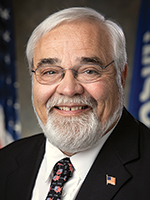
Rep. Jeff Mursau
Sponsored bills
Maddy summaryAB 88 addresses civil actions and law enforcement responses related to riot and vandalism activities. The bill prohibits government officials from limiting or restricting law enforcement's authority to arrest individuals or quell such disturbances. It also creates a new civil cause of action, allowing individuals who suffer injury or property damage from riot or vandalism to sue those who committed the acts or provided material support. Victims may seek compensatory damages, an order for property repair, and legal fees, regardless of whether criminal charges are filed. The bill also defines "rioting" and "incite" for these purposes.
Maddy summaryAssembly Joint Resolution 44 honors the distinguished life and public service of the late Representative Frederick P. Kessler, recognizing his extensive career as an assemblyman and judge in Wisconsin. The resolution details his contributions, including his work on language immersion schools and redistricting reform, and directs that a copy be provided to his family.
Maddy summaryAB 247 requires local governments to reduce building permit fees for certain home improvements benefiting disabled veterans. Political subdivisions must lower these fees by 75% or $500, whichever is less. This reduction applies when the permit is for improvements to a disabled veteran's primary residence that are necessary to accommodate their disability. The residence must be owned by the veteran or their caretaker, and local governments may request proof of eligibility.
Maddy summaryAssembly Bill 11 mandates that hospitals must obtain written informed consent from a patient before a pelvic examination is performed solely for educational purposes while the patient is under general anesthesia or otherwise unconscious. This bill creates a new statute requiring hospitals to ensure this consent is secured. Additionally, it directs hospitals to establish and maintain written policies and procedures that enforce this requirement for educational pelvic exams on unconscious patients.
Maddy summaryAssembly Bill 134 changes the effective dates for provisions within 2023 Wisconsin Act 126. It establishes July 1, 2025, as the general effective date for most of Act 126. However, the bill specifically delays the implementation of a detailed list of sections from Act 126 until December 1, 2027. This means that certain legal requirements or changes introduced by Act 126 will take effect at a later date than originally planned.
Maddy summaryAB 244 requires school boards, certain charter schools, and private schools participating in specific programs to post signs in their buildings. These signs must display the telephone number for the local agency responsible for receiving and investigating child abuse and neglect reports. The bill mandates that these signs be placed in a conspicuous, public location within each school building. This aims to make the child abuse and neglect reporting hotline easily accessible to those who need it.
Maddy summaryAssembly Bill 43 permits pharmacists to prescribe and dispense hormonal contraceptive patches and self-administered oral hormonal contraceptives to individuals aged 18 and older. Pharmacists must adhere to new rules, including requiring patients to complete a self-assessment questionnaire and undergo a blood pressure screening. The bill also mandates that pharmacists report prescriptions to the patient's primary care provider, provide a written record, and carry malpractice liability insurance. Furthermore, it ensures these contraceptives are covered under Medical Assistance when prescribed by pharmacists and grants the Pharmacy Examining Board authority for related rule-making.
Maddy summaryAB 159 creates a grant program to support rural creative economy development in Wisconsin. It provides competitive grants of up to $50,000 to eligible applicants - including rural cities, tribes, nonprofits, and economic development organizations - for projects like renovating public spaces, supporting public arts, and promoting local creative businesses. Applicants must secure matching funds from nonstate sources (with no more than 25% in-kind), and grants must directly benefit rural areas defined as populations under 10,000 or non-urbanized regions. The Wisconsin Economic Development Corporation must report on the program's effectiveness by May 2027.
Maddy summaryAB 124 prohibits individuals convicted of a violent crime from changing their name, with violations punishable as a Class H felony. The bill amends existing state laws to explicitly block all name change requests - whether through court orders or vital records updates - for people with such convictions. This applies to all name change processes, including those for birth records, marriage records, or court-ordered changes. The law does not affect name changes for individuals without violent crime convictions.