

Maddy summaryAB 382 requires health care providers to provide the same medical care to a child born alive during or after an abortion or attempted abortion as they would to any other newborn at that gestational age, including immediate hospital transport. It mandates reporting failures to comply with these requirements to law enforcement and imposes a Class H felony penalty for violations (excluding prosecution of the mother). The bill also allows affected individuals to sue for civil damages equal to three times the abortion cost plus emotional distress, while guaranteeing confidentiality for the woman involved and prohibiting contracts from being used as a defense in such lawsuits. This legislation directly affects abortion providers and hospitals performing such procedures, focusing on post-procedure medical obligations rather than restricting abortion access.
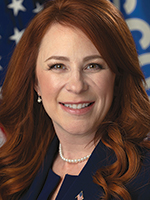
Rep. Amanda Nedweski
Sponsored bills
Maddy summaryAB 400 proposes creating a new civil lawsuit option for minors under 18 who suffer injury during gender transition medical procedures. It directly affects minors receiving such care and the healthcare providers performing them. The bill establishes a legal cause of action allowing affected minors to seek compensation through civil court for injuries linked to these procedures. This is a substantive policy change focused on legal recourse, not on restricting medical care. The bill is currently in the Judiciary Committee for review after its August 2025 introduction.
Maddy summaryAB 284 streamlines the management of state construction projects by raising the cost threshold for mandatory project enumeration from $1 million to $2 million. It requires quarterly budget reports for projects needing increases, sets a 6-month deadline for the Claims Board to resolve certain construction claims, and mandates state agencies to collaborate with energy conservation contractors on pilot projects. The bill also clarifies responsibilities for utility costs in contracts, modifies bidding procedures, and transfers $32 million from the general fund to the state building trust fund for infrastructure. These changes primarily affect state agencies, the building commission, and contractors managing public construction projects.
Maddy summaryAB 311 would allow transgender and intersex individuals to update their sex marker on birth certificates without requiring medical documentation. The bill directly affects people seeking to align their legal identity with their gender identity through simplified administrative changes. Key provisions would replace current requirements (like court orders or medical certifications) with a straightforward self-attestation process. The bill is currently under review in the Assembly Judiciary Committee after being introduced on June 6, 2025.
Maddy summaryAB 421 prohibits cities, towns, and counties from enacting "rights of nature" ordinances that grant legal rights to natural resources like rivers or forests. The bill defines such ordinances as those conferring rights to exist, be protected from pollution, or maintain healthy ecosystems. It creates a new state law (66.0132) banning these local measures, preventing municipalities from using this approach to legally protect natural areas. The bill was introduced in September 2025 and referred to the Judiciary Committee.
Maddy summaryAB 405 requires public schools in Wisconsin to include specific instruction on pregnancy, prenatal development, and childbirth within existing human growth and development curriculum. It directly affects K-12 students and educators by mandating these topics be taught as part of standard health education. The bill amends current curriculum standards to ensure this content is integrated into required instructional programs. This is a substantive policy change to educational content, not a procedural or commemorative measure.
Maddy summaryThis Wisconsin joint resolution (AJR 101) honors Charlie Kirk, founder of Turning Point USA and a prominent advocate for liberty, following his assassination. It recognizes his work promoting "faith, liberty, and truth," his role as a devoted family man, and his impact on inspiring young Americans. The resolution includes three key parts: honoring his life and legacy, commending his memory to future generations, and joining in prayer for his family and the nation. As a symbolic tribute with no policy changes or funding, it does not affect laws or individuals.
Maddy summaryAJR 100 is a symbolic resolution recognizing October 2025 as "Vaccine Injury Awareness Month" in Wisconsin. It does not create new laws, programs, or funding; instead, it formally acknowledges the national observance to raise awareness about vaccine-related injuries and support affected individuals and families. The resolution highlights the use of a black ribbon symbol for this awareness month and notes concerns about incomplete vaccine information in medical settings. This is a procedural recognition by the Wisconsin Legislature with no direct policy or regulatory changes.
Maddy summaryAB 198 creates two key programs: (1) grants for technical colleges offering emergency medical services (EMS) training, provided they don't give admission priority based on residency; and (2) a reimbursement program for individuals or their employers who paid tuition/materials for initial EMS certification/licensure as an emergency medical responder or practitioner. Eligible applicants must complete required courses, pass exams, and obtain their license/certification through the Department of Health Services. The bill also establishes a "live 911" pilot program allowing grants for real-time video communication during emergency calls, requiring a performance report by October 2027. This directly affects EMS students, practitioners, their employers, and public safety answering points.
Maddy summaryAB 77 prohibits the use of devices designed to conceal, alter, or obstruct license plates on vehicles. It defines such devices as any manual, electronic, or mechanical tool that switches plates, moves them, or makes registration numbers unreadable. The bill bans possessing, selling, installing, or using these devices, and allows police to impound vehicles equipped with them (with costs paid by the owner). Violators face fines up to $1,000 or 90 days in jail. This directly affects vehicle owners who might use such devices to obscure license plates.