

Maddy summaryAJR 89 is a symbolic resolution honoring Wisconsin's Hispanic veterans, directly affecting approximately 8,500 Hispanic veterans residing in Wisconsin. The resolution recognizes their service in U.S. military conflicts from the Civil War through recent wars, noting they represent 18.4% of the armed forces and include 61 Congressional Medal of Honor recipients. It formally resolves that the Wisconsin Legislature "recognize and honor the bravery and sacrifice" of Hispanic veterans during Hispanic Heritage Month (September 15-October 15). This resolution has no funding, policy changes, or enforcement mechanisms - it is purely a ceremonial acknowledgment.
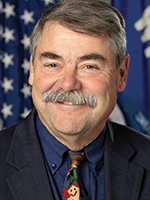
Rep. Joe Sheehan
Sponsored bills
Maddy summaryAJR 90 is a ceremonial resolution recognizing August 2025 as Immunization Awareness Month in Wisconsin. It does not create new laws or policies but formally acknowledges the importance of vaccines through the state legislature's public recognition. The resolution cites Wisconsin's school immunization requirements and global vaccine impact statistics as context for this symbolic observance. It directly affects the Wisconsin Legislature by authorizing its members to publicly honor this awareness month. This is a procedural resolution with no binding policy changes or direct impact on residents.
Maddy summaryAB 321 prohibits the possession, sale, or manufacture of undetectable firearms - those not detectable by standard metal detectors or security scanners - and requires serial numbers on firearm frames or receivers. It directly affects individuals who own or handle such firearms or unmarked firearm components, with specific exemptions for law enforcement, military personnel, and pre-1968 firearms. Violations carry penalties of Class G felony (possession of undetectable firearms), Class H felony (possession of manufacturing plans), or Class I felony (unmarked frames/receivers). The law aims to enhance public safety by making firearms more detectable during security screenings.
Maddy summaryAB 435 restructures funding and governance for Wisconsin's Warren Knowles-Gaylord Nelson Stewardship 2000 conservation program. It establishes a new Knowles-Nelson Stewardship Board with specific member appointments (including assembly/senate representatives, environmental groups, tribal representatives, and outdoor recreation stakeholders) and creates two new grant programs: one for nonprofit conservation organizations ($5 million annually) and a tribal co-management program ($3 million annually). The bill also adjusts debt limits for the program and modifies how funds are allocated from the capital improvement fund to support state parks, local recreation, and boating facilities. This directly affects conservation organizations, tribal governments, local municipalities, and outdoor recreation businesses receiving program funding.
Maddy summaryThe bill title claims to address LLC filing fees, but the provided text actually amends a statute about student enrollment requirements (183.0122), not business fees. The bill text specifies that a student must be enrolled in a postsecondary institution, public/private/tribal high school, or home-based private program to qualify for certain benefits. It does not change LLC filing fees or affect business entities. The mismatch between the title and the actual content in the bill text makes it impossible to summarize the LLC fee aspect as described. This appears to be an error in the provided bill text.
Maddy summaryAB 444 prohibits state agencies, local governments, and county sheriffs from using public facilities (including jails) to detain people solely based on immigration status. It also bans state or local funding for immigrant detention facilities. The bill directly affects all state and local entities that operate facilities or manage public funds, preventing them from participating in immigration enforcement through detention or financial support. The law creates a clear legal barrier to state involvement in immigration detention systems, effective upon enactment.
Maddy summaryAB 378 requires all state agencies to mask or anonymize personally identifiable information (PII) before sharing it with the federal government, directly affecting state agencies handling sensitive data like health records or social services. The bill allows limited exceptions for sharing unmasked data when required by law, for legislative constituent services, or for court operations. It also creates a civil lawsuit option for individuals harmed by negligent violations, allowing recovery of actual damages, up to $1,000 in punitive damages, and attorney fees. The law aims to strengthen data privacy protections by limiting federal access to identifiable state records without explicit safeguards.
Maddy summaryAJR 86 is a commemorative resolution honoring the late Representative Jim Rooney, a former Wisconsin State Assembly member (1972-1985) and lifelong public servant from Racine County. The resolution expresses the legislature's condolences to his family and recognizes his career, including chairing the Wisconsin Waterways Commission and contributing to Racine's lakefront revitalization. As a procedural resolution (not a policy bill), it contains no new laws or funding but formally commemorates his service and legacy. It was adopted by the legislature on October 7, 2025.
Maddy summaryAB 490 creates a statewide suicide prevention program funded by an annual $250,000 appropriation. The program requires the Department of Health Services to implement public awareness campaigns, coordinate with community groups, and provide training for law enforcement, healthcare providers, schools, and others who interact with people at risk of suicide. It specifically targets at-risk groups including youth, elderly individuals, Native Americans, and rural residents through county-level initiatives, crisis service enhancements, and a centralized resource website. The bill also mandates annual reports to the legislature on program activities starting in 2027.
Maddy summaryAB 475 creates a state grant program to fund immigration-related civil legal services for individuals and families. It allocates $300,000 for the 2025-26 fiscal year to award grants to community-based organizations (including for-profit groups) that provide legal assistance in immigration matters, with requirements that applicants have a history of such services and offer them without regard to immigration status. The bill also enables counties to fund similar services through existing county budgeting mechanisms. This directly supports immigrants facing legal challenges and expands access to civil legal aid in immigration cases.