

Maddy summaryAB 672 creates new Wisconsin statutes to address "transnational repression," defined as actions by foreign government or terrorist organization agents targeting dissidents (like activists, journalists, or minority group members) to silence them over political views. It establishes a state training program for law enforcement, a public awareness campaign, and a digital reporting portal to identify such cases. The bill increases penalties for crimes committed as part of this repression (e.g., elevating a Class B felony to a Class A felony) and criminalizes enforcing foreign laws without federal or state approval, punishable by a minimum 3-year prison term. These provisions directly affect foreign agents operating within Wisconsin and target actions intended to suppress political dissent.
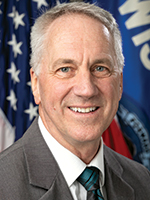
Rep. Dan Knodl
Sponsored bills
Maddy summaryAB 663 prohibits University of Wisconsin System institutions from accepting foreign grants, entering academic partnerships, or engaging in research collaborations with entities from countries designated as security threats (like China or Russia) without board approval. Exceptions require security reviews, approval that benefits students, and confirmation the partnership won’t compromise U.S. security or academic freedom. The bill also bans accepting gifts or cultural exchange payments from such entities. Institutions must submit annual reports detailing all foreign partnerships to state officials.
Maddy summaryAB 662 prohibits Wisconsin state agencies from contracting with business entities primarily based in designated "foreign countries of concern" (like China), controlled by Chinese government entities, or subsidiaries of such entities. Contractors must certify they are not prohibited entities and ensure goods/services aren’t sourced from them. Violations trigger significant penalties, including fines up to twice the contract value or $250,000, plus a 5-year contracting ban. An exemption exists if the goods/services are unavailable elsewhere and approved by the Department of Administration.
Maddy summaryAB 211 creates a new exemption in Wisconsin law allowing "tobacco bars" to operate without adhering to the state's public smoking ban. To qualify, these establishments must have opened after June 4, 2009, allow only cigar and pipe smoking (not cigarettes), not be classified as food establishments, display clear signage about smoking, prohibit minors under 21 from entering, require employee acknowledgment of secondhand smoke exposure, and demonstrate adequate air filtration in licensing applications. The bill directly affects tobacco bars meeting these specific criteria, enabling them to operate with smoking permitted while imposing strict operational requirements. It does not change the general public smoking ban but establishes a defined exception for this narrow category of businesses.
Maddy summaryAB 673 bans medical and research facilities receiving state or federal funds from using genetic software or sequencers developed by foreign adversaries (as defined by federal regulations). It also prohibits storing human genome data of state residents in foreign adversary countries, with exceptions for certain clinical trials. The law applies to facilities, companies, and nonprofits handling genetic data, requiring them to keep such data inaccessible to foreign adversaries. Violations carry a $10,000 penalty per offense, enforced by the state Attorney General.
Maddy summaryAB 450 creates a new statute (101.02(26)) specifying that Wisconsin’s commercial building codes (Chapters SPS 361-366) apply to public buildings, structures, or places of employment when their plans are submitted to the state department or a local government authorized to review such plans under statute 101.12. It explicitly excludes Section SPS 361.03(7) from applying to these public projects. This bill directly affects public construction projects requiring building plan reviews by state or local authorities, effective August 1, 2025, with local jurisdictions required to comply by April 1, 2026. The change clarifies code applicability without altering the underlying building safety standards.
Maddy summaryAB 166 requires Wisconsin colleges and universities to collect and report specific data about student outcomes and costs starting in 2027. Institutions must report graduates' average salaries (6 months and 5 years post-graduation by major), average debt, graduation rates, cost of attendance, and popular degree programs. The state board will also create and publish a list of the 50 most in-demand jobs in Wisconsin with required education levels and average salaries. This data will be provided to high schools for students in grades 10-12 as part of required academic and career planning services. The bill directly affects higher education institutions and students seeking career guidance.
Maddy summaryAB 366 requires individuals seeking housing with an emotional support animal to provide documentation from a licensed health professional confirming a disability and a disability-related need for the animal. It imposes a minimum $500 fine for falsely claiming a disability or providing false documentation to obtain housing, and similarly penalizes health professionals who issue such documentation without a 30-day patient-provider relationship. The bill clarifies that "service animals" must be trained to perform specific tasks (like guiding or alerting) and creates penalties for falsely claiming a service animal in public places, including fines up to $500 or community service. It also mandates that businesses receive educational materials about service animal laws to help them respond appropriately to service animal requests without violating the law.
Maddy summaryAB 602 requires the state department to annually submit a list of qualifying scholarship granting organizations (SGOs) to the U.S. Treasury and certify the state's authority to participate in the federal tax credit program for donations to these organizations. It mandates that the governor must decide by July 1, 2026, whether to join this federal program, which would allow residents to claim tax credits for contributions to SGOs starting in 2027. The bill directly affects state administrative processes, scholarship organizations, and donors who may qualify for federal tax benefits. It does not create new tax credits but establishes the state's procedural framework for eligibility under existing federal law (26 USC 25F).
Maddy summaryAB 169 amends Wisconsin's unemployment insurance law to strengthen work search requirements for claimants. It requires individuals receiving benefits to document at least four weekly job search actions (such as interviews or job offers) and provide verification to the department, including records of all offers received. The bill also creates new employer reporting obligations, allowing employers to notify the department if claimants decline interviews, fail to respond, or cancel interviews without rescheduling. However, the bill was vetoed by the governor on October 31, 2025, and did not become law.