

Maddy summaryAB 574 updates Wisconsin's voter registration processes to improve accuracy by requiring election officials to verify voters' addresses using U.S. Postal Service data. It mandates that clerks remove voters from registration lists if they no longer reside at their registered address (e.g., when a postcard is returned or USPS data shows a change), and requires timely notifications to voters and election authorities about status changes. This affects all registered voters whose addresses need verification and election officials responsible for maintaining voter rolls. The bill streamlines existing procedures by standardizing address verification, removal triggers, and reporting requirements for voter registration lists.
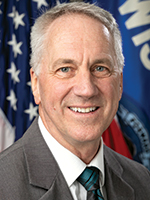
Rep. Dan Knodl
Sponsored bills
Maddy summaryAB 545 prevents University of Wisconsin System institutions from charging students supplemental fees for exclusively online courses unless the fee covers specific, verifiable online costs or applies equally to in-person versions of the same course. It directly affects students enrolled in online courses at UW institutions, particularly non-resident students who might face higher fees. The bill adds a new requirement (36.27(1)(c)) that prohibits unjustified fees for online-only courses while allowing fees tied to actual online-specific expenses or those applied consistently to in-person equivalents. This policy change targets course-related charges, not tuition rates, and applies starting 30 days after the law takes effect.
Maddy summaryAB 245 modifies the state's sales and use tax exemption for businesses operating qualified data centers. It defines a "qualified data center" as buildings (or connected buildings) owned, leased, or operated by a single business entity, designed to house server computers for processing, storing, or managing data. The bill adds provisions allowing data centers to offer rental space, utilities, and infrastructure services to tenants, while explicitly excluding cryptocurrency-related facilities from the tax exemption. This directly affects data center operators and their tenants by clarifying eligibility for tax benefits and expanding allowable services.
Maddy summaryAB 138 modifies Wisconsin Retirement System rules for retirees who return to work. It specifically allows former jailers and protective occupation retirees (who previously received retirement benefits) to opt out of rejoining the retirement system if they are rehired by a participating employer within 75 days of leaving their prior job. To qualify, they must not have a pre-existing agreement to return and must formally decline re-enrollment using a department-provided form. This change applies only to those retiring from these specific roles and does not alter other retirement eligibility rules.
Maddy summaryAB 615 requires all public school districts and independent charter schools (K-8) to implement math screening tests three times yearly to identify students at-risk of not meeting grade-level math standards. Schools must then provide "quality math tutoring" (aligned with classroom instruction, offered 3 days weekly or 50 hours annually by state-approved providers) and develop personalized math plans for at-risk students within 30 days of identification. The bill also mandates schools with low 4th-grade math proficiency to create evidence-based achievement plans by 2026, including professional development for teachers. This law directly affects K-8 students identified as needing math support and schools serving those students.
Maddy summaryAB 583 helps people wrongfully imprisoned in Wisconsin by providing them with tax-exempt compensation, health coverage, and transition support. It exempts state compensation payments for wrongful imprisonment from state income tax, covers health insurance premiums (with shared costs), and requires a 5-day transition plan for released individuals to access housing, job help, and healthcare. The bill creates new funding mechanisms (like appropriations under 20.515) to pay for these benefits and mandates state agencies to coordinate with counties on post-release support. It directly affects individuals who receive state compensation under wrongful imprisonment claims (s. 775.05) and the state budget.
Maddy summaryAB 51 clarifies that interscholastic athletic associations (nonprofits coordinating high school sports) may choose to follow public records and open meetings laws. If they elect to be governed by these laws, they can withhold records about individual referees and student participants. The bill also requires school districts to join such associations only if the association has elected to follow these public records rules. This creates a clear framework for how athletic associations handle transparency while maintaining operational flexibility.
Maddy summaryAB 639 expands the scope of practice for naturopathic doctors in Wisconsin. It specifically allows them to provide "expedited partner therapy" for sexually transmitted infections (chlamydia, gonorrhea, or trichomoniasis) under new section 466.052, enabling them to prescribe antibiotics to sexual partners of infected patients. The bill also requires naturopathic doctors to maintain malpractice insurance (with limited exceptions for government employees) under amended section 466.05(3). Additionally, it updates prescription drug and controlled substance regulations to explicitly include naturopathic doctors in relevant statutes (e.g., 961.23(6)). These changes directly affect naturopathic doctors and patients seeking STI treatment in the state.
Maddy summaryAB 526 modifies state contracting rules for airport improvements to align with federal requirements when federal funds are involved. It allows the state transportation secretary to use "construction manager at risk" contracts for qualified airport projects (like building or upgrading structures), where the contractor guarantees a maximum price and selection isn't based solely on lowest bid. This applies when projects are partially or fully funded by federal money, overriding standard state procurement rules for those specific cases. The bill directly affects state agencies, municipalities operating airports, and contractors bidding on federal-funded airport construction or improvement projects.
Maddy summaryAB 564 updates Wisconsin law to allow chiropractors to perform health examinations required for school employees (like teachers and staff). The bill amends statute 118.25(1)(a) by explicitly adding "chiropractor" to the list of licensed professionals authorized to conduct these exams, alongside physicians, naturopathic doctors, and physician assistants. This change directly affects school employees needing these exams and chiropractors who can now legally provide them. The law does not alter exam requirements or costs but expands who may perform the exams. The bill was introduced in October 2025 and referred to the Health Committee for review.