

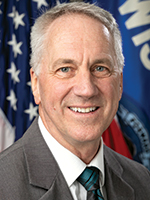
Photo of Dan Knodl
R Wisconsin Assembly · District 24 On the 2026 ballot

Rep. Dan Knodl

Compare
Total votes
876
all sessions
Attendance
100%
of floor votes
Near the chamber average
With party
99%
of cast votes
Near the chamber average
Bipartisan score
1%
crosses aisle rarely
Near the chamber average
Sponsored
1,110
bills & resolutions
Near the chamber average
Committees
5
assignments
1,110 bills and resolutions

Sponsored bills

Total
1,110
Primary
1,110
Co-sponsor
0
This page
1,110
matching current filters
Primary AJR 8
Failed · Wisconsin Assembly · Lead sponsor
Relating to: restricting the governor’s partial veto authority to only rejecting entire bill sections of an appropriation bill that are capable of separate enactment and reducing appropriations in a bill (first consideration).

Maddy summaryAJR 8 proposes a constitutional amendment to limit the governor's partial veto power on budget bills. It would prevent the governor from rejecting small parts of a bill (like single words or sentences) and require that any vetoed section must be a complete, standalone law that can function independently. The bill specifically targets appropriation bills, restricting the governor to vetoing entire sections that are capable of separate enactment. This is a proposed constitutional change, not a law, and would need voter approval to take effect. The amendment aims to reduce the governor's ability to alter budget bills through partial vetoes.

Failed Mar 23, 2026 0 co-sponsors
Primary AB 286
Failed · Wisconsin Assembly · Lead sponsor
Relating to: interest earned on coronavirus state and local fiscal recovery funds. (FE)

Maddy summaryAB 286 redirects $172 million in interest earned from unused coronavirus state and local fiscal recovery funds to the general state fund. It applies to funds held under specific state appropriations (section 20.505(1)(mb)) that were not spent by the deadline. The bill transfers this interest directly to the general fund on its effective date, rather than allowing it to remain in the recovery fund. This is a procedural adjustment to reallocate existing interest earnings, not a new funding program.

Failed Mar 23, 2026 0 co-sponsors
Primary AB 71
Failed · Wisconsin Assembly · Lead sponsor
Relating to: school district operating referenda.

Maddy summaryAB 71 changes how school districts in Wisconsin can seek voter approval to exceed their standard operating budget limits. It requires school boards to adopt a resolution specifying whether excess funds are for recurring (ongoing) or nonrecurring (one-time) purposes, and limits such resolutions to four years. Voters must approve these requests via referendum, with ballots clearly stating the amount for nonrecurring uses. Crucially, if approved for recurring purposes, the excess amount becomes part of the next year's budget base; for nonrecurring purposes, it does not affect future budget limits. This bill directly affects school districts seeking to fund additional programs beyond their regular budget without voter approval.

Failed Mar 23, 2026 0 co-sponsors
Primary AB 127
Failed · Wisconsin Assembly · Lead sponsor
Relating to: the duty of a pharmacist to dispense lawfully prescribed drugs and devices. (FE)

Maddy summaryAB 127 modifies pharmacy laws regarding the dispensing of lawfully prescribed contraceptives. It allows pharmacists to refuse dispensing for reasons of conscience but requires them to immediately transfer the prescription to another pharmacy at the patient’s direction without delay. This directly affects pharmacists in community and hospital settings who dispense contraceptives, ensuring patients can access their prescribed medication without unnecessary delays. The bill specifies that refusals cannot be based on prescription errors, potential fraud, or drug incompatibility, and clarifies that pharmacists must transfer prescriptions rather than deny service.

Failed Mar 23, 2026 0 co-sponsors
Primary AB 297
Failed · Wisconsin Assembly · Lead sponsor
Relating to: performance grants based on improving employment rates for individuals on probation, parole, or extended supervision. (FE)

Maddy summaryAB 297 creates performance grants for regional probation and parole offices based on improving employment rates for individuals on supervision (probation, parole, or extended supervision). Offices earn grants by increasing employment rates above a 2021-2024 baseline, with "eligible employment" defined as 130+ wage-earning hours monthly. Funds must be used for employee bonuses, and the department tracks outcomes like employment duration, recidivism rates, and cost savings tied to reduced incarceration. Offices are disqualified from grants if their region saw increased revocations for new crimes in the prior year. Annual reports will detail regional employment trends and program impacts for public transparency.

Failed Mar 23, 2026 0 co-sponsors
Primary AB 172
Failed · Wisconsin Assembly · Lead sponsor
Relating to: consumer data protection and providing a penalty. (FE)

Maddy summaryAB 172 creates a new consumer data protection law by defining key terms like "personal data," "biometric data," "sale of personal data," and "consumer" in section 100.80 of the statutes. This bill directly affects businesses that collect or process personal data of state residents, requiring them to follow standardized handling practices for such data. The law includes penalty provisions for violations, though specific penalty amounts and enforcement details are not provided in the available bill text.

Failed Mar 23, 2026 0 co-sponsors
Primary AB 132
Failed · Wisconsin Assembly · Lead sponsor
Relating to: creating a board to organize, promote, and host a Wisconsin nuclear power summit. (FE)

Maddy summaryAB 132 creates a "nuclear power summit board" to organize, promote, and host a Wisconsin nuclear power summit in Madison, requiring the event to occur within one month after a specific university academic term begins. The board includes appointed legislators (two senators, two assembly members), the Wisconsin Economic Development Corporation CEO, a governor-appointed member, and nonvoting industry/faculty representatives. It is funded through a dedicated appropriation from the Wisconsin Economic Development Corporation, with the summit allowing free attendance for Wisconsin residents and varying registration fees for others. The board must disband 180 days after the summit concludes, returning remaining assets to the University of Wisconsin-Madison's nuclear engineering program.

Failed Mar 23, 2026 0 co-sponsors
Primary AB 176
Failed · Wisconsin Assembly · Lead sponsor
Relating to: financial eligibility for the Alzheimer’s family and caregiver support program. (FE)

Maddy summaryAB 176 repeals the financial eligibility requirement (section 46.87(5m)) for Wisconsin's Alzheimer's family and caregiver support program. It updates two sections of the law to remove references to this repealed requirement, clarifying that eligibility now depends on meeting the financial criteria previously defined under the repealed section. The bill directly affects Alzheimer's patients and their caregivers in residential facilities who previously needed to satisfy these financial standards to receive program services. The key change is eliminating the specific financial threshold that determined program access, streamlining eligibility without creating new benefits or funding. This is a technical adjustment to existing statutes, not a substantive policy change.

Failed Mar 23, 2026 0 co-sponsors
Primary AB 107
Failed · Wisconsin Assembly · Lead sponsor
Relating to: conversion of cooperative associations organized to establish and operate nonprofit plans or programs for health care into service insurance corporations.

Maddy summaryAB 107 establishes a legal process for nonprofit cooperative health care associations (organized under §185.981) to convert into service insurance corporations. It requires the cooperative’s board to create a detailed conversion plan (including reasons, terms, and new name), which must be approved by the state insurance commissioner before member voting. If approved by both the commissioner and members, the cooperative files articles of conversion with the Department of Financial Institutions, becoming a new service insurance corporation that inherits all assets and obligations. This bill directly affects health care co-ops seeking to operate under a different corporate structure, with no financial compensation allowed for conversion-related work beyond regular salaries.

Failed Mar 23, 2026 0 co-sponsors
Primary AJR 6
Failed · Wisconsin Assembly · Lead sponsor
Relating to: recognizing that the Wisconsin State Legislature supports nuclear power and fusion energy as clean energy sources that are critical to safely meeting Wisconsin’s growing energy demands and declaring the legislature’s commitment to the continuation and expansion of nuclear power and nuclear technologies, the development of nuclear technologies and fusion energy, and employing the leadership and resources necessary to support the development of and investment in nuclear power, fusion energy, and related technologies in the state.

Maddy summaryAJR 6 is a symbolic resolution passed by the Wisconsin State Legislature declaring support for nuclear and fusion energy as critical clean energy sources. It states the legislature's commitment to advancing nuclear power, fusion technology, and related innovations to meet energy demands, reduce carbon emissions, and create high-paying jobs - citing current nuclear plants powering 1.2 million homes and avoiding 6.4 million tons of carbon emissions annually. The resolution does not create new laws or allocate funding but formally endorses expanding nuclear energy development. The bill was introduced in February 2025, referred to committees, and ultimately laid on the table in June 2025 without further action.

Failed Mar 23, 2026 0 co-sponsors
Showing 201 to 210 of 1,110 bills
Previous 1 … 20 21 22 … 111 Next