

Maddy summaryAB 277 requires state agencies to provide detailed cost analyses for new rules that may affect businesses, local governments, or individuals. Agencies must quantify all expected implementation and compliance costs (and potential savings) over a two-year period, broken down by affected groups, and report this as a single net dollar figure. If projected costs exceed $10 million, the rulemaking process must pause until costs are reduced or offset. The bill also establishes rules for funding independent cost analyses when agency estimates vary significantly and mandates revised analyses after rule modifications. This bill aims to increase transparency around financial impacts of new regulations before they are finalized.
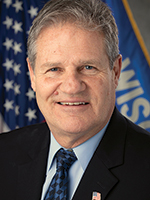
Rep. Paul Melotik
Sponsored bills
Maddy summaryAB 687 requires the state wildlife department to establish a statewide wolf population goal when wolves are not protected under federal or state endangered species laws. This law directly affects the department, hunters, and trappers by mandating a management plan that sets a specific population target. The key provision allows the department to regulate wolf hunting and trapping through licensing limits - such as restricting the number of hunters, trappers, or wolves taken - based on the established population goal. The bill does not change current protections but creates a framework for future management if wolves are removed from endangered lists.
Maddy summaryAB 681 allows law enforcement officers to use oral fluid tests (alongside breath tests) during initial roadside screening when they suspect a driver is impaired by alcohol, drugs, or controlled substances. This applies to drivers suspected of violating DUI laws (e.g., operating under the influence or while impaired). The test results help officers decide whether to arrest the driver or request further chemical testing, but cannot be used as evidence in court except to prove probable cause for an arrest. Refusing this preliminary test carries no penalty, unlike refusing a formal chemical test later.
Maddy summaryAB 683 prohibits telecommunications providers from using equipment manufactured by entities designated as "foreign adversaries" in key network infrastructure (like cell towers or fiber lines). It directly affects telecom companies operating in Wisconsin, requiring them to stop purchasing or leasing such equipment and remove existing installations by following federal removal programs. Providers must annually certify compliance and publicly report locations of affected equipment, including replacement plans, while the state commission will publish a public map and annual report. The bill aligns with federal rules banning equipment from specific foreign entities, focusing on network security without specifying political outcomes.
Maddy summaryAB 514 authorizes new circuit court branches and additional judicial staff in Kenosha, Brown, and Menominee/Shawano counties to address growing caseloads. Specifically, it adds a ninth branch in Kenosha County (effective August 2028), a ninth branch in Brown County (effective August 2027) and a tenth branch (effective August 2028), and a third branch in Menominee/Shawano Counties (effective August 2027). The bill also authorizes new circuit judge and court reporter positions for these branches, plus 30.5 additional assistant district attorney positions across 24 counties. These changes are funded through existing state court appropriations and will take effect on the specified dates.
Maddy summaryAB 571 creates a statewide Parkinson’s disease registry to collect and track health data on Parkinson’s disease and related conditions (like multiple system atrophy). Health care providers must report anonymized patient data - including diagnosis, treatment, outcomes, and demographics - to the University of Wisconsin-Madison for storage and analysis. The registry will generate annual public reports on disease incidence, prevalence, and trends via a dedicated website, with strict privacy safeguards (e.g., coded data, IRB-approved research access). This affects health care facilities, providers, and patients, but does not impose new costs or treatment requirements.
Maddy summaryAB 669 revises higher education program definitions and requirements in Wisconsin, focusing on how "disadvantaged" students are identified and supported. It prohibits the use of race, ethnicity, gender, or group identity in defining "disadvantaged" students, requiring that eligibility be based solely on economic, familial, geographic, or personal hardship. The bill updates existing programs like graduate aid grants (e.g., "Ben R. Lawton grants") and retention plans to operate without race-based considerations, while maintaining reporting requirements for financial aid distribution by student demographics. It affects public universities, technical colleges, and students applying for state-funded aid programs.
Maddy summaryAB 572 clarifies the legal definition of "bingo" in Wisconsin law to distinguish it from certain free games. The bill specifies that bingo requires participants to pay to play, uses standard 5x5 cards with numbers 1-75 (including a "FREE" center space), and determines winners based on random number draws matching predefined patterns. Crucially, it explicitly excludes games using free cards and donated prizes where participants pay no consideration, regardless of whether the host pays for prizes or supplies. This change directly affects gambling regulators, local governments, and organizations running bingo events, ensuring only paid participation games fall under gambling licensing rules. The bill does not alter existing bingo rules but provides clear legal boundaries for enforcement.
Maddy summaryAB 598 allows patient representatives to consent to health care facility admissions for incapacitated individuals without requiring a court-appointed guardian or protective placement petition. The bill creates a defined "patient representative" role, requiring two medical professionals (e.g., two physicians or one physician plus an advanced practice clinician) to certify incapacity based on medical need - not age, disability, or eccentricity. Patient representatives gain authority to make health care decisions, enroll individuals in Medical Assistance, and authorize health care expenses similar to a guardian, but only for non-developmental disability and non-mental illness cases. This change streamlines admissions for incapacitated patients while mandating 72-hour notifications to county agencies about the certification.
Maddy summaryAB 89 addresses theft crimes and their associated penalties. The bill text includes an amendment that removes the phrase "in a 6-month period" from two specific lines within the bill. This change modifies the criteria for certain theft crimes by eliminating a previously defined 6-month time constraint. This adjustment impacts individuals accused of theft and the legal process for prosecuting these offenses.