

Maddy summaryAB 281 requires state agencies and contractors to verify employees' work eligibility through the federal E-Verify program before hiring or awarding government contracts. It prohibits contracts with employers not enrolled in E-Verify or who knowingly hire workers flagged as ineligible by the program. Contracts must include written verification statements, and violations require immediate termination without liability for uncompleted work. The law applies to state procurement, construction, and local government hiring, but stops if the federal E-Verify program ends.
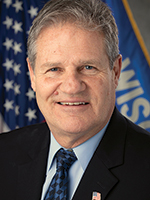
Rep. Paul Melotik
Sponsored bills
Maddy summaryAB 457 would allow California school districts to adopt resolutions exceeding their legally set revenue limits under specific, defined conditions. It directly affects school districts seeking flexibility to spend more than their allocated budget for certain needs, such as addressing unexpected costs or funding critical projects. The bill establishes clear criteria and procedures districts must follow to request and receive approval for exceeding revenue limits. Currently, the bill has passed the Education Committee and is pending further review by the Rules Committee, but it has not yet become law.
Maddy summaryAB 326 creates a program providing grants to small local governments (populations under 7,500) to cover costs for grant writing and compliance assistance services. Grants up to $5,000 can be used for securing funding related to public works, transportation infrastructure, public safety, utility costs, or cybersecurity projects. The program requires a simple application listing only basic details (project purpose, contact info, and estimated costs) and prioritizes first-time applicants. A report evaluating the program must be submitted by December 2028.
Maddy summaryAB 460 changes eligibility rules for parental choice education programs (like school vouchers or education savings accounts). It allows a student to qualify for such a program if a sibling or dependent child of their parent/guardian is already enrolled in the program. This directly affects families with multiple children, making it easier for additional children in the same household to access these programs once one child qualifies. The bill is currently under review by the Rules Committee after passing the Education Committee.
Maddy summaryAB 629 prohibits operating drones over correctional facilities without authorization from facility leaders (e.g., secretary of corrections or sheriff). It imposes a $5,000 fine for unauthorized drone flights and criminalizes using weaponized drones (equipped with tasers, firearms, etc.) near prisons, classifying it as a Class H felony. The bill grants police officers authority to disable or destroy drones they reasonably believe pose an imminent threat to public safety, including through jamming or hacking, without financial liability for property damage. These provisions directly affect drone operators near prisons, facility staff, and law enforcement agencies, with specific focus on preventing security threats at correctional institutions.
Maddy summaryAB 502 establishes compensation rules for outdoor advertising signs affected by highway projects. It requires state agencies to provide detailed appraisals (within 85-115% of the offered value) and specifies separate payments for sign owners (covering sign value and related losses) and property owners (for lost rights to erect signs). Nonconforming signs (those not meeting local rules) can be repositioned without losing their status, as long as size and visibility remain similar. This directly affects sign owners, local governments, and state transportation departments involved in highway construction.
Maddy summaryAB 415 restricts state and local government employees from using electronic devices owned by their agencies to access social media, apps, or AI tools owned by entities located in "foreign countries of concern" (as defined by federal regulations). The bill directly affects government employees and contractors who use official devices for non-law enforcement work, banning access to specific foreign-owned technology. Exceptions allow written waivers from the secretary of administration for limited job-related purposes. This policy change aims to limit government use of technology linked to designated foreign adversaries, with no impact on law enforcement activities. The bill does not create new funding or require agency budget changes.
Maddy summaryAB 672 creates new Wisconsin statutes to address "transnational repression," defined as actions by foreign government or terrorist organization agents targeting dissidents (like activists, journalists, or minority group members) to silence them over political views. It establishes a state training program for law enforcement, a public awareness campaign, and a digital reporting portal to identify such cases. The bill increases penalties for crimes committed as part of this repression (e.g., elevating a Class B felony to a Class A felony) and criminalizes enforcing foreign laws without federal or state approval, punishable by a minimum 3-year prison term. These provisions directly affect foreign agents operating within Wisconsin and target actions intended to suppress political dissent.
Maddy summaryAB 663 prohibits University of Wisconsin System institutions from accepting foreign grants, entering academic partnerships, or engaging in research collaborations with entities from countries designated as security threats (like China or Russia) without board approval. Exceptions require security reviews, approval that benefits students, and confirmation the partnership won’t compromise U.S. security or academic freedom. The bill also bans accepting gifts or cultural exchange payments from such entities. Institutions must submit annual reports detailing all foreign partnerships to state officials.
Maddy summaryAB 211 creates a new exemption in Wisconsin law allowing "tobacco bars" to operate without adhering to the state's public smoking ban. To qualify, these establishments must have opened after June 4, 2009, allow only cigar and pipe smoking (not cigarettes), not be classified as food establishments, display clear signage about smoking, prohibit minors under 21 from entering, require employee acknowledgment of secondhand smoke exposure, and demonstrate adequate air filtration in licensing applications. The bill directly affects tobacco bars meeting these specific criteria, enabling them to operate with smoking permitted while imposing strict operational requirements. It does not change the general public smoking ban but establishes a defined exception for this narrow category of businesses.