

Maddy summaryThis bill changes Wisconsin's retirement system rules for state retirees who return to work. It allows retirees who rejoin state employment (after a 75-day separation) to choose whether to keep their retirement annuity for up to 60 months, instead of having it automatically suspended. If they elect to keep the annuity, their new employer must pay equivalent retirement contributions to the system. The policy directly affects state retirees returning to jobs where they work at least two-thirds full-time, while ensuring retirement fund contributions remain intact.
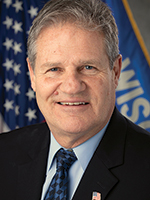
Rep. Paul Melotik
Sponsored bills
Maddy summaryAB 296 removes a 13-week waiting period that previously required employers (garnishees) to verify if they would owe wages within 13 weeks before processing wage garnishments. It directly affects debtors with ongoing wage garnishment orders and the employers handling those garnishments. The bill eliminates this waiting period, allowing garnishments to begin immediately upon employer notification. It also maintains existing priority rules, ensuring child support and restitution garnishments take precedence over other wage garnishments, with specific limits on the percentage of disposable earnings that can be garnished.
Maddy summaryAB 525 repeals 138 outdated tax credit and tax provision sections in the state's tax code. This directly affects taxpayers and state tax administrators by removing obsolete rules that no longer serve their intended purpose. The bill targets specific sections, such as expired credits and redundant requirements, without creating new tax policies. This action simplifies the tax code by eliminating provisions that have been deemed obsolete.
Maddy summaryAB 106 exempts electricity delivered to Level 3 electric vehicle (EV) charging stations installed at residences from the existing EV charging tax. This directly affects homeowners who own or operate Level 3 chargers at their primary residence. The bill removes the tax on electricity used for charging EVs at these residential stations, effective retroactively from January 1, 2025. The exemption applies specifically to Level 3 chargers at homes, not to commercial or public charging locations.
Maddy summaryAB 197 creates a new exemption allowing local governments (like counties or municipalities) to count certain regional emergency medical services costs toward their budget limits without triggering spending restrictions. To qualify, the service must cover at least 232 square miles or include 8 municipalities, and annual cost increases must stay below the inflation rate plus 5%. The exemption requires confirmation of a regional service area and a designated coordination entity for EMS across the area. This specifically affects jurisdictions operating joint emergency medical services districts or intergovernmental agreements for EMS, including fire department-provided services.
Maddy summaryAB 671 mandates the Department of Administration to study redundant federal, state, and local requirements for constructing new housing (including single-family, duplex, and multifamily units). The study must identify overlapping or unnecessary rules and submit a report with legislative recommendations within one year of the bill's effective date. This bill does not create new laws but directs a formal review to potentially streamline housing construction regulations. It directly affects future legislative decisions on housing policy, not current construction practices.
Maddy summaryAJR 109 is a symbolic joint resolution honoring Wisconsin's Hispanic and Latino veterans. It formally recognizes their service and sacrifices throughout U.S. military history, including specific references to the Borinqueneers unit and General Richard Cavazos. The resolution expresses the Wisconsin Legislature's gratitude through a formal statement, acknowledging these veterans' contributions without creating new programs or altering laws. This is a commemorative gesture, not a policy change, and directly affects no individuals or entities through legislative action.
Maddy summaryAB 678 requires Wisconsin school boards to adopt a policy by July 2026 governing appropriate communication between school employees and volunteers (acting in their official capacity) and students. The policy must cover all communication methods and content, both during and outside school hours, and specify consequences for violations. It directly affects school district staff, volunteers, and students by establishing clear standards for professional interactions. The bill creates a new statutory requirement (120.12(30)) without dictating specific communication rules, leaving implementation to individual school boards.
Maddy summaryAB 447 amends Wisconsin law to clarify when courts must address objections to video testimony in certain civil cases. It removes a specific exception that previously required courts to sustain objections about expert witness testimony via video in cases under Chapters 51 or 55 of the statutes. For all such proceedings - including expert testimony objections - the bill requires courts to apply their discretion under existing rules (s. 885.56) rather than automatically sustaining objections. This change directly affects defendants and respondents in civil matters listed under the statute who may object to remote testimony.
Maddy summaryAB 523 bans the sale, installation, or distribution of counterfeit airbags (fake parts with misleading marks) and nonfunctional airbags (previously deployed, damaged, or falsely labeled as working). It directly affects auto parts sellers, installers, and repair shops by prohibiting these practices, with limited exceptions for police vehicles, dealers without knowledge of issues, and insurance-related vehicle transfers. Violations carry fines up to $5,000 or up to one year in jail per offense, escalating to felony charges for repeat offenses or if harm or death results. The bill creates specific definitions for these airbag types and establishes penalties under existing statute 347.50.