

Maddy summaryAB 138 modifies Wisconsin Retirement System rules for retirees who return to work. It specifically allows former jailers and protective occupation retirees (who previously received retirement benefits) to opt out of rejoining the retirement system if they are rehired by a participating employer within 75 days of leaving their prior job. To qualify, they must not have a pre-existing agreement to return and must formally decline re-enrollment using a department-provided form. This change applies only to those retiring from these specific roles and does not alter other retirement eligibility rules.
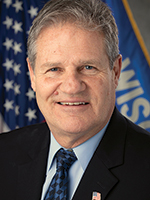
Rep. Paul Melotik
Sponsored bills
Maddy summaryAB 583 helps people wrongfully imprisoned in Wisconsin by providing them with tax-exempt compensation, health coverage, and transition support. It exempts state compensation payments for wrongful imprisonment from state income tax, covers health insurance premiums (with shared costs), and requires a 5-day transition plan for released individuals to access housing, job help, and healthcare. The bill creates new funding mechanisms (like appropriations under 20.515) to pay for these benefits and mandates state agencies to coordinate with counties on post-release support. It directly affects individuals who receive state compensation under wrongful imprisonment claims (s. 775.05) and the state budget.
Maddy summaryAB 51 clarifies that interscholastic athletic associations (nonprofits coordinating high school sports) may choose to follow public records and open meetings laws. If they elect to be governed by these laws, they can withhold records about individual referees and student participants. The bill also requires school districts to join such associations only if the association has elected to follow these public records rules. This creates a clear framework for how athletic associations handle transparency while maintaining operational flexibility.
Maddy summaryAB 10 creates a sales and use tax exemption for gun safes specifically designed to store firearms, excluding general gun storage items like locking cabinets or racks. This exemption applies to buyers purchasing qualifying safes, meaning they won’t pay state sales or use tax on these items. The bill amends tax statutes to explicitly list gun safes under exempt categories, ensuring retailers don’t need to collect tax for these purchases. It directly affects consumers and retailers selling purpose-built gun safes, with no impact on other firearm-related products or tax policies.
Maddy summaryAB 493 authorizes community solar programs where multiple households share power generated from a single solar facility. It requires municipalities to approve new community solar projects with a two-thirds vote of their governing body (unless zoning allows it automatically), limits facility size to 5 megawatts (or 20 megawatts on previously developed sites like parking lots), and ensures no single subscriber controls more than 40% of the facility’s output. This directly affects local governments (through zoning rules), solar developers ("subscriber organizations"), and residents who join these programs. The bill defines key terms like "community solar facility" and "subscriber" to standardize program rules and interconnection with utilities.
Maddy summaryAB 226 prohibits public school districts and independent charter schools from serving free or reduced-price school meals containing five specific ingredients: brominated vegetable oil, potassium bromate, propylparaben, azodicarbonamide, and red dye 3. The law applies to meals under federal programs like the National School Lunch Program and takes effect July 1, 2027. It does not restrict private vendors from serving these ingredients at school events or on school premises. The bill directly affects schools serving subsidized meals to eligible students.
Maddy summaryAB 417 creates a process for testing criminal defendants for certain communicable diseases (like HIV or sexually transmitted infections) without their consent in specific cases. It applies when defendants are charged with crimes involving bodily fluids (such as blood, semen, or saliva) that could transmit disease to victims, public safety workers, prosecutors, or correctional staff. The district attorney must seek a court order for testing, but can request an emergency order without a hearing if delaying testing risks immediate harm to those workers. Test results cannot reveal the defendant's identity, cannot be used in court, and cannot be added to the defendant's permanent medical records.
Maddy summaryAB 362 requires all public school districts and charter schools to create written cardiac emergency response plans for cardiac emergencies occurring on school property or at school-sponsored athletic events, starting in the 2026-27 school year. These plans must include core elements like designated response teams, clear AED placement and maintenance, annual drills, and staff training in CPR and AED use following American Heart Association guidelines. Schools must also ensure coaches at athletic events hold current CPR/AED certification and that AEDs are accessible at all athletic venues. The law directly affects all K-12 schools and their staff, aiming to improve immediate response to cardiac emergencies.
Maddy summaryAB 521 simplifies the process for sign owners to remove vegetation obstructing highway advertising signs. It defines a "viewing window" as a 500-foot zone along the highway where signs must remain visible, and creates a streamlined permit system for trimming or removing obstructing vegetation within this area. Existing sign owners with permits issued since 2012 can now maintain signs without new approvals (after notifying the department 15 days in advance), while new applicants must follow a 60-day permit review process. The bill also requires sign owners to remove stumps and dispose of all vegetation removed, and to compensate the department for trees (2+ inches in diameter) removed from designated "living snow fences."
Maddy summaryAB 64 creates a state income tax subtraction for eligible K-12 teachers who pay out-of-pocket for classroom supplies and materials. It allows teachers to subtract up to $300 annually from their taxable income for expenses covered under federal tax code (26 USC 62(a)(2)(D)), using the federal definition of "eligible educator." This provision directly affects teachers who incur these costs, reducing their state tax burden without requiring them to itemize deductions. The bill mirrors a federal tax break but applies specifically to Wisconsin's income tax system. The law would take effect for tax years beginning after December 31, 2024.