

Maddy summaryAB 198 creates two key programs: (1) grants for technical colleges offering emergency medical services (EMS) training, provided they don't give admission priority based on residency; and (2) a reimbursement program for individuals or their employers who paid tuition/materials for initial EMS certification/licensure as an emergency medical responder or practitioner. Eligible applicants must complete required courses, pass exams, and obtain their license/certification through the Department of Health Services. The bill also establishes a "live 911" pilot program allowing grants for real-time video communication during emergency calls, requiring a performance report by October 2027. This directly affects EMS students, practitioners, their employers, and public safety answering points.
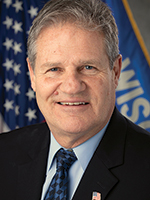
Rep. Paul Melotik
Sponsored bills
Maddy summaryThis bill designates a specific overpass on I-39 over STH 82 in Oxford, Marquette County as the "Greg Quinn and Larry Millard Memorial Bridge" to honor two firefighters who died in the line of duty. The state must install signs identifying the bridge, but only using private donations - no state funds may be used for the signs or their maintenance. The bill is purely commemorative and does not create new policy or affect public services.
Maddy summaryAB 199 changes reimbursement rates for ambulance services under Wisconsin's Medical Assistance program (state Medicaid) when patients are not transported to a facility. Starting January 1, 2027, the state will increase payments for "ambulance response and treatment, no transport" (code A0998) to match the rate for transport services (code A0429), directly benefiting ambulance providers. The bill also requires the Department of Health Services to annually report by September 15 on how national changes to emergency medical responder scope of practice may affect training in Wisconsin. These provisions specifically impact ambulance service providers, state health officials, and the Medical Assistance program.
Maddy summaryAB 309 creates legal immunity for Wisconsin 911 call centers and dispatchers who transfer callers to the national 988 Suicide and Crisis Lifeline (or its successor number). The bill shields these entities from civil lawsuits related to outcomes of such transfers, unless the injury resulted from the dispatcher's gross negligence or willful misconduct. This directly affects public safety answering points statewide by reducing liability risks when connecting individuals in crisis to the 988 service. The law defines "national crisis hotline" as 988 or its successor under federal program 42 USC 290bb-36c.
Maddy summaryAB 561 allows school buses to install and monitor cameras to record vehicles illegally passing them, and permits school bus operators or third-party vendors to submit photo or video evidence of these violations to local traffic authorities. Traffic officers can then issue citations based on this evidence, imposing fines of $30 to $500 on the vehicle owner. The bill specifies that these fines do not result in license suspension or demerit points. This law directly affects drivers who illegally pass school buses and the school bus operators or vendors reporting violations.
Maddy summaryAB 128 requires specific first responders - including firefighters, law enforcement officers, emergency medical personnel, correctional officers, and conservation wardens - to complete training on recognizing severe allergic reactions (anaphylaxis), safely storing and administering epinephrine delivery systems, and following up after use. The bill mandates that all qualifying first responders must have an epinephrine delivery system available during duty and be trained on all required subjects. The state department must compile and maintain a list of approved training organizations and may distribute epinephrine systems using existing funds. This legislation directly affects over 30,000 first responders across multiple agencies who respond to medical emergencies.
Maddy summaryAB 363 creates a no-interest loan program for dairy farms operating 50-714 cows that meet strict criteria, including 98% in-state payroll, no recent environmental or safety violations, and legal workforce compliance. Funds can be used to adopt technology improving milk production efficiency, animal health, milk quality, or reducing environmental impacts from manure management. Priority is given to projects creating jobs, enhancing manure management practices, or lowering environmental effects per gallon of milk produced. The program aims to support sustainable dairy operations while ensuring local economic benefits through targeted financial assistance.
Maddy summaryAB 485 simplifies the application process for students continuing in Wisconsin's parental choice programs. It removes the requirement for parents to submit residency documentation for returning students unless their address has changed since the previous school year. The bill modifies administrative rules to streamline verification for schools, applying only to students who attended a participating private school in the prior year. This change takes effect for the 2026-27 school year.
Maddy summaryAB 585 designates the wild turkey (*meleagris gallopavo*) as Wisconsin's official state game bird and the ruffed grouse (*bonasa umbellus*) as the state upland game bird. The bill amends Wisconsin statutes to add these specific designations to the list of official state symbols included in the Wisconsin Blue Book. This is a ceremonial, non-regulatory change that formally recognizes these birds as state symbols without altering laws or affecting public policy. The bill does not impose new requirements, fund programs, or impact citizens or wildlife management. It follows standard procedure for designating state symbols through legislative action.
Maddy summaryAB 371 allows first-class cities to use automated red-light cameras at intersections with high accident rates (1.0+ annually over 5 years). It requires cities to place warning signs, capture images focused on license plates from behind, and limit camera use to no more than five intersections per city council district. Vehicle owners, not drivers, are liable for violations (like running red lights), with fines collected funding traffic safety programs - not general city budgets. Exceptions include stolen vehicles (reported within 7 days) or rentals/dealerships that provide lessee/operator details.