

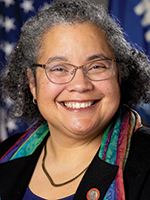
Photo of Margaret Arney
D Wisconsin Assembly · District 18 On the 2026 ballot

Rep. Margaret Arney

Compare
Total votes
243
all sessions
Attendance
99%
2 missed
Near the chamber average
With party
96%
of cast votes
Near the chamber average
Bipartisan score
2%
crosses aisle rarely
Near the chamber average
Sponsored
373
bills & resolutions
Near the chamber average
Committees
4
assignments
373 bills and resolutions

Sponsored bills

Total
373
Primary
373
Co-sponsor
0
This page
373
matching current filters
Primary AB 828
Failed · Wisconsin Assembly · Lead sponsor
Relating to: grants to school counselors, granting rule-making authority, and making an appropriation. (FE)

Maddy summaryAB 828 creates a new program to provide grants to licensed school counselors in Wisconsin for mental and behavioral health training. Starting in the 2026-27 school year, the Department of Public Instruction will award these grants to cover costs related to continuing education in this field. The bill appropriates $2 million for the program in the 2026-27 fiscal year. It requires the department to develop rules to administer the grants, targeting counselors who hold a specific state license under Wisconsin Administrative Code § PI 34.059.

Failed Mar 23, 2026 0 co-sponsors
Primary AB 875
Failed · Wisconsin Assembly · Lead sponsor
Relating to: county conservation staff for climate change resiliency purposes and making an appropriation. (FE)

Maddy summaryAB 875 creates a new funding line for county conservation staff focused on climate change resiliency. It directly affects counties that have approved land and water conservation plans and choose to allocate matching funds. The bill adds "climate change personnel" as a specific budget item under soil and water management, requiring counties to specifically request funding for these roles in their annual grant applications to the Department of Agriculture. This changes how counties can use state grants by mandating explicit requests for climate-focused staff positions within their conservation planning process. The bill appropriates $1.8 million for the 2026-27 fiscal year for this purpose.

Failed Mar 23, 2026 0 co-sponsors
Primary AB 862
Failed · Wisconsin Assembly · Lead sponsor
Relating to: consideration of climate change in certain local plans and making an appropriation. (FE)

Maddy summaryAB 862 creates a state grant program to help local governments (counties, cities, towns, and regional planning commissions) cover the full cost of including climate change considerations in specific planning documents. The bill requires these local governments to consider climate change effects in comprehensive plans, community health improvement plans, and hazard mitigation plans to the extent practicable. Funding for the grants comes from a new state appropriation, with the department determining the grant amount based on the cost of climate considerations for each plan.

Failed Mar 23, 2026 0 co-sponsors
Primary AB 859
Failed · Wisconsin Assembly · Lead sponsor
Relating to: the reimbursement rate for special education costs and school age parents programs and making an appropriation. (FE)

Maddy summaryAB 859 adjusts the state reimbursement rate for special education and school-age parent program costs. It sets the reimbursement rate at 42% of eligible costs for the 2025-26 school year, increasing to 45% for the 2026-27 school year and all subsequent years. The bill applies to costs covered under sections 115.88(1m)-(3), (6), (8), 115.93, and 118.255(4), which include services for students in hospitals, convalescent homes, and school programs. This change directly affects school districts and programs providing these services by altering the state's financial contribution toward their expenses. The bill amends statutes to ensure state funds are distributed according to these revised percentages.

Failed Mar 23, 2026 0 co-sponsors
Primary AB 872
Failed · Wisconsin Assembly · Lead sponsor
Relating to: the Energy Innovation Grant Program and making an appropriation. (FE)

Maddy summaryAB 872 creates a new Energy Innovation Grant Program to fund projects advancing clean energy technologies. It allocates $10 million annually for the 2025-26 and 2026-27 fiscal years, directly supporting the Office of Energy Innovation within the Public Service Commission. The program allows the agency to distribute grants for innovative energy solutions, with no specific project types or recipient criteria detailed in the bill. This is a funding measure with no voting record yet, as the bill was introduced on January 16, 2026.

Failed Mar 23, 2026 0 co-sponsors
Primary AB 844
Failed · Wisconsin Assembly · Lead sponsor
Relating to: creating a stretch energy code. (FE)

Maddy summaryAB 844 allows cities, counties, villages, and towns to adopt stricter energy efficiency standards for new buildings than the state's baseline code, provided they follow a state-developed "stretch energy code." Local governments can choose to implement either residential or commercial components of this code, which must exceed current state minimums. The state must create the stretch energy code by December 2026 through a working group including energy experts, climate nonprofits, and municipalities with climate plans. This directly affects local building regulations without changing the state's baseline requirements.

Failed Mar 23, 2026 0 co-sponsors
Primary AB 857
Failed · Wisconsin Assembly · Lead sponsor
Relating to: climate change scholarships and making an appropriation. (FE)

Maddy summaryAB 857 creates a climate change scholarship program funding $5 million annually for Wisconsin students enrolled in climate-related academic programs at eligible colleges and universities (including UW System, technical colleges, tribal colleges, or private nonprofits). It requires scholarships to be split equally between merit-based and need-based awards, with a $5,000 annual limit per student. The program is funded through a dedicated appropriation in the state budget, administered by the Higher Educational Aids Board. Students with unresolved child support liens may be excluded unless they provide approved payment plans.

Failed Mar 23, 2026 0 co-sponsors
Primary AB 867
Failed · Wisconsin Assembly · Lead sponsor
Relating to: on-bill financing of energy improvements and granting rule-making authority. (FE)

Maddy summaryAB 867 creates a new program allowing public utilities to finance energy improvements (like solar panels or insulation) at residential properties. Utilities would cover the upfront costs and recover them over time by adding a small, regular charge to the homeowner's utility bill. The Public Service Commission must develop rules to govern this program. This directly affects homeowners seeking energy upgrades and the utilities offering this financing option.

Failed Mar 23, 2026 0 co-sponsors
Primary AB 853
Failed · Wisconsin Assembly · Lead sponsor
Relating to: funding for certain research positions at the University of Wisconsin-Madison and making an appropriation. (FE)

Maddy summaryAB 853 allocates $200,000 annually for the 2025-26 and 2026-27 fiscal years to fund two full-time research positions at the University of Wisconsin-Madison focused on agriculture and climate change. The positions must be filled using existing vacant research roles (not creating new ones), assigned to the university's extension division, and contribute to increasing the total number of research positions at UW-Madison. The bill modifies the state budget to add this funding under existing appropriations for the University of Wisconsin System. It does not create new positions but directs existing resources toward climate science research in agriculture through UW-Madison's extension program.

Failed Mar 23, 2026 0 co-sponsors
Primary AB 855
Failed · Wisconsin Assembly · Lead sponsor
Relating to: synthetic digital representations and providing a penalty.

Maddy summaryAB 855 prohibits creating and sharing synthetic digital representations (like AI-generated images, videos, or audio) that use someone's recognizable personal characteristic (face, voice, etc.) without their consent, appear authentic to a reasonable person, and are intended to coerce, harass, intimidate, or defraud for monetary gain. It classifies unauthorized use for coercion/harassment as a Class A misdemeanor and for financial gain as a Class I felony. Key exceptions include tech providers (protected under Section 230), newsworthy content, and clear disclaimers like "This content generated by AI" in the media itself. The law directly affects individuals whose likenesses are misused without consent and aims to prevent non-consensual deepfakes used for harm.

Failed Mar 23, 2026 0 co-sponsors
Showing 81 to 90 of 373 bills
Previous 1 … 8 9 10 … 38 Next