

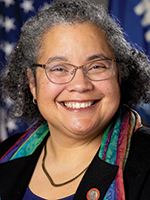
Photo of Margaret Arney
D Wisconsin Assembly · District 18 On the 2026 ballot

Rep. Margaret Arney

Compare
Total votes
243
all sessions
Attendance
99%
2 missed
Near the chamber average
With party
96%
of cast votes
Near the chamber average
Bipartisan score
2%
crosses aisle rarely
Near the chamber average
Sponsored
373
bills & resolutions
Near the chamber average
Committees
4
assignments
373 bills and resolutions

Sponsored bills

Total
373
Primary
373
Co-sponsor
0
This page
373
matching current filters
Primary AB 945
Failed · Wisconsin Assembly · Lead sponsor
Relating to: residency requirement for purposes of voting.

Maddy summaryAB 945 reduces the residency requirement for voting in Wisconsin from 28 consecutive days to 10 days before an election. It directly affects voters who move within the state, allowing those who meet the 10-day residency at a new address to vote there instead of their previous location. Key provisions include amending statutes to reflect the shorter residency period for general voting, presidential elections (where voters with less than 10 days' residency can still vote for president only), and military voter extensions. The bill also updates registration forms and affidavits for voters meeting the revised residency threshold.

Failed Mar 23, 2026 0 co-sponsors
Primary AB 920
Failed · Wisconsin Assembly · Lead sponsor
Relating to: automatic voter registration. (FE)

Maddy summaryAB 920 automatically registers eligible voters for state elections when they interact with the Department of Transportation (e.g., renewing a driver’s license or ID card). It requires the election commission to match DOT data (including name, address, date of birth, and verified citizenship proof) with existing voter records. If someone appears eligible but isn’t registered, they’re added to the voter list with a multilingual notice explaining how to opt out. Individuals can request exclusion from the list at any time, and the commission must verify eligibility before re-registering someone previously removed. The bill directly affects voters who use state-issued licenses or IDs but does not change voter eligibility requirements.

Failed Mar 23, 2026 0 co-sponsors
Primary AB 921
Failed · Wisconsin Assembly · Lead sponsor
Relating to: cost-sharing cap on insulin.

Maddy summaryAB 921 establishes a $35 monthly cap on out-of-pocket costs for insulin under disability insurance policies and self-insured health plans. It directly affects people with diabetes who rely on these specific insurance types for insulin coverage. The bill prohibits insurers from charging more than $35 for a one-month supply of insulin, covering all cost-sharing elements like deductibles and copays. This policy change applies to existing coverage requirements without altering other insurance benefits or mandates. The bill is pending in the 2026 Wisconsin Legislature.

Failed Mar 23, 2026 0 co-sponsors
Primary AB 944
Failed · Wisconsin Assembly · Lead sponsor
Relating to: grants for the purchase of election supplies and equipment and making an appropriation. (FE)

Maddy summaryAB 944 creates a state grant program to fund municipalities' purchases of election supplies and equipment, such as electronic poll books and accessibility tools. It allocates $5 million biennially (split equally for 2025-26 and 2026-27), with funding amounts tiered by municipal population size: up to $2.5 million for cities over 250,000, $1 million for 100,000-250,000, $500,000 for 50,000-100,000, and $250,000 for smaller cities. Municipalities must apply 180 days before elections and agree to random inspections of grant-funded equipment, with a minimum $250 grant per recipient. The bill directly affects all cities and towns in the state based on their population, providing targeted funding for election infrastructure.

Failed Mar 23, 2026 0 co-sponsors
Primary AB 974
Passed · Wisconsin Assembly · Lead sponsor
Relating to: a public affairs network trust fund, grants to the WisconsinEye Public Affairs Network, and making an appropriation. (FE)

Maddy summaryAB 974 establishes a permanent "public affairs network fund" to provide annual grants to WisconsinEye, the public affairs network broadcasting state government proceedings. The bill creates a new trust fund using state appropriations, donations, and interest earnings, which will fund WisconsinEye’s operating costs for live broadcasts, civic events, and free online archives of unedited government proceedings. WisconsinEye must meet specific requirements, including appointing legislative designees to its board, focusing coverage on official government business, and providing continuous free public access to broadcasts and archives. If WisconsinEye ceases operations, it must repay all grant funds to the state and transfer its archives to the state historical society.

Passed Mar 23, 2026 0 co-sponsors
Primary AB 987
Failed · Wisconsin Assembly · Lead sponsor
Relating to: the purpose statement for the statutory grant of local zoning authority.

Maddy summaryAB 987 amends a state statute to update the purpose statement that local governments must follow when creating zoning regulations. The bill adds specific goals including promoting solar/wind energy access, protecting groundwater, encouraging diverse housing types, advancing "complete streets" for all users, and preserving burial sites. These changes require cities to consider these factors when developing zoning rules that affect land use, housing, transportation, and environmental protection. The bill directly impacts local zoning authorities and the communities they serve by shaping how land development is regulated.

Failed Mar 23, 2026 0 co-sponsors
Primary AB 985
Failed · Wisconsin Assembly · Lead sponsor
Relating to: levy increase limits in political subdivisions with qualifying parking lot redevelopment. (FE)

Maddy summaryAB 985 adjusts how cities and towns calculate property tax increases when redeveloping parking lots into commercial or residential buildings. It specifically applies to political subdivisions (like cities) that convert at least 40% of a parcel's paved parking area into new construction, such as buildings. The key change adds a 50% boost (multiplying by 1.5) to the property tax value increase from these parking lot redevelopments when calculating annual tax growth limits. This adjustment applies to all qualifying projects, with separate rules for certain tax increment districts (TIDs) created after 2024.

Failed Mar 23, 2026 0 co-sponsors
Primary AB 989
Failed · Wisconsin Assembly · Lead sponsor
Relating to: minority health grants.

Maddy summaryAB 989 creates annual grants of up to $50,000 per year to community health organizations serving economically disadvantaged minority groups. The bill requires recipients to provide 50% in matching funds (cash or in-kind) and prioritizes non-federally qualified health centers and providers offering maternal/child health services. These grants, funded from a specific state appropriation account, aim to improve health outcomes for underserved minority populations through direct community health programs. The legislation directly affects community health providers and minority-serving organizations eligible to apply for these state-funded grants.

Failed Mar 23, 2026 0 co-sponsors
Primary AB 986
Failed · Wisconsin Assembly · Lead sponsor
Relating to: levy increase limits in political subdivisions with qualifying infill housing development. (FE)

Maddy summaryAB 986 modifies property tax valuation rules for local governments (like cities and towns) that build qualifying infill housing projects. It defines "qualifying infill housing" as projects adding 2-6 new homes on older residential parcels (with 90% of the area developed for 10+ years), using existing infrastructure, and increasing total units. The bill changes how new construction value affects annual tax levy limits by including 90% of new property value in tax incremental districts (TIDs) and excluding removed improvements from these calculations. This adjustment aims to ease tax levy constraints for municipalities developing such housing without altering tax rates themselves.

Failed Mar 23, 2026 0 co-sponsors
Primary AB 976
Failed · Wisconsin Assembly · Lead sponsor
Relating to: changes to the low-income housing tax credit. (FE)

Maddy summaryAB 976 clarifies how tax credits for low-income housing projects are claimed by business entities. It modifies rules so partnerships, limited liability companies, and tax-option corporations cannot claim the credit directly; instead, their members or shareholders (including insurers who are part of such entities) may claim it based on the entity's eligible costs. The bill requires entities to calculate and distribute credit amounts to members/shareholders, with specific allocation rules for ownership interests or written agreements. It directly affects housing developers, investors, and insurers involved in low-income housing projects financed through tax-exempt bonds in the state. The changes standardize credit allocation across multiple tax code sections without altering eligibility or credit amounts.

Failed Mar 23, 2026 0 co-sponsors
Showing 111 to 120 of 373 bills
Previous 1 … 11 12 13 … 38 Next