

Maddy summaryThis bill establishes a new basic health plan for individuals with household incomes below 200 percent of the poverty line and creates a purchase option program allowing eligible people with higher incomes to buy coverage through the state program instead of private insurance. The program would offer benefits similar to existing state coverage, include tax credits for eligible participants, and set premium rates comparable to managed care plans while requiring federal waivers to implement. It also directs the creation of a state-based insurance exchange where individuals can access these purchase options and grants officials authority to create rules needed for implementation. The bill requires a report on federal waiver status and economic analyses by March 2027 before the program can be fully launched.
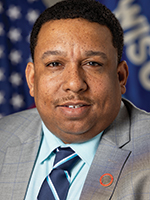
Rep. Russell Goodwin
Sponsored bills
Maddy summaryThis bill establishes a state-based health insurance exchange and provides funding for its operation. It requires the state insurance commissioner to set up an exchange that joins the federal platform by 2029 and transitions to a fully state-run system by 2030. The legislation creates a new fee structure where insurers using the exchange pay a 0.5 percent charge on premiums during the federal platform phase, with different rates applying after the transition. Additionally, it sets rules for how unspent funds from the exchange program must be handled at the end of each fiscal year.
Maddy summaryThis bill expands the Wisconsin attorney general's authority to file civil lawsuits on behalf of the state against individuals or entities accused of violating civil rights in housing, employment, education, and public accommodations. It allows the attorney general to investigate these potential violations by requiring sworn statements, accessing relevant documents, and issuing subpoenas to gather information. If a violation is found, the attorney general can seek court orders to stop the illegal conduct, recover investigation costs, and impose civil penalties of up to $50,000 for first offenses or $100,000 for subsequent violations within seven years. The bill also permits the attorney general to accept voluntary compliance agreements as an alternative to litigation, though breaking such agreements would still be treated as a violation subject to penalties.
Maddy summaryThis bill prohibits employers from including clauses in employment contracts that require former employees to refrain from speaking negatively about their former employers after leaving the job. The law declares such nondisparagement provisions illegal, void, and unenforceable because they impose an unreasonable restraint on trade. Employers must also post a notice in conspicuous locations and on their websites informing current and former employees that these clauses are not legally binding. The restrictions apply to contracts entered into, extended, modified, or renewed on or after the bill's effective date.
Maddy summaryThis bill creates a new Office of Civil Legal Aid overseen by a nine-member Civil Legal Aid Board to provide legal representation for residential tenants facing eviction. The legislation establishes a right to appointed counsel at state expense for tenants in eviction actions, requiring landlords to include notices about this right in rental agreements and eviction notices. A nine-member board, appointed by the state supreme court with at least five being licensed attorneys, would oversee program operations, manage budgets, and appoint lawyers to represent tenants who request assistance. The bill also authorizes funding for the office and sets up procedures for tenants to request appointed counsel by appearing in court or contacting the clerk before the eviction hearing date.
Maddy summaryThis bill adjusts how Wisconsin calculates and distributes state funding for special education costs and general school aid. It modifies the reimbursement rate for special education expenses, allowing the state to distribute up to 100 percent of eligible costs rather than a lower fixed percentage. The legislation also increases the general school aid appropriation for the 2026-27 fiscal year by approximately $446 million to support public school districts. These changes directly affect school districts and the state Department of Public Instruction by altering how funds are allocated and calculated for educational programs.
Maddy summaryThis bill amends Wisconsin statutes to increase penalties for repeat offenders convicted of operating a motor vehicle while intoxicated. It directly affects individuals with two or more prior DWI convictions within a 10-year period, as well as those with a lifetime history of alcohol-related driving offenses. The key changes include mandating longer license revocations ranging from one to two years, adjusting fine amounts, and establishing specific eligibility timelines for obtaining occupational licenses after revocation periods. The legislation also clarifies how prior convictions and suspensions are counted toward triggering these enhanced penalties, while allowing counties to offer reduced minimum jail sentences if offenders successfully complete alcohol and drug treatment programs.
Maddy summaryThis bill updates Wisconsin statutes to allow hospitals, fire stations, emergency medical services stations, and law enforcement agencies to install newborn infant safety devices for surrendering babies. The law defines these devices as wall-mounted units with separate exterior and interior access points and requires them to be monitored 24 hours a day with surveillance cameras. It also permits parents unable to reach a designated surrender location to call 911 for assistance in relinquishing custody of their newborn. The bill establishes specific operational requirements for facilities that choose to use these devices, including regular physical checks and alarm system testing.
Maddy summaryAB 1178 amends Wisconsin statutes to update definitions and procedures for regional transit authorities, ensuring they are recognized as eligible entities for various state programs including highway relocation orders, right-of-way applications, and employer classifications for employee benefits. The bill creates new funding mechanisms by establishing appropriation accounts to collect and distribute taxes imposed by transit authorities that choose to levy them, with a portion of those revenues retained for administrative costs. Additionally, the legislation clarifies which organizations qualify as municipalities and employers under existing laws, explicitly including transit authorities created under the specified chapter while excluding cultural arts districts from certain employer definitions. This bill does not mandate tax collection but provides the legal framework for transit authorities to adopt resolutions imposing taxes if they choose to do so.
Maddy summaryThis bill allows licensed respite care provider homes to temporarily house runaway children with the consent of both the child and their parent or guardian. It establishes procedures for notifying child welfare agencies when a runaway is found in such a home without parental consent and outlines how courts can designate these homes for temporary care after a child is taken into custody. The legislation applies to homes licensed under specific state statutes and requires oversight by county departments or child welfare agencies.