

Maddy summaryAB 737 allows municipalities to establish neighborhood improvement districts that can impose special property charges to fund infrastructure directly related to residential development within those neighborhoods. Property owners in designated districts would pay these charges, which can be collected in installments over time and included in regular tax bills, rather than requiring delinquency. The bill requires districts to specify exactly which infrastructure projects the funds will support and how charges are calculated per parcel, while allowing exemptions from notice requirements if a single owner holds all properties in the district. This legislation affects local property owners and municipalities by creating a new mechanism for financing neighborhood-specific infrastructure improvements through targeted assessments.
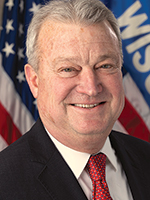
Rep. Joel Kitchens
Sponsored bills
Maddy summaryAB 822 modifies Wisconsin's local roads improvement program for town road projects. It exempts projects under $65,000 from requiring registered engineer certification, sets a minimum 10-year design life for funded improvements (requiring professional review for shorter assessments), and prevents counties from contracting with towns for road work they've already estimated. The bill creates new deadlines for towns to submit applications to county facilitators and establishes committees to review funding requests. These changes directly affect towns seeking road funding, counties managing projects, and county highway commissioners handling contracts.
Maddy summaryAB 1009 creates a framework for local governments to establish "tourism promotion improvement districts" to fund tourism marketing and infrastructure. It directly affects hotels and motels within designated districts, requiring at least 50% of room owners to petition for creation and approve an operating plan detailing improvements, activities, and financing. Key provisions include setting a 5-year maximum assessment period (10 years for renewals), capping fees for payment processing at 5%, and mandating public hearings before district approval. The bill enables districts to fund tourism promotions and infrastructure (like visitor centers) through business assessments, with all details of costs and benefits outlined in the approved operating plan.
Maddy summaryAB 1019 allows vehicle owners to purchase an annual state park admission receipt when registering or renewing their vehicle license. It adds a line on vehicle registration forms where owners can choose to pay an additional fee (with discounts for seniors or those with existing park passes). The collected fees are deposited quarterly into the conservation fund, specifically for state parks, recreation areas, and forest lands. This affects all vehicle owners in the state during registration, streamlining park access without requiring separate purchases.
Maddy summaryAJR 139 is a symbolic resolution (not a law) reaffirming Wisconsin’s longstanding sister-state relationship with Taiwan, marking its 40th anniversary in 2026. It supports the U.S. Taiwan Relations Act, encourages Wisconsin to explore establishing a representative office in Taiwan to boost trade and cultural exchanges, and backs efforts to advance a U.S.-Taiwan Bilateral Trade Agreement. The resolution highlights Wisconsin’s economic ties with Taiwan, including $380 million in exports to Taiwan in 2023. It does not create new legal obligations but formally expresses legislative support for strengthening Wisconsin-Taiwan relations.
Maddy summaryAJR 127 is a proposed constitutional amendment that would prohibit the governor from using a partial veto to create or increase any tax or fee. If approved by voters, it would amend the state constitution to restrict the governor's partial veto power specifically regarding tax or fee increases. This change would directly affect the governor's authority when reviewing budget bills containing tax or fee provisions. The amendment is currently moving toward a voter referendum in November 2026, following legislative approval. It does not change current law but would require voter ratification to become effective.
Maddy summaryAB 848 creates an Autonomous Driving Safety Board within the Department of Transportation to regulate autonomous vehicle operations on state highways. Operators must obtain a board-approved permit, requiring a public hearing, a two-thirds board vote for approval, and adherence to safety standards like maintaining financial responsibility for damages. The bill sets a lower blood alcohol limit (0.02%) for autonomous vehicle operators and prohibits operation on interstate highways. Violating the permit requirement carries a $1,000 penalty, while operators must submit annual safety reports detailing traffic interactions and incident data.
Maddy summaryAB 885 limits how cities can regulate land development outside their official boundaries. It prevents municipalities from denying approval for land plats or surveys based solely on the proposed land use, unless the denial follows specific, pre-approved rules related to: (1) land use itself, (2) public improvements, (3) land division standards, or (4) annexation agreements. This directly affects developers and landowners seeking to build in areas adjacent to cities but not yet within city limits. The bill ensures cities can only block development for clearly defined reasons, not arbitrary concerns about how land might be used.
Maddy summaryAJR 132 is a commemorative resolution honoring George Meyer, former Wisconsin Secretary of the Department of Natural Resources (DNR), recognizing his decades of service to conservation and public policy. It details his work on wetland protections, tribal rights negotiations, land acquisitions, and environmental advocacy during his 1993-2001 DNR leadership, without creating new laws or affecting any policies. The resolution expresses the Wisconsin Legislature's gratitude for his legacy and extends condolences to his family. As a purely ceremonial measure, it has no direct policy impact or effect on citizens or programs.
Maddy summaryAB 948 requires Wisconsin public school boards to adopt policies by July 1, 2027, prohibiting students from using personal wireless devices (like cell phones, tablets, and laptops) during the entire school day - including instruction, recess, transitions, and lunch - except for specific exceptions. These exceptions include emergencies, health management, accommodations under IEPs or 504 plans, and teacher-approved educational use. Schools must annually provide students with a copy of the policy and submit it to the Department of Justice by October 1, 2027, with annual updates thereafter. The bill affects all public school students and boards in Wisconsin, taking effect July 1, 2027.