Issue · Technology

Technology

Every technology bill, vote, and legislator stance in Wisconsin, automatically classified by Maddy, our AI policy reader.

Total bills
109
2025-2026 Regular Session
Top supporter
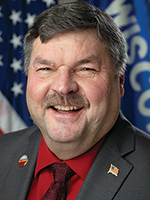
Rob Swearingen
83% support rate
Top opponent
Jodi Habush Sinykin
17% support rate
Ranked legislators
10
5 support · 5 oppose
Key legislators

Who's moving technology in Wisconsin

Legislators moving technology in Wisconsin
Legislator Party Stance Support rate Votes
Rob Swearingen
Rob Swearingen House · District 34
R
Strong +
83% 65
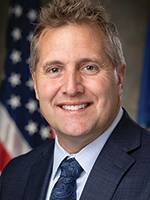
Shannon Zimmerman
Shannon Zimmerman House · District 30
R
Strong +
82% 54
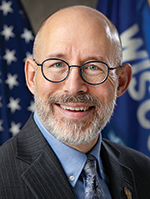
Dave Maxey
Dave Maxey House · District 83
R
Strong +
82% 63
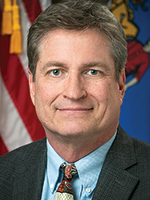
Will Penterman
Will Penterman House · District 38
R
Strong +
82% 61
Scott Allen
Scott Allen House · District 82
R
Strong +
82% 59
Jodi Habush Sinykin
Jodi Habush Sinykin Senate · District 8
D
Strong −
17% 42
Tim Carpenter
Tim Carpenter Senate · District 3
D
Strong −
17% 42
Kelda Roys
Kelda Roys Senate · District 26
D
Strong −
17% 40
Jamie Wall
Jamie Wall Senate · District 30
D
Strong −
17% 42
Chris Larson
Chris Larson Senate · District 7
D
Strong −
17% 42
Showing 81–90 of 109 bills

All technology bills

failed · Wisconsin · Assembly Mar 23, 2026

AB 384: Relating to: virtual currency kiosks.

AB 384 regulates virtual currency kiosks (machines that exchange cash for cryptocurrency or vice versa) by requiring operators to obtain state licenses, display a specific fraud warning before every transaction, and verify customer identities using government ID and photos. It limits daily transactions to $1,000 in cash, caps fees at $5 or 3% of the transaction amount, and mandates refunds for fraud victims who report incidents within 30 days. The law directly affects kiosk operators (who must comply with licensing and ID rules) and customers (who receive fraud protections and transaction limits). These provisions aim to reduce scams and financial risks associated with in-person crypto exchanges.
Sub-Topics Emerging Technology
failed · Wisconsin · Assembly Mar 23, 2026

AB 378: Relating to: prohibiting the state from sharing data with the federal government that contains personally identifiable information if the data is not first masked or otherwise anonymized and authorizing a civil cause of action for negligent violations of that prohibition. (FE)

AB 378 requires all state agencies to mask or anonymize personally identifiable information (PII) before sharing it with the federal government, directly affecting state agencies handling sensitive data like health records or social services. The bill allows limited exceptions for sharing unmasked data when required by law, for legislative constituent services, or for court operations. It also creates a civil lawsuit option for individuals harmed by negligent violations, allowing recovery of actual damages, up to $1,000 in punitive damages, and attorney fees. The law aims to strengthen data privacy protections by limiting federal access to identifiable state records without explicit safeguards.
Sub-Topics Consumer Data Protection Data Privacy Tags Privacy
failed · Wisconsin · Assembly Mar 23, 2026

AB 172: Relating to: consumer data protection and providing a penalty. (FE)

AB 172 creates a new consumer data protection law by defining key terms like "personal data," "biometric data," "sale of personal data," and "consumer" in section 100.80 of the statutes. This bill directly affects businesses that collect or process personal data of state residents, requiring them to follow standardized handling practices for such data. The law includes penalty provisions for violations, though specific penalty amounts and enforcement details are not provided in the available bill text.
vetoed · Wisconsin · Assembly May 13, 2026

AB 326: Relating to: local grant writing and compliance assistance. (FE)

AB 326 creates a program providing grants to small local governments (populations under 7,500) to cover costs for grant writing and compliance assistance services. Grants up to $5,000 can be used for securing funding related to public works, transportation infrastructure, public safety, utility costs, or cybersecurity projects. The program requires a simple application listing only basic details (project purpose, contact info, and estimated costs) and prioritizes first-time applicants. A report evaluating the program must be submitted by December 2028.
Sub-Topics Cybersecurity
passed · Wisconsin · Assembly Mar 23, 2026

AB 377: Relating to: establishing English as the official state language, use of artificial intelligence or other machine-assisted translation tools in lieu of appointing English language interpreters, and use of English for governmental oral and written communication and for nongovernmental purposes. (FE)

AB 377 establishes English as the official language of the state and requires all state agencies and local governmental units (like cities, counties, and school districts) to conduct official communications in English. It allows these entities to use artificial intelligence or machine translation tools instead of hiring human interpreters for individuals with language barriers, while still requiring interpreters in specific cases like health/safety emergencies or legal proceedings. The bill permits limited exceptions for non-English communication (e.g., for teaching languages, protecting criminal defendants' rights, or complying with federal law), but prohibits restricting private language use for non-governmental purposes. This law directly affects government operations and individuals seeking services who need language assistance.
failed · Wisconsin · Assembly Mar 23, 2026

AB 208: Relating to: an income and franchise tax exemption for broadband expansion grants and for federal high-cost program funding for broadband expansion. (FE)

AB 208 creates tax exemptions for income and franchise taxes related to broadband expansion funding. It directly affects internet service providers, telecom companies, and community organizations receiving grants or federal high-cost program funds for building broadband infrastructure in the state. The bill exempts from taxation: (1) state/local/tribal/federal grants for broadband expansion, and (2) federal high-cost program funding under 47 USC 254. These exemptions apply to taxable years beginning after December 31, 2024, and prevent double-counting with other existing tax provisions.
failed · Wisconsin · Assembly Mar 23, 2026

AB 399: Relating to: requirement for certain telecommunications providers to provide basic voice service.

AB 399 requires certain telecommunications providers serving residential customers to offer a basic voice service plan. This directly affects telecom companies that provide phone service in the state, mandating them to maintain an affordable, essential phone service option. The key provision is that providers must offer this service at a fixed, low cost to ensure accessibility for all residents, particularly in underserved communities. The bill aims to guarantee reliable communication for emergencies and daily needs without requiring new infrastructure.
failed · Wisconsin · Assembly Mar 23, 2026

AB 245: Relating to: modifying the sales and use tax exemption for qualified data centers. (FE)

AB 245 modifies the state's sales and use tax exemption for businesses operating qualified data centers. It defines a "qualified data center" as buildings (or connected buildings) owned, leased, or operated by a single business entity, designed to house server computers for processing, storing, or managing data. The bill adds provisions allowing data centers to offer rental space, utilities, and infrastructure services to tenants, while explicitly excluding cryptocurrency-related facilities from the tax exemption. This directly affects data center operators and their tenants by clarifying eligibility for tax benefits and expanding allowable services.
failed · Wisconsin · Senate Mar 23, 2026

SB 649: Relating to: banning the use of genetic software from foreign adversaries in medical and research facilities, the storage of any human genome sequencing data within the borders of a foreign adversary, and providing a penalty. (FE)

SB 649 prohibits state-funded medical and research facilities from using genetic software or operational tools developed by foreign adversaries (as defined by federal regulations), and bans storing human genome data of state residents within foreign adversary countries. It directly affects facilities receiving state or federal funds for health services or genetic research, requiring them to keep all genomic data within the state and inaccessible to foreign adversaries. Key provisions include a $10,000 penalty per violation for noncompliance, enforced by the state attorney general, with exceptions for clinical trials under federal guidelines. The bill focuses on restricting data and software access from designated foreign entities to protect genomic information.
passed · Wisconsin · Assembly Mar 23, 2026

AB 652: Relating to: various changes to the unemployment insurance law. (FE)

AB 652 updates Wisconsin's unemployment insurance law to improve accessibility and prevent fraud. It creates new "good cause" exceptions for claimants who cannot use electronic systems due to limited internet access, digital literacy challenges, or disabilities. The bill also requires employers to report job declines or missed interviews by claimants, which could affect benefit eligibility unless "good cause" is proven. Additionally, it adds a $5,000 penalty for false initial claims and clarifies rules to prevent duplicate social security disability payments. These changes directly affect unemployed workers filing claims, employers reporting job-related incidents, and the unemployment department processing claims.
Showing 81 to 90 of 109 bills
Previous 1 8 9 10 11 Next