

Issue · Housing
Housing
Every housing bill, vote, and legislator stance in Wisconsin, automatically classified by Maddy, our AI policy reader.
Total bills
108
2025-2026 Regular Session
Top supporter
Rob Kreibich
100% support rate
Top opponent
Renuka Mayadev
0% support rate
Ranked legislators
10
5 support · 5 oppose
Key legislators
Who's moving housing in Wisconsin
| Legislator | Party | Stance | Support rate | Votes |
|---|---|---|---|---|
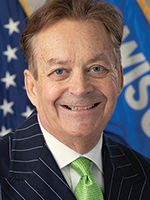
Rob Kreibich
House · District 28
|
R |
Strong +
|
100% | 38 |
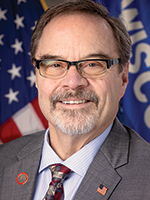
Paul Tittl
House · District 25
|
R |
Strong +
|
100% | 31 |
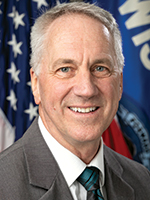
Dan Knodl
House · District 24
|
R |
Strong +
|
100% | 38 |

Lindee Brill
House · District 27
|
R |
Strong +
|
100% | 38 |
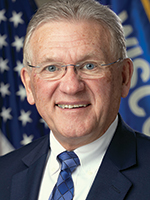
Jerry O'Connor
House · District 60
|
R |
Strong +
|
100% | 38 |

Renuka Mayadev
House · District 77
|
D |
Strong −
|
0% | 38 |

Kalan Haywood
House · District 16
|
D |
Strong −
|
0% | 34 |
Angela Stroud
House · District 73
|
D |
Strong −
|
0% | 36 |

Ben DeSmidt
House · District 65
|
D |
Strong −
|
0% | 38 |

Karen DeSanto
House · District 40
|
D |
Strong −
|
0% | 38 |
Showing 41–50 of 108
bills
All housing bills
SB 1058: Relating to: reporting positive rental payment information to credit bureaus.
SB 1048: Relating to: modifications to the property tax exemption for nonprofit organizations that sell property to low-income persons. (FE)
Topics
✓ Budget & TaxesSupports Budget & TaxesModifies property tax exemptions for nonprofits selling to low-income buyers, providing tax relief to support affordable housing initiatives through targeted tax incentives.
✓ HousingSupports HousingRequires nonprofits to develop housing for low-income buyers (below 120% AMI) via tax exemption modifications, directly advancing affordable housing access.
AB 885: Relating to: limitations on extraterritorial subdivision ordinances of incorporated municipalities.
AB 917: Relating to: a first-time home buyer purchasing assistance fund and loan program and making an appropriation. (FE)
Topics
✓ Budget & TaxesSupports Budget & TaxesBill creates a $150M appropriation for homebuyer assistance, directly funding a program through state budget spending to support first-time homebuyers.
✓ HousingSupports HousingCreates $150M interest-free loan fund for first-time homebuyers meeting income and education criteria, directly increasing affordable housing access through down payment/closing cost assistance.
AB 986: Relating to: levy increase limits in political subdivisions with qualifying infill housing development. (FE)
Topics
✓ Budget & TaxesSupports Budget & TaxesModifies property tax rules to include 90% of new development value in tax incremental districts (TIDs), strengthening local fiscal management by enabling revenue capture for infrastructure without raising existing tax burdens.
✓ HousingSupports HousingModifies tax rules to incentivize infill housing development, increasing unit density on existing infrastructure, supporting affordable housing growth through tax incremental districts.
AB 889: Relating to: creating the Wisconsin Climate Corps program, granting rule-making authority, and making an appropriation. (FE)
Topics
✓ Budget & TaxesSupports Budget & TaxesBill explicitly makes an appropriation to fund the Wisconsin Climate Corps program with specific wage/benefit requirements, directly advancing state budget allocation for climate jobs.
✓ EnergySupports EnergyBill explicitly funds weatherizing homes for energy efficiency, directly advancing energy efficiency policy as a key energy infrastructure measure.
✓ EnvironmentSupports EnvironmentBill creates climate-focused jobs including natural land restoration, energy-efficient weatherization, and community gardens - directly advancing environmental conservation and pollution reduction.
✓ HealthcareSupports HealthcareMandates gold-level health insurance for Climate Corps workers, directly expanding coverage under the program's requirements.
✓ HousingSupports HousingProvides housing stipends ($100/week) and funds home weatherization, indirectly supporting housing affordability and worker housing needs.
✓ Labor & EmploymentSupports Labor & EmploymentMandates $15/hr wage, housing stipends, and gold-level health insurance for climate corps workers, directly advancing employment standards and worker benefits through funding.
AB 976: Relating to: changes to the low-income housing tax credit. (FE)
Topics
✓ Budget & TaxesSupports Budget & TaxesClarifies tax credit allocation for low-income housing, enabling direct access for eligible entities/members, aligning with tax relief for affordable housing programs.
✓ HousingSupports HousingClarifies tax credit claiming process for low-income housing projects, enabling more efficient use of funding to support affordable housing development.
SB 848: Relating to: constructing laterals and service pipes without a landowner’s permission in the City of Milwaukee. (FE)
Sub-Topics
Landlords
AB 868: Relating to: Focus on Energy inclusion of programs promoting energy efficiency and renewable energy measures for low-income households and granting rule-making authority. (FE)
Topics
✓ Budget & TaxesSupports Budget & TaxesMandates 25% of energy efficiency funds for low-income programs, directing existing budget allocation toward essential energy cost reduction services.
✓ EnergySupports EnergyRequires 25% of energy efficiency funding for low-income renewable energy/efficiency programs, directly advancing clean energy access for vulnerable households.
✓ EnvironmentSupports EnvironmentMandates 25% energy efficiency funding for low-income households, promoting renewable energy measures and reducing energy burdens, directly advancing environmental protection through cleaner energy use.
✓ HousingSupports HousingRequires 25% of energy efficiency funding for low-income households, directly reducing energy costs and improving housing affordability for vulnerable residents.