Issue · Healthcare

Healthcare

Every healthcare bill, vote, and legislator stance in Wisconsin, automatically classified by Maddy, our AI policy reader.

Total bills
386
2025-2026 Regular Session
Top supporter
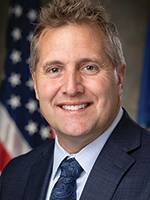
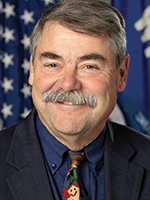
Shannon Zimmerman
79% support rate
Top opponent
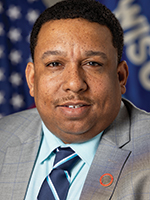
Russell Goodwin
31% support rate
Ranked legislators
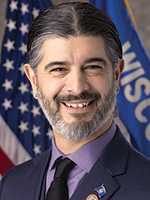
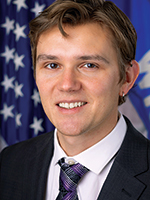
10
5 support · 5 oppose
Key legislators

Who's moving healthcare in Wisconsin

Legislators moving healthcare in Wisconsin
Legislator Party Stance Support rate Votes
Shannon Zimmerman
Shannon Zimmerman House · District 30
R
Support
79% 35
Will Penterman
Will Penterman House · District 38
R
Support
71% 41
Jeff Mursau
Jeff Mursau House · District 36
R
Support
69% 44
Chanz Green
Chanz Green House · District 74
R
Support
67% 47
Paul Melotik
Paul Melotik House · District 22
R
Support
67% 47
Russell Goodwin
Russell Goodwin House · District 12
D
Oppose
31% 42
Joe Sheehan
Joe Sheehan House · District 26
D
Oppose
33% 43
Vinnie Miresse
Vinnie Miresse House · District 71
D
Oppose
35% 46
Ryan Clancy
Ryan Clancy House · District 19
D
Oppose
38% 44
Christian Phelps
Christian Phelps House · District 93
D
Oppose
39% 47
Showing 361–370 of 386 bills

All healthcare bills

failed · Wisconsin · Senate Mar 23, 2026

SB 42: Relating to: permitting pharmacists to prescribe certain contraceptives, extending the time limit for emergency rule procedures, providing an exemption from emergency rule procedures, granting rule-making authority, and providing a penalty. (FE)

Senate Bill 42 allows pharmacists to prescribe and dispense hormonal contraceptive patches and self-administered oral hormonal contraceptives to individuals aged 18 and older. Pharmacists must follow specific procedures, including having patients complete a self-assessment questionnaire and undergo a blood pressure screening. The Pharmacy Examining Board will create rules for this process, which also requires pharmacists to report prescriptions to a patient's primary care practitioner and maintain malpractice insurance. Additionally, the bill ensures that Medical Assistance covers these contraceptive services when provided by certified pharmacists.
failed · Wisconsin · Senate Mar 23, 2026

SB 407: Relating to: grant program for an integrated mental health facility. (FE)

SB 407 creates a grant program to fund Rogers Behavioral Health's new integrated mental health facility in the Chippewa Valley. The bill requires Rogers to submit detailed certification plans for all service levels (inpatient, residential, partial hospitalization, intensive outpatient, and outpatient care) to meet state licensing requirements before receiving funds. It also mandates that the facility accept Medical Assistance recipients (Wisconsin's Medicaid program), admit involuntary patients within two years, and provide annual reports to the Department of Health Services for five years. This bill directly affects Rogers Behavioral Health and mental health patients in the Chippewa Valley region seeking comprehensive care.
Sub-Topics Medicaid Mental Health
failed · Wisconsin · Senate Mar 23, 2026

SB 282: Relating to: membership on the Board of Nursing.

SB 282 amends Wisconsin's Board of Nursing membership requirements. It specifies that the board must include 3 licensed registered nurses (RNs), 1 licensed practical nurse (LPN), 1 certified advanced practice registered nurse prescriber, 1 nurse educator, 1 additional RN or LPN, and 2 public members - all appointed for staggered 4-year terms. All nursing members must have graduated from an accredited program. The changes take effect September 1, 2026, directly affecting how the Board of Nursing is structured and who serves on it.
failed · Wisconsin · Assembly Mar 23, 2026

AB 206: Relating to: the procedure for adding federal newborn screening recommendations to the state-required newborn screenings, granting rule-making authority, and providing an exemption from emergency rule procedures. (FE)

AB 206 establishes a process for Wisconsin to add federal newborn screening recommendations to its state-required screening list. It requires the Department of Health Services to evaluate new federal recommendations within 18 months and begin rulemaking to add disorders to the screening list if deemed appropriate. The bill also mandates annual reviews of disorders not included in current screenings to assess new medical evidence and departmental capacity, with a 6-month timeline for implementing new screenings after rules are finalized. This streamlines rulemaking by exempting the department from standard emergency rule procedures, ensuring timely updates to newborn screening protocols without delaying public health protections. The bill directly affects newborns in Wisconsin by determining which genetic disorders are screened for at birth.
Sub-Topics Public Health
failed · Wisconsin · Senate Mar 23, 2026

SB 570: Relating to: a statewide Parkinson’s disease registry. (FE)

SB 570 creates a statewide registry to collect anonymized data on Parkinson’s disease and related movement disorders (parkinsonisms) in Wisconsin. Health care providers and facilities must report patient diagnosis, treatment, and outcomes to the University of Wisconsin-Madison’s Department of Population Health Sciences by a specified deadline. The registry will store this data securely, remove identifying information, and share it only for research or public health purposes with strict confidentiality safeguards. The state must publish annual reports on disease incidence and prevalence through a public website, making this data accessible to the public and researchers. This bill directly affects health care providers who must submit reports and Wisconsin residents living with Parkinson’s disease or parkinsonisms.
Sub-Topics Public Health
failed · Wisconsin · Assembly Mar 23, 2026

AB 97: Relating to: extension of eligibility under the Medical Assistance program for postpartum women. (FE)

AB 97 extends health coverage under Wisconsin's Medicaid program (Medical Assistance) for postpartum women from 60 days to 365 days after pregnancy, directly affecting pregnant and postpartum women who qualify for the program. The bill changes eligibility rules to ensure coverage continues without regard to income changes during this extended period. It also adds a provision allowing women with family incomes above 300% of the poverty line to qualify if their income is spent on medical care or health insurance premiums. This policy update aims to provide longer-term health coverage for new mothers during a critical postpartum period.
Sub-Topics Insurance Medicaid
failed · Wisconsin · Assembly Mar 23, 2026

AB 113: Relating to: sharing minors’ safety plans. (FE)

AB 113 creates a secure online portal for sharing minors' crisis safety plans between authorized organizations. It allows minors (12+ years old) to create written plans with a facilitator, including details like emergency contacts, de-escalation strategies, and what to tell first responders during mental health or behavioral crises. Minors must sign a release form agreeing to share their plan only with designated safety partners (like schools, hospitals, or police) via the portal, which expires after one year. The portal will enable real-time access for crisis response while requiring strict confidentiality and minor consent, directly affecting minors with behavioral health needs and the agencies supporting them.
failed · Wisconsin · Assembly Mar 23, 2026

AB 398: Relating to: including information about immunization waivers in enrollment or admission materials for schools, child care centers, and nursery schools.

AB 398 requires schools, child care centers, and nursery schools to include specific information about immunization waiver processes in their enrollment or admission materials. This means parents and guardians would see clear details on how to request waivers when signing up their children, rather than learning about it later. The bill standardizes this information across all covered institutions to improve transparency. It directly affects families during enrollment and the institutions managing those applications.
failed · Wisconsin · Assembly Mar 23, 2026

AB 54: Relating to: utilization management controls for antipsychotic prescription drugs under the Medical Assistance program. (FE)

AB 54 prohibits the state department from requiring prior authorization or other utilization management controls for FDA-approved antipsychotic prescription drugs under the Medical Assistance program. This directly affects Medicaid beneficiaries who rely on these medications, removing barriers to accessing prescribed antipsychotic treatments. The bill creates a new statute section explicitly stating that utilization management controls (such as step therapy or prior approval) cannot be imposed on these specific drugs. The policy change aims to streamline access to necessary antipsychotic medications without altering drug approval standards.
failed · Wisconsin · Senate Mar 23, 2026

SB 598: Relating to: coverage under the Medical Assistance program for incarcerated individuals. (FE)

SB 598 would require the state health department to seek a federal Medicaid waiver enabling coverage for incarcerated individuals in the Medical Assistance program (state Medicaid) up to 90 days before release. It specifically covers case management, medication-assisted treatment for substance use disorders, and a 30-day supply of prescription medications for those already eligible for Medical Assistance. If approved, the federal government would fund the program’s share of these services, with the state covering its portion. This bill directly affects incarcerated individuals transitioning to community care, aiming to improve continuity of health services upon release.
Sub-Topics Corrections Medicaid
Showing 361 to 370 of 386 bills
Previous 1 36 37 38 39 Next