Issue · Healthcare

Healthcare

Every healthcare bill, vote, and legislator stance in Wisconsin, automatically classified by Maddy, our AI policy reader.

Total bills
386
2025-2026 Regular Session
Top supporter
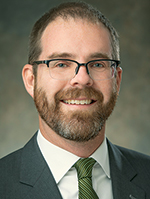
Shannon Zimmerman
79% support rate
Top opponent
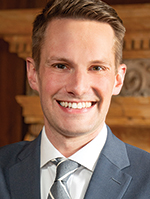
Russell Goodwin
31% support rate
Ranked legislators
10
5 support · 5 oppose
Key legislators

Who's moving healthcare in Wisconsin

Legislators moving healthcare in Wisconsin
Legislator Party Stance Support rate Decisive votes
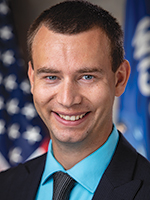
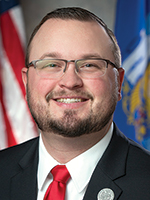
Shannon Zimmerman
Shannon Zimmerman House · District 30
R
Support
79% 14
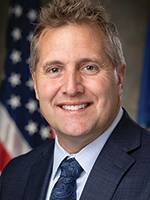
Will Penterman
Will Penterman House · District 38
R
Support
71% 17
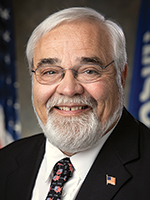
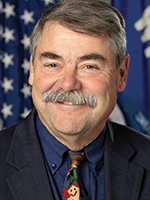
Jeff Mursau
Jeff Mursau House · District 36
R
Support
69% 16
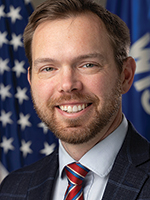
Adam Neylon
Adam Neylon House · District 15
R
Support
67% 18
Alex Dallman
Alex Dallman House · District 39
R
Support
67% 18
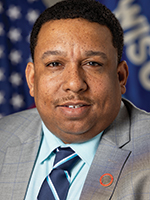
Russell Goodwin
Russell Goodwin House · District 12
D
Oppose
31% 16
Joe Sheehan
Joe Sheehan House · District 26
D
Oppose
33% 15
Vinnie Miresse
Vinnie Miresse House · District 71
D
Oppose
35% 17
Ryan Clancy
Ryan Clancy House · District 19
D
Oppose
38% 16
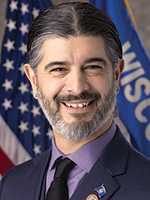
Alex Joers
Alex Joers House · District 81
D
Oppose
39% 18
Showing 241–250 of 386 bills

All healthcare bills

failed · Wisconsin · Assembly Mar 23, 2026

AB 114: Relating to: clinician initiation of emergency detention of a minor and providing a penalty.

AB 114 allows licensed clinicians (such as psychologists, psychiatrists, or clinical social workers) in counties with fewer than 750,000 residents to initiate emergency detentions for minors who are mentally ill, drug-dependent, or developmentally disabled. Clinicians must complete county-approved training, document specific reasons (including why detention is the least restrictive option), and obtain county department approval before initiating detention. The county department must arrange transport to a treatment facility and file documentation with the court within 24 hours. This bill does not apply to large counties (750,000+ population) and replaces existing law for clinician-initiated detentions.
Sub-Topics Mental Health
failed · Wisconsin · Assembly Mar 23, 2026

AB 303: Relating to: 988 Suicide and Crisis Lifeline grants. (FE)

AB 303 creates a new state grant program to fund crisis intervention services for people contacting the national 988 Suicide and Crisis Lifeline from within the state. The bill requires the state department to award grants to organizations providing crisis care coordination to individuals who call or text 988. This directly affects crisis service providers that serve callers within the state's geographic boundaries. The key mechanism is a state-funded grant program administered by the department to support these organizations, ensuring consistent access to crisis care for 988 users. The bill does not change the 988 hotline's operation but provides state funding to support local crisis response services.
Sub-Topics Mental Health
failed · Wisconsin · Assembly Mar 23, 2026

AB 631: Relating to: use of public lands to provide temporary residence for the homeless and providing a penalty. (FE)

AB 631 creates "structured camping facilities" on designated public lands (excluding parks and fairgrounds) to provide temporary housing for homeless individuals and families. Local governments or the state department can designate these facilities, requiring residents to complete mental health or substance use evaluations, with a waiting list system when capacity is reached. The bill also establishes penalties for unauthorized camping on public property, classifying second or subsequent violations as Class C misdemeanors. It mandates data collection on facility usage, including occupancy and referrals for services, while ensuring safety and sanitation at all sites.
failed · Wisconsin · Assembly Mar 23, 2026

AB 547: Relating to: regulating medical cannabis, the prescription drug monitoring program, and providing a penalty. (FE)

AB 547 establishes a new Office of Medical Cannabis Regulation within Wisconsin's Department of Health Services to oversee medical cannabis programs. It defines "medical cannabis product" consistently across state laws and adds protections preventing courts from denying child custody based solely on lawful medical cannabis use or registry enrollment. The bill also updates local ordinances to clarify restrictions on marijuana possession, ensuring penalties don't apply to medical cannabis users under specific circumstances. These changes aim to create a clearer regulatory framework while addressing legal inconsistencies in existing statutes.
Sub-Topics Prescription Drugs
failed · Wisconsin · Senate Mar 23, 2026

SB 72: Relating to: creating an individual income tax deduction for certain income earned by an individual from the practice of psychiatry or from providing psychiatric or mental health services. (FE)

SB 72 creates a state income tax deduction for psychiatrists and psychiatric mental health nurse practitioners who work in Wisconsin. It allows eligible individuals to deduct up to $100,000 annually from their taxable income if they practice outside medically underserved areas, or up to $200,000 if they work in such areas (as defined by state law). To qualify, professionals must claim the deduction within their first two years of practicing in Wisconsin or returning to the state, and can only use it for up to five consecutive years. The bill directly affects licensed psychiatrists and certified psychiatric mental health nurse practitioners who meet the location and eligibility requirements.
vetoed · Wisconsin · Assembly May 13, 2026

AB 73: Relating to: statutory recognition of specialized treatment court and commercial court dockets.

AB 73 creates a new statute (Chapter 798) to formally recognize two types of specialized court programs in Wisconsin: treatment courts and commercial courts. Treatment courts (e.g., drug, mental health, veterans courts) address underlying issues like addiction to reduce recidivism through treatment and supervision, while commercial courts handle business disputes more efficiently. The bill establishes these dockets within the existing court system, requiring judges to receive specialized training and operate using graduated sanctions and rewards. It directly affects courts handling these case types, aiming to improve outcomes for participants and streamline dispute resolution.
signed · Wisconsin · Senate Dec 10, 2025

SB 190: Relating to: ratification of the Respiratory Care Interstate Compact. (FE)

SB 190 ratifies Wisconsin's participation in the Respiratory Care Interstate Compact, enabling respiratory therapists licensed in Wisconsin to practice in other participating states without obtaining new licenses. This bill directly affects respiratory care practitioners and healthcare facilities that employ them, as it establishes reciprocal licensing recognition across states. Key provisions amend Wisconsin statutes to recognize "compact privileges" for respiratory therapists certified under the compact, streamlining practice across state lines. The law requires the state medical examining board to appoint a commission to administer the compact, aligning Wisconsin with similar agreements for healthcare professionals.
failed · Wisconsin · Senate Mar 23, 2026

SB 552: Relating to: funding for the birth defect prevention and monitoring system and making an appropriation. (FE)

SB 552 increases annual funding for Wisconsin's birth defect prevention and monitoring system from $95,000 to $500,000. It also authorizes 3.3 additional full-time staff positions at the Department of Health Services to maintain this system. The bill allocates an extra $405,000 for fiscal years 2025-26 and 2026-27 from the state health services budget. This directly affects the Department of Health Services, which will use the funds to strengthen birth defect monitoring and prevention efforts. The changes are purely fiscal, with no new policy requirements beyond the specified funding and staffing adjustments.
Sub-Topics Appropriations
failed · Wisconsin · Assembly Mar 23, 2026

AB 563: Relating to: requiring hospitals and ambulatory surgical centers to implement policies to prevent exposure to surgical smoke in operating rooms. (FE)

AB 563 requires hospitals and ambulatory surgical centers to implement policies preventing exposure to surgical smoke during procedures. It mandates the use of smoke evacuation systems (equipment capturing smoke at the source) in operating rooms for any surgery likely to generate surgical smoke - defined as gaseous byproducts from tools like lasers or scalpels. Exceptions allow providers to skip the system if they determine it's unnecessary for a specific procedure. The bill directly affects healthcare facilities and surgical staff by establishing a concrete safety standard for smoke exposure.
Sub-Topics Workplace Safety
failed · Wisconsin · Assembly Mar 23, 2026

AB 62: Relating to: health care costs omnibus, granting rule-making authority, making an appropriation, and providing a penalty. (FE)

AB 62 establishes a Prescription Drug Affordability Review Board to address prescription drug costs. The board, with members representing pharmaceutical companies, health insurers, healthcare providers, and the public, must meet quarterly and avoid conflicts of interest. Key provisions include creating a $500,000 annual grant program for healthcare providers to develop tools showing patients the cost of prescriptions (Section 601.415), launching a diabetes medication pilot project (Section 601.41), and repealing a section requiring copayments for certain Medicaid services (Section 7). This bill directly affects insurers, pharmacies, drug manufacturers, and healthcare providers who must disclose drug costs to patients.
Showing 241 to 250 of 386 bills
Previous 1 … 24 25 26 … 39 Next