Issue · Healthcare

Healthcare

Every healthcare bill, vote, and legislator stance in Wisconsin, automatically classified by Maddy, our AI policy reader.

Total bills
386
2025-2026 Regular Session
Top supporter
Shannon Zimmerman
79% support rate
Top opponent
Russell Goodwin
31% support rate
Ranked legislators
10
5 support · 5 oppose
Key legislators

Who's moving healthcare in Wisconsin

Legislators moving healthcare in Wisconsin
Legislator Party Stance Support rate Decisive votes
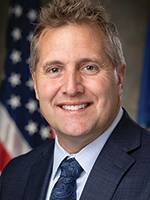
Shannon Zimmerman
Shannon Zimmerman House · District 30
R
Support
79% 14
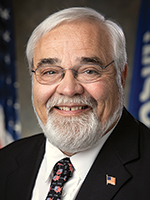
Will Penterman
Will Penterman House · District 38
R
Support
71% 17
Jeff Mursau
Jeff Mursau House · District 36
R
Support
69% 16
Adam Neylon
Adam Neylon House · District 15
R
Support
67% 18
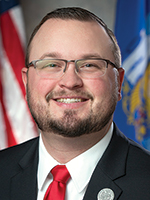
Alex Dallman
Alex Dallman House · District 39
R
Support
67% 18
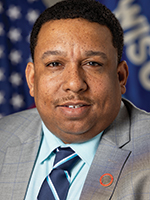
Russell Goodwin
Russell Goodwin House · District 12
D
Oppose
31% 16
Joe Sheehan
Joe Sheehan House · District 26
D
Oppose
33% 15
Vinnie Miresse
Vinnie Miresse House · District 71
D
Oppose
35% 17
Ryan Clancy
Ryan Clancy House · District 19
D
Oppose
38% 16
Alex Joers
Alex Joers House · District 81
D
Oppose
39% 18
Showing 221–230 of 386 bills

All healthcare bills

failed · Wisconsin · Senate Mar 23, 2026

SB 262: Relating to: assisted living facility referral agencies and providing a penalty.

SB 262 requires referral agencies that connect prospective residents to assisted living facilities to disclose key financial details, including fixed referral fees paid by facilities, business relationships, and their website listing practices. It prohibits agencies from charging fees based on a resident's value or percentage of services and mandates written resident confirmation before charging facilities. Residents can terminate agency services at any time, including stopping the use of their personal information. Violations carry a $1,000 penalty per offense, directly affecting referral agencies, assisted living facilities, and prospective residents.
Sub-Topics Long-Term Care
signed · Wisconsin · Assembly Mar 27, 2026

AB 668: Relating to: reports on the competency of involuntarily committed individuals to refuse medication or treatment based upon an examination by an advanced practice registered nurse.

AB 668 amends Wisconsin law to allow advanced practice registered nurses (APRNs) with psychiatric expertise to conduct examinations determining whether involuntarily committed individuals can refuse medication or treatment. This change directly affects individuals in psychiatric commitment under specific legal standards who refuse care, as it expands the pool of qualified professionals (previously limited to physicians) who can provide the required medical certification. The bill requires any motion to override a patient's refusal to include a written report signed by an APRN or physician stating the individual is not competent to refuse treatment or that treatment is necessary to prevent serious harm. The amendment takes effect September 1, 2026, after a temporary transition period allowing physician-only assessments until that date. This creates a new pathway for competency determinations while maintaining existing court hearing requirements.
failed · Wisconsin · Assembly Mar 23, 2026

AB 607: Relating to: housing and homelessness; emergency rental assistance program; indigent civil legal services; workforce development; community action agencies; poverty reports; mental health; economic security; reimbursement for nonemergency medical transportation services; urban mass transit aid; lead exposure and abatement services; lead service line replacement; providing an exemption from emergency rule procedures; granting rule-making authority; and making an appropriation. (FE)

AB 607 creates new programs and modifies existing ones to address housing, homelessness, and related services in Wisconsin. It establishes a lead service line replacement program for water systems, creates an annual review process for homelessness services, and funds emergency rental assistance for households earning under 80% of county median income. The bill allocates $43 million for indigent civil legal services, $5 million for emergency rental assistance (2026-27), and $2.5 million for housing grants. These provisions directly affect low-income residents, homeless individuals, and service providers by expanding access to housing support, legal aid, and water infrastructure improvements.
failed · Wisconsin · Assembly Mar 23, 2026

AB 68: Relating to: the prescription drug monitoring program. (FE)

AB 68 modifies Wisconsin's prescription drug monitoring program (PDMP) by requiring healthcare practitioners to review a patient's PDMP records before prescribing controlled substances. This applies to all prescribers of such medications and expires on April 1, 2030. The bill also extends the deadline for certain program requirements from October 30, 2025, to October 30, 2030. It does not create new obligations but adjusts existing review timelines for the PDMP. The bill was referred to committee but ultimately "laid on the table" in March 2025.
Sub-Topics Prescription Drugs
failed · Wisconsin · Assembly Mar 23, 2026

AB 510: Relating to: use of certain statements as evidence in prosecution for prostitution.

AB 510 prevents law enforcement or medical providers from using statements about prostitution as evidence in court if a person contacts them to report another crime (like theft or assault) or seek medical care. It applies directly to individuals seeking help for non-prostitution issues, including those reporting on behalf of others. The bill prohibits using any prostitution-related statements obtained during these unrelated contacts in prosecution for prostitution or attempted prostitution. This policy change ensures that people accessing emergency services or reporting other crimes cannot face additional charges based on their initial contact. The bill is currently pending in the Judiciary Committee after its October 2025 introduction.
failed · Wisconsin · Assembly Mar 23, 2026

AB 498: Relating to: automated external defibrillators in child care centers and making an appropriation. (FE)

AB 498 provides $1 million in biennial funding to help licensed child care centers purchase and maintain automated external defibrillators (AEDs). The bill creates a grant program administered by the Department of Children and Families, allowing centers to apply for funding to cover AED costs. To qualify, centers must contribute at least 33% of the grant amount in matching funds. This policy directly affects licensed child care centers by making AEDs more accessible for emergency cardiac care.
Sub-Topics Appropriations
failed · Wisconsin · Assembly Mar 23, 2026

AB 573: Relating to: sexual assault forensic examination compensation.

AB 573 clarifies which costs related to sexual assault forensic examinations are covered under compensation programs for victims. It specifically defines "examination costs" to include evidence-gathering procedures, STI testing/prevention, HIV prophylaxis (medication to prevent HIV exposure), and STI treatment medications provided during the exam. The bill explicitly excludes administrative fees, attorney costs, and other non-medical expenses from coverage. Additionally, it requires applicants to submit only medical records directly related to the covered services, such as examinations, treatments, or preventive medications, and prohibits submitting unrelated documentation. This bill adjusts eligibility criteria for compensation without creating new benefits or funding.
failed · Wisconsin · Assembly Mar 23, 2026

AB 11: Relating to: pelvic exams on unconscious patients and creating an administrative rule related to hospital requirements for pelvic exams on unconscious patients.

Assembly Bill 11 mandates that hospitals must obtain written informed consent from a patient before a pelvic examination is performed solely for educational purposes while the patient is under general anesthesia or otherwise unconscious. This bill creates a new statute requiring hospitals to ensure this consent is secured. Additionally, it directs hospitals to establish and maintain written policies and procedures that enforce this requirement for educational pelvic exams on unconscious patients.
Sub-Topics Hospitals
failed · Wisconsin · Senate Mar 23, 2026

SB 589: Relating to: statutory right to contraception.

SB 589 establishes a statutory right for individuals to obtain contraception and for health care providers to offer it, directly affecting patients, providers, and local governments. It prohibits state or local governments from restricting access to FDA-approved contraceptives (like pills, condoms, or IUDs) through laws, regulations, or policies that single out contraception or impede access. The bill allows individuals or providers to sue if a policy violates these rights, and courts can block such policies and award attorney fees to winning parties. It explicitly does not change health insurance coverage requirements or override existing constitutional protections.
failed · Wisconsin · Senate Mar 23, 2026

SB 223: Relating to: discrimination in employment, housing, public accommodations, education, insurance coverage, national guard, jury duty, and adoption and in the receipt of mental health or vocational rehabilitation services.

Senate Bill 223 aims to expand anti-discrimination protections within the state. It proposes to add "gender identity," "gender expression," and "sexual orientation" to the list of characteristics protected by state law. The bill amends numerous statutes to prohibit discrimination based on these categories across various sectors, including employment, housing, public accommodations, education, and insurance coverage. It also extends these protections to areas such as the National Guard, jury duty, and adoption processes.
Showing 221 to 230 of 386 bills
Previous 1 … 22 23 24 … 39 Next