Issue · Healthcare

Healthcare

Every healthcare bill, vote, and legislator stance in Wisconsin, automatically classified by Maddy, our AI policy reader.

Total bills
386
2025-2026 Regular Session
Top supporter
Shannon Zimmerman
79% support rate
Top opponent
Russell Goodwin
31% support rate
Ranked legislators
10
5 support · 5 oppose
Key legislators

Who's moving healthcare in Wisconsin

Legislators moving healthcare in Wisconsin
Legislator Party Stance Support rate Decisive votes
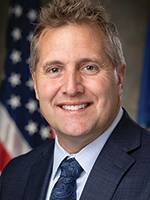
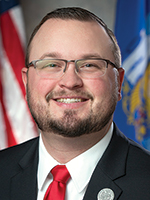
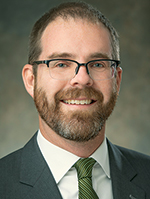
Shannon Zimmerman
Shannon Zimmerman House · District 30
R
Support
79% 14
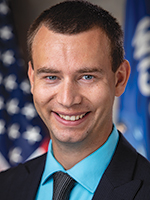
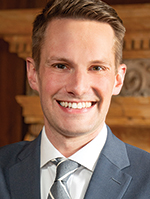
Will Penterman
Will Penterman House · District 38
R
Support
71% 17
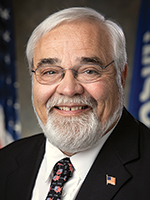
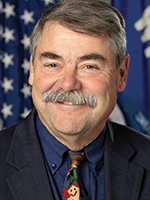
Jeff Mursau
Jeff Mursau House · District 36
R
Support
69% 16
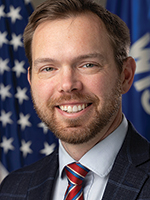
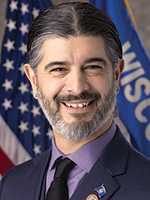
Adam Neylon
Adam Neylon House · District 15
R
Support
67% 18
Alex Dallman
Alex Dallman House · District 39
R
Support
67% 18
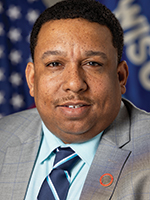
Russell Goodwin
Russell Goodwin House · District 12
D
Oppose
31% 16
Joe Sheehan
Joe Sheehan House · District 26
D
Oppose
33% 15
Vinnie Miresse
Vinnie Miresse House · District 71
D
Oppose
35% 17
Ryan Clancy
Ryan Clancy House · District 19
D
Oppose
38% 16
Alex Joers
Alex Joers House · District 81
D
Oppose
39% 18
Showing 191–200 of 386 bills

All healthcare bills

failed · Wisconsin · Senate Mar 23, 2026

SB 252: Relating to: independence accounts. (FE)

SB 252 amends eligibility rules for state benefit programs by excluding up to $40,000 in inherited assets when calculating an individual's total assets. It directly affects people applying for or receiving state benefits (like Medicaid or food assistance) who inherit assets, allowing them to retain more inheritance without losing eligibility. The bill modifies existing rules to clarify that inherited assets up to $40,000 will not count toward asset limits, while requiring individuals to deposit earned income into designated accounts. This is a procedural adjustment to benefit eligibility criteria, not a new program.
Sub-Topics Medicaid
failed · Wisconsin · Senate Mar 23, 2026

SB 437: Relating to: automated external defibrillators in child care centers and making an appropriation. (FE)

This bill provides $1 million every two years to help licensed child care centers purchase and maintain automated external defibrillators (AEDs). It requires centers to contribute 33% of the grant amount as matching funds. The Department of Children and Families will administer the grants, distributing funds to eligible centers under state licensing rules. This policy directly affects all licensed child care centers in the state by improving emergency cardiac response capabilities.
Sub-Topics Appropriations
failed · Wisconsin · Senate Mar 23, 2026

SB 574: Relating to: funding for the supplemental food program for women, infants and children during the federal government shutdown and making an appropriation. (FE)

SB 574 creates a state funding mechanism to maintain Wisconsin's WIC (Women, Infants, and Children) program benefits during federal government shutdowns. It requires the Department of Health Services to continue providing WIC benefits at pre-shutdown levels if federal funding lapses, specifically referencing the October 1, 2025 funding gap. The bill ensures uninterrupted access to nutrition support for low-income pregnant women, new mothers, infants, and young children who rely on WIC. This temporary provision expires on October 1, 2026, and is repealed upon federal funding restoration. The measure directly affects WIC participants and state budgeting during federal funding interruptions.
Sub-Topics Appropriations
failed · Wisconsin · Senate Mar 23, 2026

SB 657: Relating to: noncompete clauses for medical practitioners.

SB 657 prohibits noncompete clauses that restrict medical practitioners from working for more than 24 consecutive months after starting a job. It also makes all such noncompete agreements unenforceable if an employer terminates the practitioner’s employment for any reason. The law applies to defined medical practitioners, including physicians, physician assistants, psychologists, and advanced practice nurse prescribers. These provisions make affected noncompete agreements void and unenforceable under Wisconsin law. The bill takes effect after publication, with specific definitions updated to clarify the scope of "medical practitioner."
failed · Wisconsin · Assembly Mar 23, 2026

AB 112: Relating to: consent to mental health treatment by minors who are age 14 or older.

AB 112 allows minors aged 14 or older to consent to inpatient mental health treatment without parental or guardian approval, directly affecting these minors, their parents/guardians, and mental health facilities. The bill amends statutes to let minors 14+ sign treatment applications themselves, and if parents refuse consent or cannot be found, minors may petition a court for approval. Facilities must now inform minors and parents (if available) of their rights, including the right to an independent evaluation and court hearings. The law requires facilities to file court petitions within 3 days if a minor aged 14+ refuses to join a treatment application. This bill focuses on expanding minor autonomy in mental health care decisions while maintaining court oversight.
Sub-Topics Mental Health
failed · Wisconsin · Senate Mar 23, 2026

SB 317: Relating to: requiring cardiac emergency response plans for cardiac emergencies that occur on school property or at school-sponsored athletic events. (FE)

SB 317 requires all Wisconsin public schools and charter schools to develop written cardiac emergency response plans by the 2027-28 school year. These plans must include core elements like response teams, AED maintenance details, annual drills, and staff training in CPR/AED use following national guidelines (e.g., American Heart Association). High schools must additionally require coaches to maintain current CPR/AED certification. Schools are not mandated to purchase AEDs, but must plan for their use if available. The law specifically targets cardiac emergencies occurring on school property or at school-sponsored athletic events.
passed · Wisconsin · Assembly Mar 23, 2026

AB 362: Relating to: requiring cardiac emergency response plans for cardiac emergencies that occur on school property or at school-sponsored athletic events. (FE)

AB 362 requires all public school districts and charter schools to create written cardiac emergency response plans for cardiac emergencies occurring on school property or at school-sponsored athletic events, starting in the 2026-27 school year. These plans must include core elements like designated response teams, clear AED placement and maintenance, annual drills, and staff training in CPR and AED use following American Heart Association guidelines. Schools must also ensure coaches at athletic events hold current CPR/AED certification and that AEDs are accessible at all athletic venues. The law directly affects all K-12 schools and their staff, aiming to improve immediate response to cardiac emergencies.
failed · Wisconsin · Senate Mar 23, 2026

SB 635: Relating to: refundable individual income tax credit for premarital counseling and making an appropriation.

SB 635 creates a refundable tax credit for married couples who complete premarital counseling before their wedding. It allows couples filing jointly to claim $600 in their first married year, $300 in the second, and $100 in the third, with reduced amounts for separate returns. To qualify, couples must obtain written certification from a licensed therapist, psychiatrist, or clergy member confirming the counseling occurred before marriage. The credit is funded through a new state appropriation and must be claimed within specific time limits after the marriage year.
failed · Wisconsin · Senate Mar 23, 2026

SB 110: Relating to: authorizing youth behavioral health program under the Medical Assistance program and granting rule-making authority.

SB 110 creates a new state program under the Medical Assistance program to coordinate behavioral health services for youth under 21 with complex needs. It requires collaboration between health, children’s services, education, and county agencies to provide specific services like mobile crisis response, home-based treatment, and residential care, with the goal of keeping families supported in communities and avoiding institutional care. The state can develop rules for the program and must secure federal approval to fund these services. This directly affects young people under 21 and their families seeking these coordinated behavioral health supports.
Sub-Topics Mental Health
failed · Wisconsin · Senate Mar 23, 2026

SB 269: Relating to: a school psychologist loan program. (FE)

SB 269 establishes a state-funded loan program for graduate students pursuing school psychology careers at Wisconsin universities. Eligible students (in-state residents enrolled full-time in school psychology programs with a 3.0+ GPA) can receive up to $10,000 annually ($30,000 total) with 5% interest. Borrowers earn 25% loan forgiveness each year they work full-time as school psychologists in public or private schools located in rural counties or urbanized areas. All loan repayments and interest flow into the state general fund.
Showing 191 to 200 of 386 bills
Previous 1 … 19 20 21 … 39 Next