Issue · Healthcare

Healthcare

Every healthcare bill, vote, and legislator stance in Wisconsin, automatically classified by Maddy, our AI policy reader.

Total bills
386
2025-2026 Regular Session
Top supporter
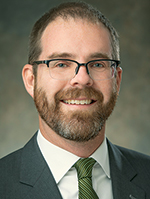
Shannon Zimmerman
79% support rate
Top opponent
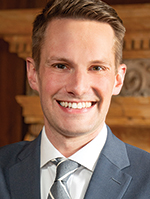
Russell Goodwin
31% support rate
Ranked legislators
10
5 support · 5 oppose
Key legislators

Who's moving healthcare in Wisconsin

Legislators moving healthcare in Wisconsin
Legislator Party Stance Support rate Decisive votes
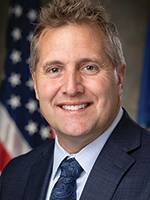
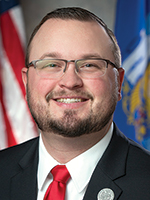
Shannon Zimmerman
Shannon Zimmerman House · District 30
R
Support
79% 14
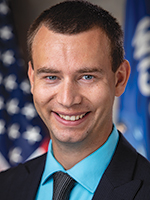
Will Penterman
Will Penterman House · District 38
R
Support
71% 17
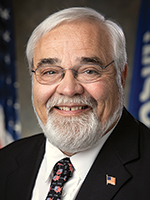
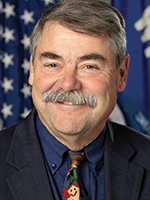
Jeff Mursau
Jeff Mursau House · District 36
R
Support
69% 16
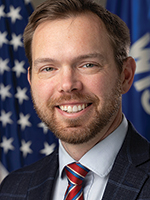
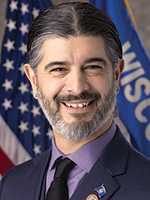
Adam Neylon
Adam Neylon House · District 15
R
Support
67% 18
Alex Dallman
Alex Dallman House · District 39
R
Support
67% 18
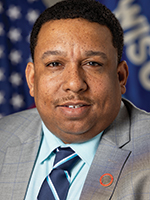
Russell Goodwin
Russell Goodwin House · District 12
D
Oppose
31% 16
Joe Sheehan
Joe Sheehan House · District 26
D
Oppose
33% 15
Vinnie Miresse
Vinnie Miresse House · District 71
D
Oppose
35% 17
Ryan Clancy
Ryan Clancy House · District 19
D
Oppose
38% 16
Alex Joers
Alex Joers House · District 81
D
Oppose
39% 18
Showing 181–190 of 386 bills

All healthcare bills

failed · Wisconsin · Assembly Mar 23, 2026

AB 49: Relating to: a minor’s authority to consent to health care.

AB 49 allows minors aged 14 or older who are unaccompanied youth (homeless youth without parental supervision) to consent to medically necessary health care without parental permission. To qualify, a minor must be verified as unaccompanied by specific professionals like school counselors, shelter staff, or social workers. The bill defines "medically necessary care" as treatment meeting established medical standards, including safety, effectiveness, and cost-efficiency. Healthcare providers following this law are protected from liability for providing such care, though the law does not override existing mandatory reporting requirements or other minor consent rights under Chapter 51.
failed · Wisconsin · Senate Mar 23, 2026

SB 99: Relating to: spinal cord injury research grants and symposia and making an appropriation. (FE)

SB 99 creates a Spinal Cord Injury Council to oversee research grants and allocates $2.5 million biennially for spinal cord injury research in Wisconsin. The council, composed of researchers, individuals with spinal cord injuries, veterans, family members, and medical professionals, develops grant criteria and reviews applications. Researchers receiving grants must present findings at department-hosted symposia every two years and report annual progress to the legislature. The bill specifically funds innovative treatments and rehabilitative approaches, with grants allowing up to 8% for administrative costs.
Sub-Topics Appropriations
failed · Wisconsin · Senate Mar 23, 2026

SB 477: Relating to: implementing a suicide prevention program and making an appropriation. (FE)

SB 477 creates a statewide suicide prevention program within the Department of Health Services, allocating $250,000 annually for its implementation. The program requires public awareness campaigns, training for law enforcement, healthcare providers, school staff, and others who interact with at-risk individuals, and coordination with community groups and crisis services. It mandates county-level advisory groups, enhanced crisis services, and annual reports to the legislature detailing program activities. The bill directly affects state agencies, community organizations, and professionals working with vulnerable populations like youth, rural residents, and Native Americans.
signed · Wisconsin · Assembly Mar 24, 2026

AB 180: Relating to: requiring the Department of Health Services to seek any necessary waiver to prohibit the purchase of candy or soft drinks with FoodShare benefits. (FE)

AB 180 requires the state Department of Health Services to request a federal waiver from the USDA to prohibit the use of FoodShare benefits (the state's name for SNAP) for purchasing candy or sugary drinks. The bill mandates that if the waiver is granted, candy and sugary drinks would be excluded from eligible items; if denied, the state must reapply annually. This applies directly to FoodShare recipients who currently can use benefits for these items. The bill creates a procedural requirement for the state to seek this change but does not immediately ban the purchases.
failed · Wisconsin · Senate Mar 23, 2026

SB 608: Relating to: a state matching grant program for recipients of federal per diem payments and making an appropriation. (FE)

SB 608 creates a state matching grant program that provides $950,000 in state funds to match federal per diem payments received by eligible non-state entities (like community organizations or service providers). The program directly affects organizations that already receive federal daily living payments, allowing them to access additional state funding through a 1:1 match. Key provisions include allocating $950,000 specifically for this matching grant under the Veterans Affairs budget and defining eligible recipients as non-state entities receiving federal per diem payments. This is a procedural funding measure that establishes a new appropriation line without changing eligibility criteria or creating new requirements.
Sub-Topics Appropriations
failed · Wisconsin · Assembly Mar 23, 2026

AB 342: Relating to: grants to hire school mental health professionals who are members of a racial minority group, granting rule-making authority, and making an appropriation. (FE)

AB 342 creates a $5 million annual grant program for school districts to hire mental health professionals who are members of racial minority groups. The bill defines "racial minority group" to include Black Americans, American Indians/Alaska Natives, Hispanic individuals, Asian/Pacific Islanders, and multiracial people. School districts receiving grants must use funds specifically to hire qualified professionals from these groups. The Department of Public Instruction will administer the program and establish rules for implementation, with funding allocated for the 2025-26 and 2026-27 fiscal years.
signed · Wisconsin · Assembly Mar 19, 2026

AB 45: Relating to: ratification of the Dietitian Licensure Compact. (FE)

AB 45 ratifies Wisconsin's participation in the Dietitian Licensure Compact, enabling dietitians licensed in other participating states to practice in Wisconsin with minimal additional requirements. The bill creates a Dietitian Licensure Compact Commission and updates statutes to recognize "compact privilege" as a valid credential for dietitians. Key provisions allow dietitians to practice across state lines without full re-licensing, streamline verification of training hours, and adjust fee structures for compact-related credentials. This directly affects dietitians seeking to practice in Wisconsin while holding a license from another compact state.
Sub-Topics Medical Licensing
failed · Wisconsin · Assembly Mar 23, 2026

AB 272: Relating to: eligibility for Family Care for individuals who are deaf-blind. (FE)

AB 272 amends eligibility rules for Wisconsin's Family Care program to automatically include individuals who are deaf-blind, as defined under federal law (29 U.S.C. § 1905). This change directly affects deaf-blind residents seeking Family Care services, removing the need for separate care-level assessments for this group. The bill establishes that deaf-blind status alone satisfies the "functional eligibility" requirement under existing statute. It does not alter other eligibility criteria or funding mechanisms for the program. The bill was introduced in May 2025 and referred to the Health, Aging and Long-Term Care committee.
Sub-Topics Long-Term Care
failed · Wisconsin · Assembly Mar 23, 2026

AB 197: Relating to: a levy limit exemption for regional emergency medical systems and eligibility for the expenditure restraint incentive program. (FE)

AB 197 creates a new exemption allowing local governments (like counties or municipalities) to count certain regional emergency medical services costs toward their budget limits without triggering spending restrictions. To qualify, the service must cover at least 232 square miles or include 8 municipalities, and annual cost increases must stay below the inflation rate plus 5%. The exemption requires confirmation of a regional service area and a designated coordination entity for EMS across the area. This specifically affects jurisdictions operating joint emergency medical services districts or intergovernmental agreements for EMS, including fire department-provided services.
Sub-Topics Government Spending Tags Public Safety
failed · Wisconsin · Senate Mar 23, 2026

SB 534: Relating to: regulating medical cannabis, the prescription drug monitoring program, and providing a penalty. (FE)

SB 534 creates an Office of Medical Cannabis Regulation within the Department of Health Services to oversee medical cannabis programs. It defines "medical cannabis product" consistently across statutes and prohibits courts from considering lawful medical cannabis use or registry status when making child custody decisions, except in cases where a child accesses the products. The bill also amends provisions related to prescription drug monitoring and clarifies that local ordinances cannot prosecute for marijuana possession under specific conditions. These changes primarily affect patients using medical cannabis, courts handling custody cases, and state agencies managing cannabis and drug monitoring programs.
Sub-Topics Prescription Drugs
Showing 181 to 190 of 386 bills
Previous 1 … 18 19 20 … 39 Next