Issue · Criminal Justice

Criminal Justice

Every criminal justice bill, vote, and legislator stance in Wisconsin, automatically classified by Maddy, our AI policy reader.

Total bills
250
2025-2026 Regular Session
Top supporter
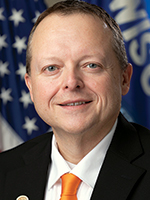
Jeff Mursau
70% support rate
Top opponent
Ryan Clancy
32% support rate
Ranked legislators
10
5 support · 5 oppose
Key legislators

Who's moving criminal justice in Wisconsin

Legislators moving criminal justice in Wisconsin
Legislator Party Stance Support rate Votes
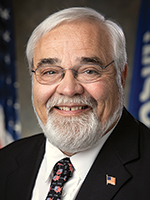
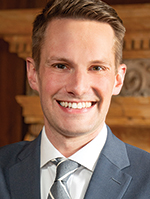
Jeff Mursau
Jeff Mursau House · District 36
R
Support
70% 54
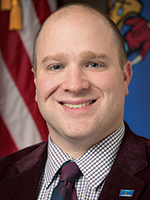
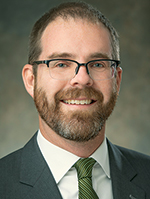
Will Penterman
Will Penterman House · District 38
R
Support
67% 48
Brad Pfaff
Brad Pfaff Senate · District 32
D
Support
64% 36
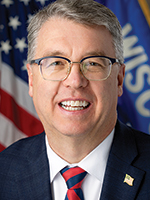
Eric Wimberger
Eric Wimberger Senate · District 2
R
Support
64% 36
Scott Krug
Scott Krug House · District 72
R
Support
64% 58
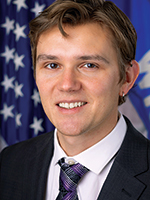
Ryan Clancy
Ryan Clancy House · District 19
D
Oppose
32% 53
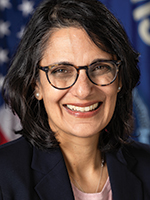
Renuka Mayadev
Renuka Mayadev House · District 77
D
Oppose
32% 58
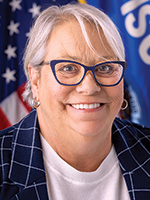
Christine Sinicki
Christine Sinicki House · District 20
D
Oppose
32% 58
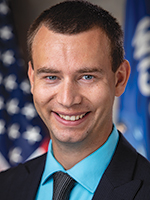
Alex Joers
Alex Joers House · District 81
D
Oppose
32% 58
Christian Phelps
Christian Phelps House · District 93
D
Oppose
33% 57
Showing 231–240 of 250 bills

All criminal justice bills

signed · Wisconsin · Senate Mar 13, 2026

SB 620: Relating to: tracking a person who is registered as a sex offender but unable to provide an address.

SB 620 requires sex offenders on parole or extended supervision who cannot provide an address to notify the department within 24 hours of becoming unable to do so. It also mandates that the department use location tracking technology (passive positioning systems) for these individuals if they fail to provide an address as required under existing registration rules. The bill directly affects sex offenders subject to registration who lose the ability to provide a stable address. Key mechanisms include the 24-hour notification deadline and automatic departmental implementation of tracking when address information is unavailable. The policy change ensures continuous monitoring of this specific group to maintain public safety oversight.
Sub-Topics Probation & Parole
failed · Wisconsin · Senate Mar 23, 2026

SB 132: Relating to: classification of the crime of impersonating law enforcement officers, fire fighters, and certain other emergency personnel and providing a penalty.

SB 132 upgrades penalties for impersonating emergency personnel, changing the offense from a misdemeanor to a felony. It applies to anyone pretending to be a police officer, firefighter, paramedic (emergency medical services practitioner), or emergency medical responder with intent to deceive. The bill creates a new felony classification under state law, replacing current misdemeanor penalties for these specific impersonation acts. This directly affects individuals who falsely pose as these professionals, increasing potential criminal consequences.
failed · Wisconsin · Senate Mar 23, 2026

SB 650: Relating to: penalty enhancer for crimes committed by a person acting as an agent of a foreign government or terrorist organization with the intent to silence or punish persons for their political view, criminalizing the enforcement of foreign laws without federal or state approval, and providing a penalty. (FE)

SB 650 defines "transnational repression" as actions by foreign agents targeting individuals (like activists or journalists) to silence them due to political views. It creates three key provisions: (1) requires Wisconsin's Department of Justice to develop law enforcement training, public awareness campaigns, and a reporting portal for transnational repression cases; (2) increases penalties for crimes committed as transnational repression (e.g., raising a Class B felony to a Class A felony); and (3) criminalizes enforcing foreign laws without federal or state approval, punishable as a Class E felony with a minimum 3-year prison term. The bill directly affects foreign government agents, law enforcement, and individuals targeted by transnational repression. It focuses on prevention, awareness, and stricter penalties for specific foreign interference tactics.
failed · Wisconsin · Assembly Mar 23, 2026

AB 573: Relating to: sexual assault forensic examination compensation.

AB 573 clarifies which costs related to sexual assault forensic examinations are covered under compensation programs for victims. It specifically defines "examination costs" to include evidence-gathering procedures, STI testing/prevention, HIV prophylaxis (medication to prevent HIV exposure), and STI treatment medications provided during the exam. The bill explicitly excludes administrative fees, attorney costs, and other non-medical expenses from coverage. Additionally, it requires applicants to submit only medical records directly related to the covered services, such as examinations, treatments, or preventive medications, and prohibits submitting unrelated documentation. This bill adjusts eligibility criteria for compensation without creating new benefits or funding.
failed · Wisconsin · Assembly Mar 23, 2026

AB 170: Relating to: prohibiting the Department of Justice from using the legal services of nongovernmental employees. (FE)

AB 170 prohibits the Department of Justice from using legal services from non-governmental employees (such as private lawyers or contractors) for investigating or prosecuting civil or criminal cases. The only exception allows legal interns paid no more than $10,000 annually, even if they are not state or federal employees. This directly affects how the Department of Justice hires legal support for case work. The bill creates a new statute (165.252) to enforce this restriction, with no other exemptions beyond the intern provision. It was introduced in April 2025 and referred to the Judiciary Committee.
failed · Wisconsin · Senate Mar 23, 2026

SB 302: Relating to: performance grants based on improving employment rates for individuals on probation, parole, or extended supervision. (FE)

SB 302 creates a performance-based grant program for regional probation and parole offices, rewarding them with funds when they improve employment rates for individuals on probation, parole, or extended supervision compared to a 2021-2024 baseline. The grant amount is calculated by multiplying the region's improvement in employment rates (for all three supervision categories) by the total number of individuals under supervision and $2,500, but only if the improvement is positive and the region did not experience increased revocations for new crimes. Regional offices must use the funds for employee bonuses, and the department will track and report annually on employment outcomes, recidivism, program changes, and potential cost savings from reduced incarceration.
failed · Wisconsin · Senate Mar 23, 2026

SB 444: Relating to: identity requirements for officers who arrest or detain individuals and providing a penalty.

SB 444 requires law enforcement officers to clearly identify themselves during arrests or detentions by verbally stating their role, displaying their surname and badge number with high-contrast visibility, and showing agency insignia in specific sizes. It mandates officers to provide the legal authority for the detention and prohibits face covering except for health/safety reasons or tactical teams. Violating these requirements is a Class D felony, though courts cannot impose jail time. The bill directly affects all officers employed by law enforcement agencies and individuals subject to arrests or detentions.
failed · Wisconsin · Senate Mar 23, 2026

SB 355: Relating to: establishing a civil cause of action for civil rights violations.

SB 355 creates a new legal pathway for individuals whose constitutional rights (under U.S. or state law) were violated by government actors acting "under color of law" (e.g., police, officials). It allows affected people to sue for damages, injunctions, or other relief against the violating party, including government entities. The bill specifically requires courts to award reasonable attorney fees to winning plaintiffs and sets a 6-year deadline to file such lawsuits. This directly affects anyone facing rights violations by government officials, providing a clear legal remedy where none existed previously under the cited statutes.
Sub-Topics Civil Rights Policing Tags Civil Liberties
signed · Wisconsin · Assembly Dec 8, 2025

AB 201: Relating to: extortion, sexual extortion, and providing a penalty.

AB 201 modifies Wisconsin law to require sex offender registration for individuals convicted of sexual extortion or certain related offenses. It directs courts to mandate registration under Wisconsin Statute 301.45 if the underlying conduct was "sexually motivated" (as defined in Statute 980.01(5)), including violations of statutes related to sexual extortion (e.g., 942.09, 942.095). The bill affects offenders convicted of sexual extortion or sexually motivated crimes under Chapters 940, 942, 943, 944, or 948. Courts may later release individuals from registration if they meet conditions set by the court. This is a policy change to expand registration requirements for specific sexual offenses, not a new criminal penalty.
Sub-Topics Courts
signed · Wisconsin · Assembly Mar 6, 2026

AB 677: Relating to: creating a crime of grooming a child for sexual activity and providing a penalty.

AB 677 creates a new criminal offense for "grooming a child for sexual activity," defined as manipulating a child to facilitate sexual abuse. This law directly affects individuals convicted of such grooming behavior, adding it as a punishable offense under Wisconsin statutes like 948.02 (sexual exploitation of a child) and 948.072 (grooming). Key provisions amend multiple laws to include grooming as a disqualifying factor for home placements, licensing for childcare, and reporting requirements, while defining it as a "serious crime" for entities serving minors. The bill does not change existing penalties for actual sexual abuse but establishes grooming itself as a distinct criminal violation with specific legal consequences.
Showing 231 to 240 of 250 bills