Issue · Criminal Justice

Criminal Justice

Every criminal justice bill, vote, and legislator stance in Wisconsin, automatically classified by Maddy, our AI policy reader.

Total bills
250
2025-2026 Regular Session
Top supporter
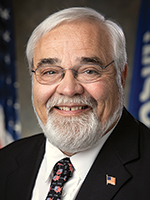
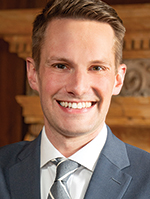
Jeff Mursau
70% support rate
Top opponent
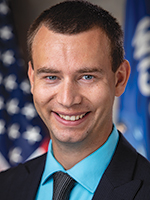
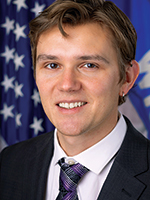
Ryan Clancy
32% support rate
Ranked legislators
10
5 support · 5 oppose
Key legislators

Who's moving criminal justice in Wisconsin

Legislators moving criminal justice in Wisconsin
Legislator Party Stance Support rate Votes
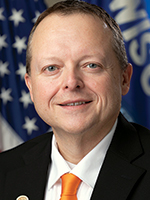
Jeff Mursau
Jeff Mursau House · District 36
R
Support
70% 54
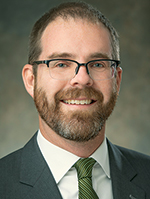
Will Penterman
Will Penterman House · District 38
R
Support
67% 48
Brad Pfaff
Brad Pfaff Senate · District 32
D
Support
64% 36
Eric Wimberger
Eric Wimberger Senate · District 2
R
Support
64% 36
Scott Krug
Scott Krug House · District 72
R
Support
64% 58
Ryan Clancy
Ryan Clancy House · District 19
D
Oppose
32% 53
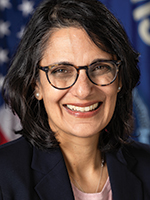
Renuka Mayadev
Renuka Mayadev House · District 77
D
Oppose
32% 58
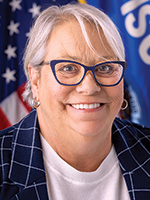
Christine Sinicki
Christine Sinicki House · District 20
D
Oppose
32% 58
Alex Joers
Alex Joers House · District 81
D
Oppose
32% 58
Christian Phelps
Christian Phelps House · District 93
D
Oppose
33% 57
Showing 211–220 of 250 bills

All criminal justice bills

vetoed · Wisconsin · Senate May 13, 2026

SB 146: Relating to: prohibiting persons who have been convicted of a violent crime from changing their name and providing a penalty.

SB 146 prohibits individuals convicted of a violent felony from legally changing their name. It amends existing law to clarify that the prohibition applies specifically to violent crimes classified as felonies, not all violent offenses. This directly affects people with violent felony convictions who seek to change their legal name. The bill establishes a clear legal barrier to name changes for this group, with penalties for violations.
Sub-Topics Violent Crime
failed · Wisconsin · Assembly Mar 23, 2026

AB 331: Relating to: establishing a civil cause of action for civil rights violations.

AB 331 creates a new legal right for individuals who believe their constitutional rights (such as due process or equal protection) were violated by government officials acting under color of law, including police or state employees. It allows victims to sue for damages, court orders to stop violations, and court-ordered attorney fees. The law sets a 6-year deadline to file such lawsuits and applies to both federal and state civil rights violations. It does not apply to cases already covered by existing statutes like 893.80 or 893.82.
Sub-Topics Civil Rights Courts Policing Tags Civil Liberties
failed · Wisconsin · Senate Mar 23, 2026

SB 372: Relating to: crime victim notification cards. (FE)

SB 372 creates standardized crime victim notification cards to help victims of crime stay informed about court proceedings involving offenders. The bill requires the director of state courts to design these cards, which victims can complete with their contact information and the offender's details, and send to the relevant court clerk. County courts and victim/witness offices must provide these cards at no cost to victims, and the law protects victim mailing addresses from public inspection under state law. This directly affects crime victims in Wisconsin who need to receive updates about offender sentencing or probation modifications.
signed · Wisconsin · Senate Apr 9, 2026

SB 575: Relating to: sexual assault forensic examination compensation.

SB 575 clarifies which medical costs related to sexual assault forensic exams are covered by state compensation. It defines "examination costs" to include medical tests, HIV prevention medication (prophylaxis), and STI treatment provided during the exam process if related to the assault. The bill explicitly excludes administrative fees, attorney costs, or unrelated medical expenses from coverage. This directly affects sexual assault victims seeking reimbursement for specific, exam-related medical care under the state's compensation program.
Sub-Topics Violent Crime
failed · Wisconsin · Senate Mar 23, 2026

SB 380: Relating to: eliminating criminal defenses of adequate provocation, self-defense, or not guilty by reason of mental disease or defect if the claim is based on the victim’s gender identity or sexual orientation.

SB 380 eliminates three specific criminal defenses (adequate provocation, self-defense, and not guilty by reason of mental disease or defect) when a defendant claims the defense was based on the victim’s actual or perceived gender identity, gender expression, or sexual orientation. Key provisions explicitly bar these defenses in cases involving romantic advances without force, past relationships, or disclosures of the victim’s identity. The bill directly affects criminal defendants who attempt to justify violence using prejudice against LGBTQ+ identities as a legal argument. It applies to offenses committed on or after the bill’s effective date, removing these defenses from Wisconsin’s criminal code without altering the underlying crimes.
failed · Wisconsin · Assembly Mar 23, 2026

AB 361: Relating to: eliminating criminal defenses of adequate provocation, self-defense, or not guilty by reason of mental disease or defect if the claim is based on the victim’s gender identity or sexual orientation.

AB 361 eliminates specific criminal defenses in cases where a defendant claims they acted due to the victim's gender identity or sexual orientation. The bill amends statutes to prevent defendants from using "adequate provocation," "self-defense," or "not guilty by reason of mental disease" as justifications if the claim relates to the victim's actual or perceived gender identity, expression, or sexual orientation. This specifically blocks defenses in situations like when the victim made a romantic advance without force or when the defendant and victim dated. The law applies to offenses committed on its effective date and directly affects defendants in criminal cases involving these specific circumstances.
failed · Wisconsin · Assembly Mar 23, 2026

AB 297: Relating to: performance grants based on improving employment rates for individuals on probation, parole, or extended supervision. (FE)

AB 297 creates performance grants for regional probation and parole offices based on improving employment rates for individuals on supervision (probation, parole, or extended supervision). Offices earn grants by increasing employment rates above a 2021-2024 baseline, with "eligible employment" defined as 130+ wage-earning hours monthly. Funds must be used for employee bonuses, and the department tracks outcomes like employment duration, recidivism rates, and cost savings tied to reduced incarceration. Offices are disqualified from grants if their region saw increased revocations for new crimes in the prior year. Annual reports will detail regional employment trends and program impacts for public transparency.
failed · Wisconsin · Senate Mar 23, 2026

SB 318: Relating to: small law enforcement agency grant pilot program. (FE)

SB 318 creates a temporary pilot program to provide training grants to small law enforcement agencies (those employing 25 or fewer full-time equivalent officers). Agencies qualify if they face imminent retirements, have 20%+ vacancies, or need to train new officers. Grants cover preparatory training for future officers and up to six months of on-the-job training costs for new recruits. Recipients must commit to working at the agency for one year after training, with repayment required if they leave early; the program ends 18 months after all funds are distributed.
Sub-Topics Law Enforcement
passed · Wisconsin · Assembly Mar 23, 2026

AB 514: Relating to: authorizing additional circuit court and criminal justice system positions. (FE)

AB 514 authorizes new circuit court branches and additional judicial staff in Kenosha, Brown, and Menominee/Shawano counties to address growing caseloads. Specifically, it adds a ninth branch in Kenosha County (effective August 2028), a ninth branch in Brown County (effective August 2027) and a tenth branch (effective August 2028), and a third branch in Menominee/Shawano Counties (effective August 2027). The bill also authorizes new circuit judge and court reporter positions for these branches, plus 30.5 additional assistant district attorney positions across 24 counties. These changes are funded through existing state court appropriations and will take effect on the specified dates.
Sub-Topics Courts Judges
failed · Wisconsin · Senate Mar 23, 2026

SB 222: Relating to: extortion, sexual extortion, and providing a penalty.

SB 222 increases penalties for extortion and sexual extortion by making it a Class B felony if the crime directly causes the victim's death. It also expands victim compensation, allowing family members or household members of victims of specific violent crimes (including certain sexual offenses) to claim economic losses from the victim's death. The bill modifies existing statutes to clarify eligibility for these compensation awards, which cover losses like funeral costs or lost wages. These changes directly affect victims of extortion-related deaths and their families seeking financial support.
Sub-Topics Victims' Rights
Showing 211 to 220 of 250 bills
Previous 1 21 22 23 25 Next