

Maddy summaryThis bill establishes the West Virginia Professional Charter School Board and sets specific qualifications for its appointed voting members. It requires board members to be state citizens with experience in public or nonprofit governance, school leadership, or education law, while also mandating geographic diversity and limiting political party representation to no more than three members. The legislation also creates conflict-of-interest rules that prevent appointments for individuals currently employed by charter schools or companies serving them, and it defines the board's duties including authorizing charter schools, investigating complaints, and conducting audits.
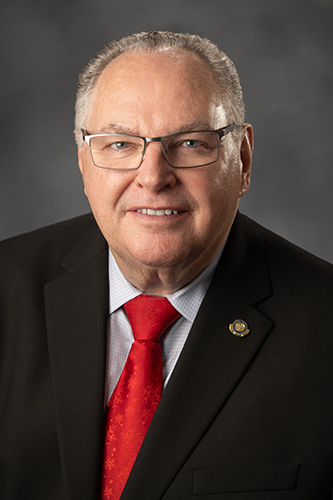
Sen. Rollan Roberts
Sponsored bills
Maddy summaryThis bill creates new criminal offenses for intentionally abusing or desecrating human remains, including mutilation, dismemberment, or unauthorized disposal of a deceased body or cremated remains. It establishes a base felony offense (1-5 years in prison or up to $5,000 fine) and an aggravated offense (2-10 years or $2,000-$10,000 fine) when the act involves concealment, obstruction, commercial exploitation, or connection to other felonies. The law applies to both bodies and cremated remains but exempts lawful activities by medical professionals, funeral directors, law enforcement, and researchers acting within legal authority. Prosecutions may occur in the county where the conduct happened or where the remains were discovered.
Maddy summarySB 388 requires all public elementary and secondary schools in West Virginia to make the Aitken Bible available in fourth, eighth, and 10th grade social studies classrooms. Schools may only use private donations to obtain the Bible - public funds cannot be used for this purpose. The bill explicitly applies to public charter schools authorized under West Virginia law. This legislation mandates the availability of the Aitken Bible in specified grades while restricting funding sources for its distribution.
Maddy summarySB 684 exempts private, parochial, and church schools in West Virginia from the state's requirement to teach specific courses, including state and U.S. history, civics, the U.S. Constitution, and government structure. This bill removes these schools from the curriculum mandates that apply to public schools for those subjects and from Celebrate Freedom Week obligations. As a result, private, parochial, and denominational schools will no longer be subject to these course requirements under state law. Public schools will continue to be required to follow the existing curriculum standards for these subjects.
Maddy summaryThis bill prohibits West Virginia's Public Service Commission from approving utility rate increases that include costs for intermittent power sources like solar or wind energy. It specifically blocks the Commission from considering construction, operation, maintenance, or decommissioning costs for facilities relying solely on variable energy sources (defined as those dependent on weather and not fully controllable). Existing contracts signed before the law takes effect are exempt, but new expansions or commitments to such projects cannot be included in rate hikes. The bill also requires the Commission to submit an annual report to the Legislature assessing the law's impact on energy rates, reliability, and affordability.
Maddy summaryThis bill amends West Virginia's dog racing licensing rules. It removes requirements that racetrack applicants must host a minimum number of live racing dates to obtain or maintain a license or to secure telecast wagering contracts. The bill also allows racetracks to operate simulcast racing (live races shown via video) without conducting any live dog racing, and simplifies licensing for video lottery operations at these venues. These changes directly affect dog racetracks seeking licenses or renewing operations, particularly those transitioning away from live racing.
Maddy summarySB 25 creates the West Virginia Coal Marketing Program and a dedicated state fund to support the coal industry. The program, administered by the Governor, uses registration fees from "Friends of Coal" vehicle plates to fund projects that protect coal markets, assist communities impacted by coal market changes, and educate the public about coal's economic role and modern practices. Key provisions include using funds for promotional campaigns highlighting coal's importance to West Virginia's identity, economy, and energy reliability, as well as addressing challenges in coal-dependent communities. Unspent funds carry over annually, and the Governor must report yearly on funded projects to the legislature. This bill directly affects state government operations, coal industry stakeholders, and communities facing economic shifts due to the coal sector.
Maddy summarySB 424, the Affordable Electricity and Economic Growth Act of 2026, would amend West Virginia law to streamline regulations for coal-based electricity generation and coke production (used in steelmaking) by requiring state agencies to simplify permitting processes. The bill directs the Department of Economic Development to lead efforts in promoting these industries, with the goal of leveraging the state's metallurgical coal resources to boost economic growth. It states that developing these sectors would improve economic opportunities, stabilize electricity prices, and strengthen West Virginia's competitiveness with neighboring states. The legislation aims to address regulatory barriers that have hindered coal-related projects compared to other states.
Maddy summarySB 546 establishes requirements for clothing and necessity allowances for children in foster care in West Virginia. It mandates that placement providers (foster parents, kinship caregivers, or residential providers) assess each child’s wardrobe and approved necessities (non-clothing items like hygiene products) at initial placement. If lacking, providers must obtain an initial allowance of at least $375 for immediate clothing and essentials, or supplementary allowances up to $175 for extraordinary needs like illness or damaged items. Payment options include a reloadable card (issued within 48 hours), a case worker’s purchasing card, or reimbursement (last resort), with requirements to maintain an inventory tracking the child’s items throughout all placements. The bill directly affects foster children, their caregivers, and the Department of Human Services.
Maddy summarySB 602 requires repeat DUI offenders in West Virginia to carry a special identification card indicating they are prohibited from purchasing alcohol. The card must feature a prominent red stripe and the words "No Alcohol Sale" on its front. This applies to individuals identified as "interdicted persons" under the law, meaning those legally barred from alcohol sales due to DUI convictions. The bill establishes the card's design, application process, and enforcement mechanisms for businesses to verify compliance. It does not change DUI penalties but creates a new identification requirement for affected individuals.