

Maddy summarySB 931 establishes the "West Virginia Utility Affordability and Economic Competitiveness Act" to address high utility costs by imposing a moratorium on rate increases for electricity and water utilities. The bill defines "affordability" as the lowest total cost of electricity (including all rates, fees, and charges) that minimizes financial burden on households and businesses while considering competitiveness with neighboring states. It sets reliability standards requiring electricity sources to maintain 80% performance without intermittent availability (excluding peaker plants) and mandates comprehensive cost evaluations factoring in environmental impacts and supply chain risks. These provisions aim to restore affordability and reliability for West Virginia residents and businesses, which the legislature states are foundational to economic development.
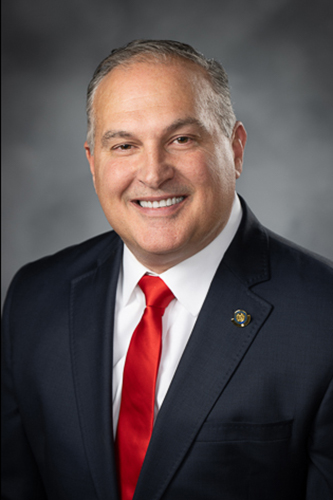
Sponsored bills
Maddy summaryWest Virginia's SB 917 imposes a 15% privilege tax on the retail sale of electric vehicle charging services at public charging stations. It directly affects charging station operators, who must collect the tax from customers and remit it monthly to the state. The tax applies to gross receipts from public charging services (e.g., per session or per kWh), excluding private or free charging. Revenue generated will fund the State Road Fund, aligning with the principle that road users should contribute to infrastructure maintenance.
Maddy summaryThis bill establishes rules for pharmacy benefit managers operating in West Virginia to protect pharmacies and patients from unfair pricing practices. It requires these managers to provide information about lower-cost drug alternatives without penalizing pharmacies for discussing them, and it prohibits charging pharmacies more than the amount patients pay out of pocket. The legislation also restricts how pharmacy benefit managers can handle 340B drug discounts, ensuring 340B pharmacies are not charged additional fees or subjected to extra administrative burdens compared to other pharmacies. Additionally, the bill mandates an annual study of dispensing fees and requires the implementation of a pharmacy cost containment tool to help control drug spending.
Maddy summarySB 615 (West Virginia Senate Bill 615) requires all state and local law enforcement agencies in West Virginia to notify U.S. Immigration and Customs Enforcement (ICE) when they determine an individual is in the U.S. without legal authorization. The bill directly affects undocumented immigrants in West Virginia and mandates that law enforcement cooperate with federal immigration authorities under federal law. Key provisions include prohibiting any state or local policies that would block this notification, and requiring agencies to follow federal immigration enforcement procedures. This bill changes how West Virginia law enforcement handles immigration status determinations, making notification to ICE mandatory rather than optional.
Maddy summarySenate Bill 822 (SB 822) revises West Virginia's "gold card" program, which grants healthcare providers expedited approval for certain services without prior authorization. The bill expands eligibility to include hospitals and department hospitals (state-run hospitals), revises qualification criteria, and extends the gold card's validity period. It also requires the Office of the Insurance Commissioner to standardize the process, permits providers to request performance data used in gold card decisions, and increases civil penalties for violations. This bill directly affects healthcare providers participating in the state's public employees insurance program by streamlining authorization processes and clarifying requirements.
Maddy summarySenate Bill 589 removes the mandatory certification requirement for recovery residences in West Virginia. It eliminates the need for these facilities - drug- and alcohol-free housing supporting individuals in substance use disorder recovery - to obtain a "certificate of compliance" from the Department of Human Services. The bill amends relevant code sections to delete the registration process while retaining definitions and other provisions. This change directly affects recovery residences and their operators by reducing regulatory requirements. The policy shift focuses on deregulation rather than altering the operational standards for these facilities.
Maddy summaryThis bill prohibits the use of specific synthetic food dyes and preservatives - including butylated hydroxyanisole, propylparaben, and FD&C dyes like Yellow No. 5 and Red No. 40 - in food products sold in West Virginia. It directly affects food manufacturers, processors, and retailers who sell products containing these ingredients. The law defines these substances as "adulterated" under food safety rules, banning them based on legislative findings linking them to health risks like cancer and childhood hyperactivity. The prohibition applies to products manufactured on or after January 1, 2028, with civil penalties for violations.
Maddy summarySB 783 proposes that defendants convicted of sexual battery (or attempted sexual battery) causing injury to the sexual organs of a child under 12 years old face a mandatory death penalty or life imprisonment without parole. The bill requires a separate sentencing hearing after conviction, where a jury must unanimously find at least two aggravating factors to consider the death penalty. If eight or more jurors recommend death, the court must impose it; otherwise, life without parole is required. This bill directly affects individuals convicted of this specific child sexual abuse offense in West Virginia.
Maddy summarySB 732 would permit Child Protective Services (CPS) workers to audio record all investigatory interactions with individuals under investigation for child abuse or neglect allegations. This applies to all CPS interactions, including home visits, but requires either the person’s informed consent or a court order when privacy expectations exist (e.g., in private homes). Recordings must be stored for the entire duration of the case. The bill directly affects CPS workers, families under investigation, and CPS offices, changing how investigations are documented without restricting case types or requiring new court referrals.
Maddy summarySB 716 would lower the participation requirement for West Virginia's volunteer firefighter tax credit from 30% to 20% of department activities. This change directly affects volunteer firefighters seeking the tax credit, making it easier to qualify by reducing the minimum activity threshold. The bill amends Section 11-13JJ-4 of the state code to update the participation percentage while keeping other eligibility conditions unchanged. Currently, firefighters must participate in 30% of activities; the bill would require only 20%.