

Maddy summaryThis bill updates the legal definitions and requirements for certified public accountants in West Virginia, affecting individuals seeking CPA certification, accounting firms, and the state Board of Accountancy. It clarifies key terms like "firm," "attestation services," and "affiliated entity" to align with current accounting standards and modernizes education, examination, and experience requirements for certification. The legislation also modifies the Board's rule-making authority and revises provisions regarding practice privileges for out-of-state practitioners, while updating rules on unlawful acts and disciplinary measures for licensees and firms.
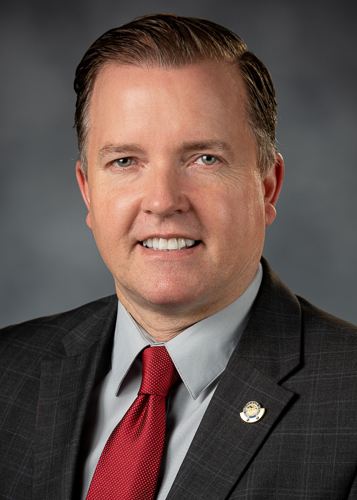
Sen. Mark Maynard
Sponsored bills
Maddy summaryThis Senate Resolution designates February 3, 2026, as "Marshall University Day" at the Capitol to honor the university's contributions. It recognizes Marshall University's history, alumni achievements, academic programs (including cybersecurity and health care), economic impact, and student-athlete success. The resolution has no binding policy effect - it is purely ceremonial, with no new requirements or funding for the university. The Senate adopted it unanimously by voice vote on February 3, 2026.
Maddy summarySB 732 would permit Child Protective Services (CPS) workers to audio record all investigatory interactions with individuals under investigation for child abuse or neglect allegations. This applies to all CPS interactions, including home visits, but requires either the person’s informed consent or a court order when privacy expectations exist (e.g., in private homes). Recordings must be stored for the entire duration of the case. The bill directly affects CPS workers, families under investigation, and CPS offices, changing how investigations are documented without restricting case types or requiring new court referrals.
Maddy summarySB 716 would lower the participation requirement for West Virginia's volunteer firefighter tax credit from 30% to 20% of department activities. This change directly affects volunteer firefighters seeking the tax credit, making it easier to qualify by reducing the minimum activity threshold. The bill amends Section 11-13JJ-4 of the state code to update the participation percentage while keeping other eligibility conditions unchanged. Currently, firefighters must participate in 30% of activities; the bill would require only 20%.
Maddy summaryThis Senate Concurrent Resolution (SCR 1) requests the West Virginia Division of Highways to rename specific bridges and road segments after military veterans and community members. It directly affects the Division of Highways, which would implement the proposed names for 15+ existing infrastructure locations across 10 counties. The resolution specifies exact locations (e.g., a bridge in Wayne County to be called the "Hercie Maynard Memorial Bridge" or a section of WV Route 10 as the "Purple Heart Trail") without creating new laws or funding. It is purely a naming request, not a policy change, and honors individuals with military service or local significance. The resolution was quickly adopted by both legislative chambers in January 2026.
Maddy summarySB 655, the Right to Race Act, grants legal immunity to existing West Virginia racetracks from nuisance lawsuits brought by neighbors who purchased property after the track was built. It protects racetracks from claims related to noise, disturbances, or other issues if the surrounding property was acquired later. The law also prevents local governments from passing ordinances that would restrict racetrack operations conflicting with this immunity. This applies only to racetracks operating before adjacent property ownership changed.
Maddy summarySB 546 establishes requirements for clothing and necessity allowances for children in foster care in West Virginia. It mandates that placement providers (foster parents, kinship caregivers, or residential providers) assess each child’s wardrobe and approved necessities (non-clothing items like hygiene products) at initial placement. If lacking, providers must obtain an initial allowance of at least $375 for immediate clothing and essentials, or supplementary allowances up to $175 for extraordinary needs like illness or damaged items. Payment options include a reloadable card (issued within 48 hours), a case worker’s purchasing card, or reimbursement (last resort), with requirements to maintain an inventory tracking the child’s items throughout all placements. The bill directly affects foster children, their caregivers, and the Department of Human Services.
Maddy summarySB 635, the Mountain Bike Responsibility Act, requires commercial trail operators in West Virginia to implement specific safety signage and trail markings. It mandates operators to display trail network maps at key locations, mark trails by difficulty level (using industry-standard colors/symbols), and clearly indicate closed trails at trailheads and intersections. The bill applies directly to commercial entities operating mountain bike trails and aerial tramways, defining their duties while clarifying that mountain bikers assume inherent sport risks. Currently pending in the Senate Judiciary Committee (introduced January 28, 2026), this bill establishes operational standards but does not alter existing liability laws for injuries.
Maddy summarySB 544 provides a temporary increase in subsidy payments for kinship parents (relatives caring for children) to match foster parent rates, lasting up to six months. To qualify, kinship parents must complete a state and national criminal background check within five days of placement, pass the check, undergo a home safety screening, and receive a list of child-placing agencies from the Department of Human Services to assist with foster parent certification. The temporary payment begins within 30 days of placement and continues monthly until certification is achieved or the six-month period ends, whichever comes first. Kinship parents cover the cost of background checks and fingerprinting.
Maddy summarySB 524 requires each county Bureau of Social Services office to hold a monthly meeting to review operations and coordinate with state and local partners on child welfare issues. The meetings must address staffing, caseloads, service barriers, and child welfare metrics, and include participants like county officials, law enforcement, schools, and healthcare representatives. The Department of Human Services must provide annual training on child abuse reporting and inter-agency coordination, and counties must submit a summary report after each meeting. This bill directly affects county social services offices and the state/local agencies involved in child welfare services.