

Maddy summarySB 267 extends the deadline for commercial drivers to renew or restore their commercial driver's licenses (CDLs) beyond the standard timeframe. This bill directly affects commercial drivers who missed initial renewal deadlines due to circumstances like medical issues or administrative delays. The key provision allows these drivers additional time to complete renewal or restoration requirements without losing their license status. The law took effect on August 8, 2025, after approval by the Governor on April 25, 2025.
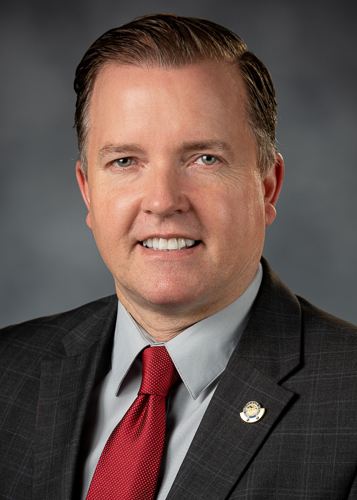
Sen. Mark Maynard
Sponsored bills
Maddy summarySB 573 prohibits local governments from banning or restricting the sale, purchase, or use of motor vehicles based on their power source (such as electric, hybrid, or gasoline). This directly affects vehicle buyers, sellers, and local governments that previously imposed such restrictions. The bill establishes a statewide standard, preventing cities or counties from enacting ordinances that target specific vehicle types. It took effect immediately upon the Governor's approval on April 24, 2025, as Chapter 232 of the 2025 Regular Session laws.
Maddy summarySB 617 defines "gang" as any group of three or more people engaging in specific crimes, and creates new criminal penalties for gang membership and recruitment. It makes joining a gang or assisting in gang-related crimes a felony punishable by up to 10 years in prison or a $25,000 fine, separate from the underlying crimes. The bill also adds penalties for intimidating witnesses in gang-related cases, with up to 10 years in prison. This law directly affects individuals who join gangs or recruit others, targeting ongoing criminal activity under West Virginia's Anti-Organized Criminal Enterprise Act.
Maddy summarySB 790 requires municipal and county governing bodies to mandate quarterly financial and operational reports from water, wastewater, and combined utility systems (including sanitary boards and public service districts). It directly affects local water utilities operating under municipal or county oversight, such as municipal waterworks, sewer systems, and public service districts. The bill establishes two key requirements: (1) quarterly reporting to governing bodies (municipal councils or county commissions), and (2) annual six-hour continuing education for board members and senior managers on financial management, regulatory compliance, and operational best practices. These provisions aim to improve financial accountability and operational efficiency in critical utility services.
Maddy summaryThis concurrent resolution (SCR 18) recognizes the West Virginia Legislature's intent to create the "West Virginia Coal Renaissance Act" but does not enact new law. It directs state agencies (like the Department of Commerce and Public Service Commission) to develop strategies for increasing coal usage in state power plants, including optimizing plant operations, preventing premature closures, and supporting coal production. The resolution specifically targets coal-fired electric utilities and plants, aiming to reverse years of declining coal use by aligning state policy with federal energy priorities under the Trump administration. It focuses on planning and coordination (e.g., quarterly progress reports) rather than mandating immediate policy changes.
Maddy summarySenate Resolution 50 is a non-binding request to the federal government to study and implement waterway restoration projects in West Virginia. The resolution specifically asks federal agencies to evaluate and act on debris removal, river bed stabilization, and restoration of natural water flow patterns to address existing flooding damage and prevent future flooding. It was prompted by historic flooding in West Virginia during winter and spring 2025, which left streams and rivers filled with debris that continues to damage property and infrastructure. The resolution requests federal action to mitigate these issues and reduce future recovery costs. This resolution is addressed to President Donald J. Trump and Elon Musk, in his alleged capacity as a special government employee.
Maddy summarySB 940 amends West Virginia's Water Pollution Control Act (§22-11-8(d)) to prevent local governments (political subdivisions) from imposing water pollution standards stricter than federal or state rules when administering permits under state delegation. It directly affects cities, counties, and other local entities that issue water pollution permits. The bill prohibits local ordinances from being more stringent than existing federal or state regulations, with limited exceptions specified in the law. This change ensures uniformity in pollution control standards across the state by preventing local governments from creating additional requirements.
Maddy summarySenate Concurrent Resolution 25 requests the Joint Committee on Government and Finance to study incentives and policies to better fund public libraries across West Virginia. The resolution highlights that public libraries serve as vital community resources, particularly in underserved and rural areas, providing free access to books, digital resources, educational programs, and job training. The committee is directed to report its findings, conclusions, and recommendations - including potential legislation - to the 2026 Legislature. This resolution does not directly fund libraries but aims to identify effective strategies for improving their financial support. The study will focus on how to best sustain library services that support literacy, workforce development, and community engagement statewide.
Maddy summarySCR 24 is a procedural resolution requesting the Joint Committee on Government and Finance to study West Virginia's medical residency program shortages. It directs the committee to examine why medical graduates remain "unmatched" in residency programs and explore solutions like allowing unmatched graduates to intern with licensed physicians in the state and addressing federal funding constraints for residency programs. The resolution specifically asks the committee to consider creating an Unmatched Medical Graduate Advisory Council to address these issues. The committee must report its findings and recommendations to the 2026 legislative session, with any proposed legislation drafted based on those recommendations. This resolution does not enact new policy but initiates a study to inform future action on physician shortages.
Maddy summarySB 67 allows the West Virginia Department of Transportation (WV DOT) to issue permits for sanctioned motor vehicle racing events on public roads, municipal streets, or airports under specific conditions. It directly affects motorsports sanctioning bodies (like recognized race organizers) seeking to host events, requiring them to obtain permits, provide insurance, and secure written permission from local authorities (counties, municipalities, or airports). Key provisions include a permit fee deposited into the State Road Fund to cover administrative costs, strict safety and traffic control requirements, and exemptions from standard road obstruction and speed laws for authorized events. The bill also clarifies that the state and WV DOT are not liable for event-related injuries or damage, shifting responsibility to permittees through indemnification agreements.