

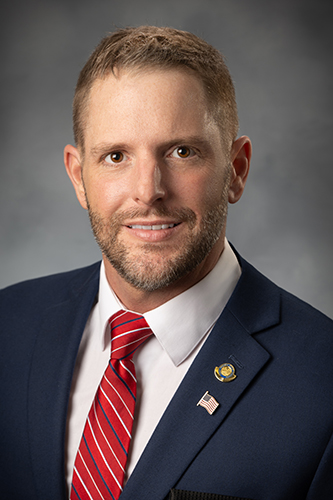
Maddy summarySB 680 requires West Virginia's Commissioner of the Division of Highways to create and submit an annual plan for routine repaving of all normally asphalt-surfaced state roads. This plan must outline how the state will systematically maintain road surfaces, directly affecting the Division of Highways and West Virginia residents who rely on state highways. The bill amends existing law to add this specific annual planning requirement, ensuring consistent road maintenance without changing other highway duties. It focuses on proactive, scheduled repaving rather than reactive repairs, applying to all standard asphalt roads in the state.
Sponsored bills
Maddy summarySB 684 requires the West Virginia Department of Education to review school closures and consolidations from the current year and the previous four years, then propose changes to the School Aid Formula that would have prevented at least 80% of closures justified by financial or operational reasons. The proposal must be submitted to the legislature within 180 days of the bill's passage. This bill directly affects school districts facing closures due to budget constraints by mandating a funding formula revision to prevent future closures. The key mechanism is the 80% prevention target for financially motivated closures, aiming to adjust funding to stabilize schools.
Maddy summarySB 685, the Non-Profit Transparency and Accountability Act, requires all West Virginia nonprofit organizations receiving any public funds (from state or federal sources) to comply with Freedom of Information Act (FOIA) requests exactly as government bodies do. This applies to nonprofits using public money for operations, mandating they respond to public records requests under the same rules as government agencies. The bill also requires these nonprofits to enroll in Open Checkbooks, a public database for tracking financial information. It directly affects nonprofits that receive public funding, aiming to increase transparency around how public money is spent.
Maddy summaryThis bill requires all electric utilities in West Virginia to offer customers a choice between smart meters and traditional manual meters for residential, business, and rental properties. Utilities must allow customers to opt out of smart meters - those that emit signals, contain batteries, or require wireless data transmission - in favor of manual meters that are read physically and have no electronic emissions. The law specifically excludes normal electromagnetic radiation from electricity flow as a concern under this requirement. It directly affects all electricity customers in West Virginia who wish to avoid smart meter technology for personal reasons.
Maddy summaryThis bill establishes specific licensing requirements for individuals and firms administering polygraph examinations (psychophysiological detection of deception) in West Virginia. To obtain a license, applicants must be 21+, U.S. citizens, have no disqualifying felony convictions (with a rational nexus review), honorable military discharge, pass a competency exam, complete six months of internship training, and meet education standards set by the Commissioner of Labor (without requiring a bachelor's degree for Class I or associate degree for Class II applicants). It creates two license types: Class I (general use) and Class II (for law enforcement employees only). The bill also mandates an annual fee paid into a dedicated fund for enforcement, with the Commissioner setting detailed rules for training, testing, equipment standards, and continuing education.
Maddy summarySenate Bill 676 allows veterinarians and veterinary technicians licensed in good standing in other U.S. states with equivalent requirements to practice in West Virginia without retaking exams or meeting all local licensing conditions. It requires applicants to have held an active license for five years in another state and provide documentation confirming no disciplinary actions. The bill directly affects licensed veterinary professionals seeking to work across state lines by simplifying their path to West Virginia licensure.
Maddy summarySB 688, the "Responsible Use of Facial Recognition Act," prohibits West Virginia law enforcement agencies from using facial recognition, real-time security monitoring, drones, license plate readers, and other specified surveillance technologies without a warrant based on probable cause. The bill requires that any facial recognition technology used must be developed and manufactured exclusively in the United States to address national security concerns about foreign technology providers. It establishes a working group within the Department of Homeland Security to create model policies for the responsible use of these technologies. The bill directly affects all law enforcement agencies in West Virginia and aims to strengthen Fourth Amendment protections against unreasonable searches.
Maddy summaryThis resolution designates March 3, 2025, as "Future Farmers of America Day" at the West Virginia Legislature. It commemorates the history and ongoing work of the National FFA Organization, which supports agricultural education for students across West Virginia (serving 6,968 members in 91 programs). The resolution has no policy impact - it is purely ceremonial, recognizing FFA's role in developing leadership and agricultural skills since its founding in 1928. It does not change laws or affect any specific groups beyond acknowledging FFA's contributions.
Maddy summarySB 659, the "Parents' Bill of Rights," codifies specific rights for parents of minor children in West Virginia. It directly affects parents by establishing their fundamental right to direct their child's education, health care, moral upbringing, and access to school records without government interference. Key provisions include requiring state entities to demonstrate "compelling state interest" before infringing parental rights, listing specific parental rights (e.g., choosing schools, making health decisions), and allowing parents to sue for violations. The bill creates a legal framework for parents to seek remedies like injunctions or damages if their rights are violated by schools, government, or officials.
Maddy summaryWest Virginia's SB 633, the "Protecting Kids from Porn Act," requires commercial adult websites (those offering over 25% explicit content) to implement strict age verification before allowing access to minors. This includes mandatory biometric facial recognition, government ID, and credit card authentication for users, with re-verification every 24 hours. Websites failing to comply face $1 million per violation, permanent state blocking, and civil liability up to $10,000 per minor exposed. The law prohibits circumvention via VPNs or proxies and establishes an Attorney General enforcement unit to audit compliance. It directly affects adult content platforms operating in West Virginia, not general internet users.