

Maddy summarySB 557 establishes a new licensing framework for genetic counselors in West Virginia, requiring criminal background checks for all applicants and mandating a valid license to practice. The bill sets specific licensure requirements, including continuing education, defines the scope of practice, and prohibits genetic counselors from representing themselves as licensed physicians - violations carry felony penalties (up to 2 years in prison or $2,000 fine). It creates a dedicated Genetic Counselors Practice Act within the state medical licensing system, replacing prior provisions and adding new rules for complaints, disciplinary actions, and license renewal. This directly affects genetic counselors, applicants, and healthcare facilities employing them in West Virginia.
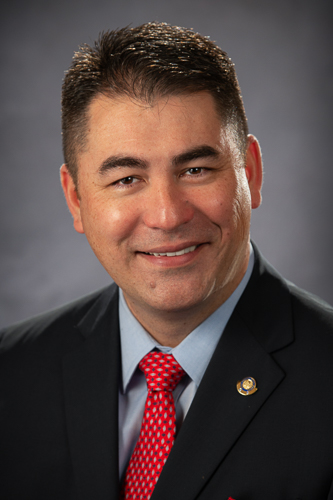
Sen. Tom Takubo
Sponsored bills
Maddy summarySB 514 requires that the full text of proposed constitutional amendments be printed on official ballots in West Virginia elections where voters decide on such changes. Currently, ballots include a title and summary, but this bill mandates adding the complete amendment text - showing any struck-through or underlined edits - alongside the title and summary. Ballot commissioners must place this full text on the ballot or ballot label, and if the Legislature fails to include it in the proposal, the Secretary of State will supply it. This change directly affects voters by providing complete information about constitutional proposals before they cast their vote.
Maddy summaryThis bill requires health insurers in West Virginia to cover medically necessary dental procedures directly related to cancer treatment, such as surgery, chemotherapy, radiation, or immunotherapy. It specifically covers services like exams, medications, dental devices, and rehabilitation needed to restore functions like eating, speaking, or swallowing after cancer care. Insurers must use a unique billing code ("West Virginia Code §33-64-1") for these services, with prescriptions for covered medications using a designated identifier. The law takes effect July 1, 2026, applying to most health insurance plans under the Affordable Care Act.
Maddy summaryWest Virginia's SB 119, the Stop the Bleed Act, requires all county school boards to implement bleeding control programs in public schools starting with the 2025-2026 school year. The bill mandates schools to place defined bleeding control kits (containing tourniquets, bandages, gauze, and training materials) in accessible locations, provide staff training every other year on hemorrhage control techniques, and incorporate bleeding control education into high school curricula for grades 9-12. Schools must annually inspect kits and restock after use, with personnel protected from civil liability for good-faith kit use (except in cases of gross negligence). Funding may come from private donations or state appropriations. The law directly affects all West Virginia public school districts and their staff and students.
Maddy summarySB 120 designates Marshall University's Forensic Analysis Laboratory as a backup provider for West Virginia's state DNA database during natural disasters or statewide emergencies, ensuring continuity of operations. It also designates the same laboratory as an additional site for analyzing DNA from unidentified human remains submitted by the Chief Medical Examiner. The bill grants Marshall University's lab access to national missing persons and unidentified remains databases to support identification efforts through the National Missing and Unidentified Persons System. Additionally, it requires the Chief Medical Examiner to collect specific DNA samples for inclusion in the state DNA databank.
Maddy summarySB 118 creates a program to address West Virginia's shortage of forensic pathologists by repaying their student loans. It directly affects medically trained forensic pathologists employed full-time by the Office of the Chief Medical Examiner who hold an accredited medical degree and West Virginia license. To qualify, applicants must complete 12 consecutive months of employment for each year of repayment requested (up to 10 years total), have eligible student loans in good standing, and meet specific loan balance requirements. The program offers up to $300,000 in total loan repayment over 10 years, administered annually by the Department of Health using a dedicated state fund, with awards based on funding availability.
Maddy summarySB 115 creates a tax credit for physicians who relocate to West Virginia to practice in medically underserved or health professional shortage areas. To qualify, physicians must be licensed in West Virginia, graduates of an accredited U.S. medical school, and have completed a residency within the past year. The credit equals up to the physician's personal taxable income for three consecutive years, but requires a six-year commitment to practice in the state; failure to meet this term triggers repayment. The credit is applied against state income tax and must be claimed annually through the tax return.
Maddy summaryWest Virginia's Senate Bill 216 requires public colleges and universities to provide free, confidential transportation to hospitals for students seeking a sexual assault forensic medical exam after experiencing sexual violence. Starting in the 2026-2027 academic year, institutions must arrange transportation - using options like campus staff, rape crisis center workers, or ride-sharing services - without charging students or compromising their privacy. The bill explicitly prohibits forcing students to use law enforcement vehicles for transport and mandates at least one non-police transportation option per campus. This policy directly affects students at state higher education institutions who report sexual violence and seek medical support.
Maddy summarySB 189 amends West Virginia law to allow spouses to testify for or against each other in criminal cases, removing the previous restriction that prevented one spouse from being compelled to testify against the other. The bill specifically permits spousal testimony in cases involving crimes committed by one spouse against a child, grandchild, or other close family members (like parents or siblings), as defined in the law. It also clarifies that a spouse’s decision not to testify cannot be used as evidence against the accused or commented on by the court or jury. This change directly affects spouses involved in criminal trials where family violence or harm to dependents is alleged.
Maddy summaryThis bill increases the annual dental coverage limit for West Virginia Medicaid enrollees aged 21 and older from an unspecified amount to $2,000 per year. It covers diagnostic/preventative services (like cleanings and x-rays) and restorative services (like fillings and crowns), but excludes cosmetic procedures such as teeth whitening or veneers. The bill requires managed care organizations to provide quarterly education to enrollees about dental benefits starting July 2025, and mandates annual reports to the legislature on program usage, provider participation, and service types. The Bureau for Medical Services must also base West Virginia dental rates on national averages by July 2025.