

Maddy summarySB 614 would allow West Virginia pharmacists to sell Ivermectin for human use without a prescription once the federal Food and Drug Administration (FDA) approves it for over-the-counter sale. The bill requires pharmacists to provide the FDA-approved patient information sheet at the time of sale and eliminates the need for a pharmacist consultation. It also protects pharmacists and healthcare providers from liability or disciplinary action for dispensing or recommending Ivermectin under these conditions, provided they act in good faith and follow applicable laws. This change would directly affect patients seeking Ivermectin and pharmacists operating in West Virginia.
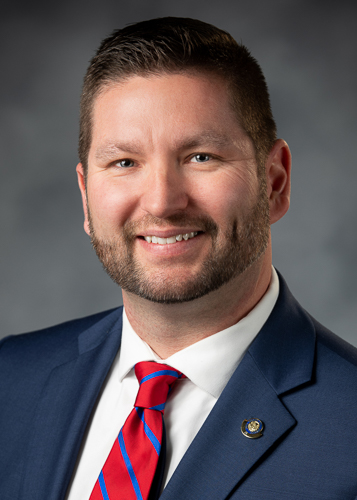
Sen. Jason Barrett
Sponsored bills
Maddy summaryThis Senate Joint Resolution (SJR 14) proposes a constitutional amendment to increase West Virginia's homestead exemption from $20,000 to $25,000 for eligible homeowners. It would directly affect seniors (65+ years) and permanently disabled residents who own and occupy their primary home as their residence. The amendment, if approved by voters in the 2026 general election, would change the state constitution to set a $25,000 exemption limit on property taxes for qualifying residential properties. This would reduce property tax burdens for affected homeowners by exempting a larger portion of their home's assessed value. The bill is currently pending in the Senate Judiciary Committee and requires voter ratification to take effect.
Maddy summaryWest Virginia's SB 545 bans seven specific artificial food dyes (Red 3, Red 40, Yellow 5, Yellow 6, Blue 1, Blue 2, and Green 3) from all meals served in school nutrition programs starting August 1, 2025. The bill directly affects public schools by prohibiting these dyes as ingredients in school-provided meals. It allows schools to sell non-compliant food items during fundraising events held off-campus or at least 30 minutes after school ends. This change aims to remove dyes deemed potentially harmful, focusing on school meal safety without restricting other food sales.
Maddy summaryThis Senate Resolution (SR 14) formally recognizes Leadership Berkeley, a community organization in Berkeley County, West Virginia, for its work promoting civic engagement and community development. It acknowledges the group's efforts to educate members on local issues and foster collaboration across Berkeley County's business, government, and civic sectors. The resolution expresses the Senate's appreciation for the organization's dedication and contributions to the county. As a symbolic gesture with no new policy or funding, it does not directly affect residents or create legal obligations. The resolution was adopted unanimously by the Senate on February 26, 2025.
Maddy summaryThis Senate Resolution (SR 13) memorializes Wanda Porterfield Casto, a 34-year part-time Senate Secretary/Administrative Assistant who served the West Virginia Senate and dedicated her life to public service. The resolution formally honors her legacy as a wife, mother, grandmother, and public servant, extending the Senate's deepest sympathies to her family following her passing on May 20, 2024. It directs the Senate Clerk to send a copy of the resolution to her family. As a commemorative resolution, it has no policy impact and serves solely to recognize her contributions.
Maddy summaryThis bill transfers $25 million from the Economic Development Fund (fund 9060) to the unappropriated surplus balance in the General Revenue State Fund for fiscal year 2025. It directly affects state budget accounting by making unused economic development funds available for other state appropriations during the same fiscal year. The key mechanism is a simple reallocation of funds - expiring the unspent amount in the Economic Development Fund to the General Revenue surplus. This procedural change does not alter spending priorities but adjusts how unspent funds are handled in the state budget.
Maddy summaryThis Senate Resolution (SR 3) creates a Select Committee on Substance Use Disorder and Mental Health for the Eighty-Seventh Legislature. The committee, appointed by the Senate Presiding Officer (up to 17 members), will gather information on prevention, treatment, research, policies, access to care, and funding related to substance use disorders and mental health. It may meet during legislative interims and has jurisdiction over related legislative proposals, operating under Senate committee rules. This is a procedural resolution establishing a committee, not a law changing policy.
Maddy summarySJR 11 proposes a constitutional amendment to West Virginia's Constitution that would change term limits for county sheriffs. Currently, a sheriff who serves two consecutive terms becomes ineligible for the next term. The amendment would specifically allow a person appointed to fill a sheriff's term with less than two years remaining to run for two consecutive terms after their appointment. This change would apply only to those appointed to finish terms with less than two years left, while maintaining the general rule for elected sheriffs. The amendment would require voter approval in the 2026 general election to take effect.
Maddy summaryThis bill amends West Virginia law to establish reckless driving resulting in death as a felony offense, rather than a misdemeanor. It directly affects drivers who cause fatal accidents through willful or wanton disregard for safety on roads, parking areas, or other specified public spaces. Conviction carries a prison sentence of 1 to 10 years, or a fine of $5,000 to $10,000, or both. The bill updates existing traffic code provisions (§17C-5-3) to create this felony classification while making technical corrections to the law.
Maddy summarySB 188 increases the prison sentence for voluntary manslaughter in West Virginia by raising the minimum term from 3 years to 5 years and the maximum from 15 years to 25 years. It also requires that individuals convicted under this law serve at least 5 years before becoming eligible for parole, or a longer period as specified by other law. This bill directly affects people convicted of voluntary manslaughter, resulting in longer mandatory prison terms. The change applies to all future convictions under this offense, without altering other legal procedures or sentencing factors.