

Maddy summarySB 617 defines "gang" as any group of three or more people engaging in specific crimes, and creates new criminal penalties for gang membership and recruitment. It makes joining a gang or assisting in gang-related crimes a felony punishable by up to 10 years in prison or a $25,000 fine, separate from the underlying crimes. The bill also adds penalties for intimidating witnesses in gang-related cases, with up to 10 years in prison. This law directly affects individuals who join gangs or recruit others, targeting ongoing criminal activity under West Virginia's Anti-Organized Criminal Enterprise Act.
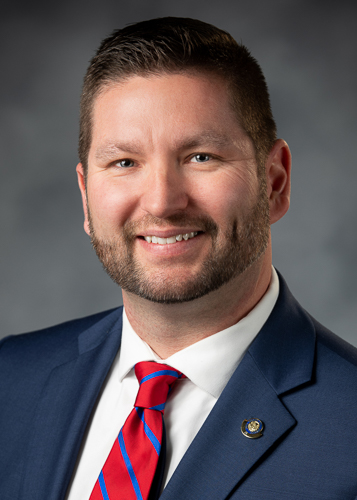
Sen. Jason Barrett
Sponsored bills
Maddy summarySenate Resolution 50 is a non-binding request to the federal government to study and implement waterway restoration projects in West Virginia. The resolution specifically asks federal agencies to evaluate and act on debris removal, river bed stabilization, and restoration of natural water flow patterns to address existing flooding damage and prevent future flooding. It was prompted by historic flooding in West Virginia during winter and spring 2025, which left streams and rivers filled with debris that continues to damage property and infrastructure. The resolution requests federal action to mitigate these issues and reduce future recovery costs. This resolution is addressed to President Donald J. Trump and Elon Musk, in his alleged capacity as a special government employee.
Maddy summarySB 940 amends West Virginia's Water Pollution Control Act (§22-11-8(d)) to prevent local governments (political subdivisions) from imposing water pollution standards stricter than federal or state rules when administering permits under state delegation. It directly affects cities, counties, and other local entities that issue water pollution permits. The bill prohibits local ordinances from being more stringent than existing federal or state regulations, with limited exceptions specified in the law. This change ensures uniformity in pollution control standards across the state by preventing local governments from creating additional requirements.
Maddy summarySB 124 reduces the time limits for filing lawsuits to recover money owed under contracts in West Virginia. It shortens the deadline for written contracts from 10 years to 5 years and for oral contracts from 5 years to 2 years. The bill also clarifies that the "discovery rule" applies, meaning the time limit starts when a person discovers or should have discovered the issue, not when the contract was breached. This directly affects individuals and businesses seeking to sue for unpaid services or goods under written or oral agreements. The changes apply to contracts, certain bonds, and recognizances as specified in the bill's provisions.
Maddy summarySenate Concurrent Resolution 25 requests the Joint Committee on Government and Finance to study incentives and policies to better fund public libraries across West Virginia. The resolution highlights that public libraries serve as vital community resources, particularly in underserved and rural areas, providing free access to books, digital resources, educational programs, and job training. The committee is directed to report its findings, conclusions, and recommendations - including potential legislation - to the 2026 Legislature. This resolution does not directly fund libraries but aims to identify effective strategies for improving their financial support. The study will focus on how to best sustain library services that support literacy, workforce development, and community engagement statewide.
Maddy summarySCR 24 is a procedural resolution requesting the Joint Committee on Government and Finance to study West Virginia's medical residency program shortages. It directs the committee to examine why medical graduates remain "unmatched" in residency programs and explore solutions like allowing unmatched graduates to intern with licensed physicians in the state and addressing federal funding constraints for residency programs. The resolution specifically asks the committee to consider creating an Unmatched Medical Graduate Advisory Council to address these issues. The committee must report its findings and recommendations to the 2026 legislative session, with any proposed legislation drafted based on those recommendations. This resolution does not enact new policy but initiates a study to inform future action on physician shortages.
Maddy summaryThis is a ceremonial Senate Resolution (SR 44) honoring basketball legend Jerry West, a native of West Virginia. It memorializes his life and legacy, recognizing his birth in Chelyan, West Virginia; his high school and college career at West Virginia University; his NBA playing career with the Los Angeles Lakers; and his contributions to basketball as a player, coach, and executive. The resolution also acknowledges his philanthropy, including the Jerry West Scholarship for WVU students. It does not create new laws or affect any policies - it is a formal tribute expressing the Senate's respect and extending sympathy to his family.
Maddy summarySJR 8 proposes a constitutional amendment requiring all voters in West Virginia elections to be U.S. citizens. The amendment would add language to the state constitution stating: "Only citizens of the state who are citizens of the United States shall be entitled to vote at all elections." This would codify the existing requirement that voters must be U.S. citizens, which is already enforced under current law. The proposal must be approved by voters in the 2026 general election to take effect.
Maddy summaryThis bill increases the homestead property tax exemption for eligible West Virginia residents from $20,000 to $25,000 of assessed value. It directly affects homeowners aged 65+ or certified as permanently and totally disabled who own and occupy their primary residence in West Virginia, requiring two consecutive years of state residency (with limited exceptions for military returnees or those relocating within five years). The key mechanism deducts the exemption amount from a home's assessed value on property tax records, eliminating taxes if the exemption exceeds the home's value. The change is contingent on voters approving a constitutional amendment to permit the higher exemption, and the bill repeals a prior limitation on property tax levy rates.
Maddy summarySB 874 would allow current home confinement officers in West Virginia to join the Emergency Medical Services Retirement System (EMSRS). This bill amends the state code to explicitly include home confinement officers in the EMSRS eligibility requirements, which previously excluded them. The key mechanism is adding a new section (§16-5V-6f) to the EMSRS law, granting these officers access to the same retirement benefits as other EMS personnel. It directly affects current home confinement officers by providing them with retirement system participation they were previously denied. The bill does not change benefit calculations or funding mechanisms but expands eligibility to a specific group of public safety workers.