

Maddy summarySB 934 defines "low-proof spirit alcohol products" as canned beverages containing 0.5% to 15.5% alcohol by volume (31 proof), made by distilling and mixing with ingredients like seltzer, juice, or flavorings. This definition directly affects manufacturers, retailers, and regulators by clarifying which products fall under this specific category under West Virginia's alcohol laws. The bill does not create new sales rules or restrictions but establishes a clear regulatory category for these canned, low-alcohol beverages. It amends existing definitions in the state's alcohol code to distinguish these products from beer, wine, and higher-proof spirits.
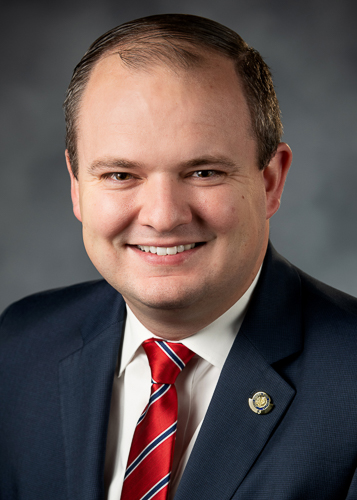
Sen. Ben Queen
Sponsored bills
Maddy summarySJR 16 proposes a constitutional amendment to increase West Virginia's homestead property tax exemption from $20,000 to at least $25,000 for qualifying homeowners. The amendment would affect homeowners aged 65 or older, or those who are permanently and totally disabled, who own and occupy their homes as primary residences. If approved by voters in the 2026 general election, it would change the constitutional language governing homestead exemptions while allowing the Legislature to make further modifications to the exemption through regular legislation after January 1, 2027. The amendment is currently pending voter approval as a proposed constitutional change.
Maddy summarySB 105 updates retirement eligibility for county sheriffs in West Virginia who are enrolled in the public retirement system. It clarifies that sheriffs may retire at age 62 with at least eight years of actual, contributing service as an elected sheriff, instead of the standard requirement of age 60 with five years of service for other public employees. The bill specifically applies to sheriffs not participating in another retirement system administered by the retirement board. This change modifies Section 5-10-20 of West Virginia’s retirement law to explicitly address sheriffs’ eligibility.
Maddy summaryThis bill (SB 100) allows West Virginia State Police members in the retirement system to convert accrued sick or annual leave into additional retirement credit. Current members who joined before July 1, 2015, get two months of retirement credit for every month of leave used (based on 8-hour leave days), while newer members (joining July 1, 2015, or later) get one month of credit per month of leave used. The bill clarifies that leave days equal eight hours and specifies how unused partial credits (less than 10 workdays) are handled. It directly affects State Police retirees by potentially increasing their retirement benefits through unused leave.
Maddy summaryThis bill exempts up to $25,000 of the cash value or death benefit from life insurance policies from asset calculations when determining eligibility for West Virginia Medicaid. It directly affects residents applying for Medicaid who own life insurance policies, allowing them to retain more policy value without losing benefits. The key provision sets a clear $25,000 threshold for exemption, meaning only amounts above this limit would count toward Medicaid asset limits. This change modifies how Medicaid assesses applicants' financial resources, specifically excluding qualifying life insurance assets from the calculation.
Maddy summaryThis bill allows classroom teachers who joined West Virginia's Teachers Retirement System on or after July 1, 2015, to sell up to 10 unused personal leave days to their county school board for cash. Teachers receive 80% of the county's rate for a substitute teacher with a bachelor's degree and 10 years' experience per day, paid by June 30. Once sold, those leave days are permanently forfeited and cannot be used for any future purpose. The policy directly affects eligible teachers by providing a one-time cash option for unused leave instead of carrying it forward.
Maddy summarySB 853 clarifies registration requirements for individuals and organizations bidding at public auctions of tax-abandoned land held by West Virginia's State Auditor. It requires bidders to register in advance with the Auditor's office or submit a notarized affidavit on the auction day, and prohibits registration for those with past payment defaults, delinquent property taxes, repeated code enforcement violations, or unresolved legal disputes related to property ownership. The bill specifically allows 501(c)(3) nonprofit organizations focused on housing or public facilities to bid at auctions, provided their bid is no more than 5% lower than the highest non-nonprofit bid. This affects anyone seeking to purchase tax-foreclosed land through county auctions, ensuring bidders meet specific eligibility criteria before participating.
Maddy summaryThis is a ceremonial resolution (SR 37), not a bill with policy changes. It formally recognizes the Energy Council's 50th anniversary and commends the organization for its work since 1975. The resolution expresses the West Virginia Senate's appreciation for the Council's role in fostering nonpartisan collaboration among energy policymakers across 14 U.S. states and two Canadian provinces. It has no binding effect or impact on energy policy, funding, or regulations.
Maddy summarySB 811 creates a pilot program providing financial subsidies to eligible child care workers in West Virginia to help cover their own child care costs. The subsidy covers 50% to 100% of eligible workers’ child care expenses, with eligibility based on employment hours and household income, as defined by rules to be established by the Department of Human Services by December 2025. The program runs from 2026 through 2028, requiring annual reports on participation, funds disbursed, worker retention, and feedback, plus a final evaluation to inform future decisions. Funding will come from state appropriations, federal grants, or other sources.
Maddy summaryThis Senate Resolution (SR 30) is a ceremonial acknowledgment of the 80th anniversary of the Claude Worthington Benedum Foundation. It recognizes the Foundation’s history since 1944, its focus on community/economic development, education, health, and entrepreneurship in West Virginia, and its role in supporting rural initiatives. The resolution has no policy impact or funding provisions - it simply expresses the Senate’s appreciation and directs a copy to the Foundation. It was adopted by voice vote on March 14, 2025.