

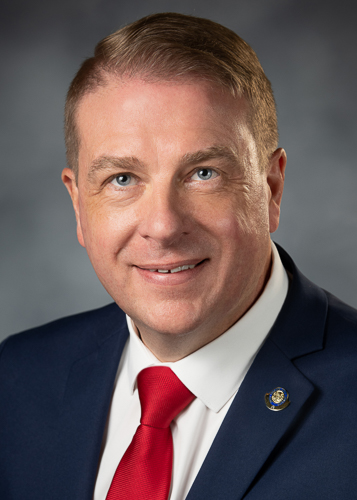
Photo of Vince Deeds
R West Virginia Senate · District 10 On the 2026 ballot

Sen. Vince Deeds

Compare
Total votes
1,930
all sessions
Attendance
100%
1 missed
Higher than 80% of chamber peers
With party
97%
of cast votes
Near the chamber average
Bipartisan score
1%
crosses aisle rarely
Near the chamber average
Sponsored
740
bills & resolutions
Higher than 91% of chamber peers
Committees
16
assignments
740 bills and resolutions

Sponsored bills

Total
740
Primary
129
Co-sponsor
611
This page
740
matching current filters
Co-sponsor SB 566
In committee · West Virginia Senate · Co-sponsor
Providing certified law-enforcement officers tuition-free education up to highest tuition rate for public higher education in WV

Maddy summarySB 566 provides tuition coverage for certified law enforcement officers in West Virginia pursuing education. It covers tuition and fees for one certificate, one undergraduate degree, one master's degree, and up to two doctorate degrees annually per officer, capped at the highest public university tuition rate. Officers must serve one year for every year of tuition covered or repay the costs. The program requires the Secretary of Homeland Security to set eligibility rules and administer payments, with reductions if officers receive other grants. It directly affects certified officers seeking education while serving in West Virginia.

In committee Mar 5, 2025 1 co-sponsor
Primary SB 698
In committee · West Virginia Senate · Lead sponsor
Relating to open captioning for motion pictures

Maddy summarySB 698 requires movie theater exhibitors operating six or more locations across multiple sites in West Virginia to provide open captioning for at least two showings per week of any film that includes open captioning in its production. It also mandates that theaters offer audio description upon request for films produced with audio description. The law excludes drive-in theaters and prohibits requiring exhibitors to purchase new equipment if it would create an undue burden or alter their business operations. This bill directly affects large theater chains in West Virginia, aiming to improve accessibility for deaf and hard-of-hearing moviegoers.

In committee Mar 5, 2025 0 co-sponsors
Co-sponsor SB 534
Passed · West Virginia Senate · Co-sponsor
Clarifying qualifications to be licensed to administer polygraphs

Maddy summaryThis bill establishes specific licensing requirements for individuals and firms administering polygraph examinations (psychophysiological detection of deception) in West Virginia. To obtain a license, applicants must be 21+, U.S. citizens, have no disqualifying felony convictions (with a rational nexus review), honorable military discharge, pass a competency exam, complete six months of internship training, and meet education standards set by the Commissioner of Labor (without requiring a bachelor's degree for Class I or associate degree for Class II applicants). It creates two license types: Class I (general use) and Class II (for law enforcement employees only). The bill also mandates an annual fee paid into a dedicated fund for enforcement, with the Commissioner setting detailed rules for training, testing, equipment standards, and continuing education.

Passed Mar 4, 2025 1 co-sponsor
Co-sponsor SB 484
In committee · West Virginia Senate · Co-sponsor
Relating to disclosures and penalties associated with use of synthetic media and artificial intelligence

Maddy summaryWest Virginia's SB 484 prohibits political campaigns from distributing AI-generated election content that falsely depicts individuals without consent within 90 days of an election, unless a clear disclaimer is included. The required disclaimer must be prominently displayed (matching font size for text, clearly spoken for audio), include technical metadata about the media's creation, and remain permanently visible. Exemptions cover bona fide news coverage that discloses authenticity concerns and paid broadcasts by media outlets. The law targets deceptive election tactics while preserving journalistic protections and platform responsibilities under federal law.

In committee Mar 4, 2025 1 co-sponsor
Co-sponsor SB 622
In committee · West Virginia Senate · Co-sponsor
Authorizing compensation for certain lower court staff

Maddy summarySenate Bill 622 changes how salaries are set for specific lower court staff in West Virginia. It replaces fixed annual salary amounts for magistrate court clerks, magistrate assistants, magistrate court deputy clerks, family court secretary-clerks, and family case coordinators with a pay scale determined by the Administrative Director of the Supreme Court of Appeals. This means future salary adjustments for these positions will follow the same process as other state employees' raises, rather than using the previously set statutory figures. The bill directly affects these court staff members across all West Virginia counties.

In committee Mar 4, 2025 1 co-sponsor
Co-sponsor SB 234
Passed · West Virginia Senate · Co-sponsor
Increasing value at which municipal property must be sold through public auction

Maddy summarySB 234 increases the threshold requiring public auction sales of municipal property from $1,000 to $10,000. It also allows municipalities to negotiate direct sales of real property with adjacent property owners when the governing body determines this is the "highest and best use" of the land. The bill affects all West Virginia municipalities, municipal building commissions, and municipal development authorities. This change reduces the need for public auctions on lower-value properties and provides flexibility for adjacent landowner transactions.

Passed Mar 3, 2025 1 co-sponsor
Co-sponsor SB 545
In committee · West Virginia Senate · Co-sponsor
Banning certain products from food in WV

Maddy summaryWest Virginia's SB 545 bans seven specific artificial food dyes (Red 3, Red 40, Yellow 5, Yellow 6, Blue 1, Blue 2, and Green 3) from all meals served in school nutrition programs starting August 1, 2025. The bill directly affects public schools by prohibiting these dyes as ingredients in school-provided meals. It allows schools to sell non-compliant food items during fundraising events held off-campus or at least 30 minutes after school ends. This change aims to remove dyes deemed potentially harmful, focusing on school meal safety without restricting other food sales.

In committee Mar 3, 2025 1 co-sponsor
Co-sponsor SB 654
In committee · West Virginia Senate · Co-sponsor
Creating WV ALS Care Services Act

Maddy summarySB 654 creates West Virginia's ALS Care Services Act, providing state-funded support for residents diagnosed with ALS and their caregivers. The bill requires the Department of Human Services to fund three key services: care coordination and support, access to assistive technology and medical equipment (including a ramp loan program for home modifications), and access to multidisciplinary ALS clinics. It appropriates $250,000 from the General Revenue Fund for Fiscal Year 2026 to implement these programs, aiming to help ALS patients remain safely at home while reducing healthcare costs.

In committee Mar 3, 2025 1 co-sponsor
Co-sponsor SB 656
In committee · West Virginia Senate · Co-sponsor
Relating to impeding, threatening, or harassing first responders

Maddy summarySB 656 creates a 25-foot buffer zone around first responders during lawful duties. It directly affects bystanders who ignore verbal warnings to stay back while police, firefighters, probation officers, or emergency responders are working. The bill prohibits approaching within 25 feet with intent to impede duties, threaten harm, or harass the responder. Violations are punishable by fines up to $500 or up to one year in jail. This law aims to protect responders from close proximity interference during critical operations.

In committee Mar 3, 2025 1 co-sponsor
Co-sponsor SB 253
In committee · West Virginia Senate · Co-sponsor
Creating Chronic Weight Management Task Force

Maddy summarySB 253 creates the West Virginia Chronic Weight Management Task Force to study obesity and type 2 diabetes management. The task force, composed of the State Health Officer (as chair), legislative members, and appointed experts from health organizations (including diabetes nonprofits, community health offices, and patient advocates), will examine health interventions, barriers to care, and data-driven solutions. It must report findings to the Joint Committee on Health annually starting December 31, 2025, and make recommendations for legislative action by December 31, 2027. The bill requires state agencies like the Department of Health to provide administrative support and cooperate with the task force’s work.

In committee Feb 28, 2025 1 co-sponsor
Showing 271 to 280 of 740 bills
Previous 1 … 27 28 29 … 74 Next