

Maddy summaryThis bill updates the legal definitions and requirements for certified public accountants in West Virginia, affecting individuals seeking CPA certification, accounting firms, and the state Board of Accountancy. It clarifies key terms like "firm," "attestation services," and "affiliated entity" to align with current accounting standards and modernizes education, examination, and experience requirements for certification. The legislation also modifies the Board's rule-making authority and revises provisions regarding practice privileges for out-of-state practitioners, while updating rules on unlawful acts and disciplinary measures for licensees and firms.
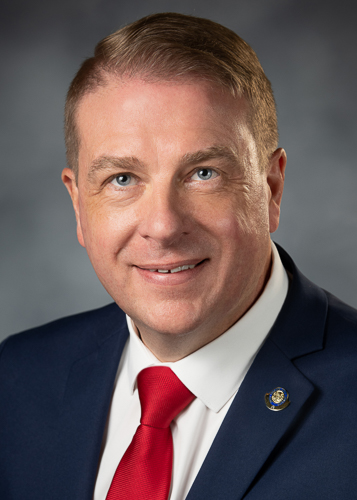
Sen. Vince Deeds
Sponsored bills
Maddy summarySB 720 establishes the West Virginia Comprehensive Student and Family Support Act to create a coordinated system of services for students facing barriers like emotional, behavioral, or developmental challenges that risk academic failure, suspension, or out-of-home placement. It directly affects eligible students in West Virginia public schools who are at risk of dropout, exclusion, or placement, prioritizing those transitioning from juvenile justice or foster care. The bill creates a state fund to pool public resources, requires local teams to coordinate education, health, and social services, and mandates outcome tracking (like attendance and behavioral progress) through a State Oversight Office within the West Virginia Department of Education. This system aims to reduce duplication, improve educational outcomes, and ensure accountability via annual reporting and audits.
Maddy summarySB 716 would lower the participation requirement for West Virginia's volunteer firefighter tax credit from 30% to 20% of department activities. This change directly affects volunteer firefighters seeking the tax credit, making it easier to qualify by reducing the minimum activity threshold. The bill amends Section 11-13JJ-4 of the state code to update the participation percentage while keeping other eligibility conditions unchanged. Currently, firefighters must participate in 30% of activities; the bill would require only 20%.
Maddy summaryThis bill creates new criminal offenses for intentionally abusing or desecrating human remains, including mutilation, dismemberment, or unauthorized disposal of a deceased body or cremated remains. It establishes a base felony offense (1-5 years in prison or up to $5,000 fine) and an aggravated offense (2-10 years or $2,000-$10,000 fine) when the act involves concealment, obstruction, commercial exploitation, or connection to other felonies. The law applies to both bodies and cremated remains but exempts lawful activities by medical professionals, funeral directors, law enforcement, and researchers acting within legal authority. Prosecutions may occur in the county where the conduct happened or where the remains were discovered.
Maddy summarySB 696 would amend West Virginia law to explicitly permit women's wrestling as a sanctioned sport in public high schools and public charter schools. The bill directs the West Virginia Secondary School Activities Commission (WVSSAC) to include women's wrestling in its list of approved athletic events, ensuring it can be offered as a competitive sport. This change directly affects public school athletic programs and students, allowing female athletes to participate in wrestling under the same rules as other sanctioned sports. The bill does not alter existing eligibility requirements for student athletes but adds wrestling to the Commission's approved sports list.
Maddy summarySB 388 requires all public elementary and secondary schools in West Virginia to make the Aitken Bible available in fourth, eighth, and 10th grade social studies classrooms. Schools may only use private donations to obtain the Bible - public funds cannot be used for this purpose. The bill explicitly applies to public charter schools authorized under West Virginia law. This legislation mandates the availability of the Aitken Bible in specified grades while restricting funding sources for its distribution.
Maddy summaryThis Senate Resolution (SR 23) designates February 2, 2026, as "Future Farmers of America Day" at the West Virginia Legislature. It recognizes the history and impact of the National FFA Organization, including its founding in 1928 and its current role serving over 7,489 students across 91 agricultural education programs in West Virginia. The resolution has been adopted by the Senate and directs the Clerk to send a copy to the West Virginia Farm Bureau. It is a ceremonial resolution with no new policy or funding provisions.
Maddy summarySB 688 creates a new criminal offense in West Virginia for recklessly harming or interfering with service animals that assist people with disabilities. It prohibits actions like striking, taunting, throwing objects at, or obstructing service animals - whether they are actively working or the offender knows the animal is a service animal. Violators face up to one year in jail, a $500 fine, or both, plus full restitution for costs including veterinary care, replacement animal expenses, and lost income for the handler. The bill directly affects service animal handlers and anyone who harms these animals during their duties.
Maddy summarySB 673 imposes a 3-cent tax per milligram of nicotine on all e-cigarette products sold in West Virginia, replacing a previous tax based on product type. This tax applies to both disposable (closed-system) and refillable (open-system) devices, with fallback rates (40mg per unit for disposables, 6mg/mL for refillables) if labeling is unclear. All revenue generated will be directed to the Public Employees Insurance Agency (PEIA) to reduce or stabilize state employees' health insurance premiums, without replacing existing employer contributions. The bill directly affects e-cigarette distributors and manufacturers in the state, effective July 1, 2026.
Maddy summarySB 682 authorizes West Virginia's Director of Natural Resources to create rules requiring motorboat operators with engines larger than 9.9 horsepower to run in idle mode on lakes designated for smaller boats. This directly affects boat operators using lakes where smaller engines (9.9 hp or less) are typically permitted. The bill enables the Director to establish these operational rules and impose fines for violations, without specifying exact lake locations or penalty amounts. It modifies existing law to give the Director authority to regulate motorboat operations on specific waterways, aligning with federal navigation standards. The policy change focuses on reducing noise and disturbance in designated quiet-lake areas.