

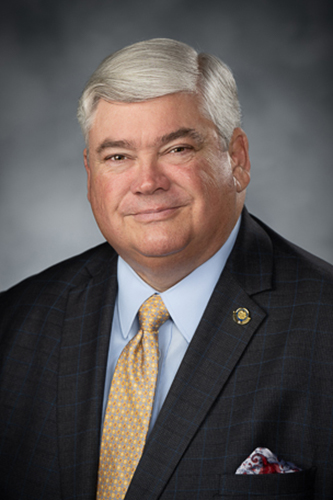
Maddy summaryThis Senate resolution formally recognizes the dedicated public service of Honorable Michael Andrew Woelfel, a former West Virginia State Senator. The bill honors his career as a prosecutor, juvenile court referee, university professor, and legislator who served three consecutive terms in the Senate. It expresses the Senate's appreciation for his contributions to West Virginia citizens and directs the Clerk to send a copy of the resolution to Woelfel. This is a commemorative measure with no policy changes or budgetary impact.
Sponsored bills
Maddy summaryThis Senate Concurrent Resolution requests a study by the Joint Committee on Government and Finance to examine whether hunters in West Virginia should be required to buy an additional upland game bird stamp when purchasing a standard hunting license. The proposed stamp would apply to hunters targeting species like ruffed grouse, bobwhite quail, and ring-necked pheasant specifically within wildlife management areas. The resolution includes preliminary data suggesting a $10 stamp could generate about $37,000 in revenue if half of the approximately 7,300 licensed hunters purchased it, with funds potentially used to stock more game birds. The committee is asked to report its findings and any legislative recommendations by the 2027 regular session, with study costs covered through existing legislative appropriations.
Maddy summaryThis Senate resolution formally recognizes the dedicated public service of Honorable Charles Houston Clements, a former West Virginia state senator. The bill honors Clements for his legislative career, including his service as Chair of the Transportation and Infrastructure Committee and his decision not to seek reelection in 2026. It expresses the Senate's appreciation for his commitment to serving West Virginia citizens and directs the Clerk to send a copy of the resolution to Clements.
Maddy summaryThis legislative resolution asks the Joint Committee on Government and Finance to investigate the ongoing water quality and infrastructure problems in southern West Virginia, especially in McDowell and Wyoming counties. The study will examine causes of poor water quality, potential contamination sources, the condition of existing water systems, and whether state agencies are properly regulating the situation. The committee is required to report its findings and recommendations to the legislature by the 2027 session, with costs covered by legislative funding.
Maddy summaryThis Senate Resolution encourages private businesses in West Virginia to explore commercial opportunities with mining and mineral processing institutions in Somalia, focusing on rare earth critical minerals. The bill highlights West Virginia's expertise in surface mining and mineral processing as a potential global hub while emphasizing that all commercial activities must remain private-sector initiatives compliant with U.S. laws and regulations. It explicitly states that the resolution does not create any government agreements or commitments and does not constitute foreign policy, while directing copies to Somali and U.S. officials to facilitate dialogue.
Maddy summarySB 972, or "Raylee's Law," temporarily restricts custodial parents or guardians from arranging home instruction for their child during an active West Virginia Department of Human Services (DHS) child abuse or neglect investigation where they are the alleged perpetrator. The law prohibits withdrawing a child from school for home instruction or resuming home instruction as the primary provider during the investigation. This restriction ends when DHS closes the case without substantiation or a court orders otherwise. The bill explicitly states it does not create a presumption of guilt, permanently ban home education, or limit court authority to order alternative educational placements for the child’s safety.
Maddy summarySenate Resolution 48 memorializes the late Sarah Abigail (Mullennex) Minear, a former West Virginia State Senator (1994-2006) and community leader, by formally honoring her life and public service. The resolution recognizes her roles as a philanthropist, founding president of the Tucker Community Foundation and West Virginia Grantmakers Association, and her decades of volunteer work across West Virginia. It extends the Senate’s condolences to her family and directs the Clerk to send a copy of the resolution to her loved ones. This is a ceremonial resolution with no policy or financial impact, solely commemorating her legacy.
Maddy summarySB 718 increases the annual salary for magistrates in West Virginia to $70,000, effective July 1, 2026. This bill amends West Virginia Code §50-1-3, which sets magistrate compensation, building on previous increases from $60,375 (2021) to $63,250 (2022). The measure directly affects all magistrates serving in West Virginia courts. The change is a straightforward salary adjustment with no additional mechanisms or eligibility requirements specified in the bill text.
Maddy summarySB 893 creates a state tax credit equal to 10% of the federal carbon storage credit (under IRS Section 45Q) earned by businesses operating new biochar manufacturing facilities in West Virginia that began operations after July 1, 2025. It directly affects eligible businesses that qualify for the federal credit, allowing them to reduce their state corporation income tax by up to 50% of their tax liability for the year. The credit lasts up to 12 years and requires verification through IRS certification and documentation proving biochar production occurred in the state. Businesses must submit federal tax return copies and evidence of carbon sequestration meeting nationally recognized standards to claim the credit.
Maddy summarySB 1066 protects burial rights for individuals who own cemetery lots or grave spaces in West Virginia. It requires cemetery operators to provide reasonable access for interments (burials), prohibits restrictions based solely on scheduling convenience, and bans retroactively changing rules to harm existing lot owners' rights. The bill defines "abandoned" or "endangered" cemeteries (where no responsible owner exists or the site faces physical threats) and establishes state authority to intervene. It directly affects lot owners (who hold property rights to burial plots) and cemetery operators by setting enforceable standards for access, services, and preventing evasion of cemetery obligations. The bill does not create new burial rules but codifies existing protections and clarifies enforcement mechanisms.