

Maddy summaryHB 4950 establishes the West Virginia Freedom and Innovation Pilot Act of 2026, creating a voluntary program for any West Virginia county to join. Participating counties would receive $5,775 per enrolled student (as of December 2025) with a 1% annual funding increase if enrollment grows, while being exempt from state-mandated staffing ratios, service quotas, and central salary schedules - though they must still follow the Third Grade Success Act and federal requirements. Counties in the program maintain full control over school calendars, class sizes, salaries, and benefits, but administrative costs are capped at 7% of their total annual budget. The pilot begins July 1, 2026, and will be reviewed by the Legislative Oversight Commission on Education Accountability by July 1, 2031, after which it will sunset unless extended.
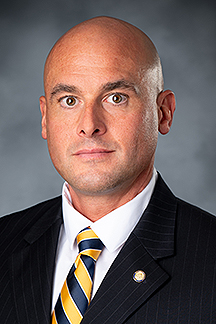
Del. Joe Funkhouser
Sponsored bills
Maddy summaryHB 4997 prohibits individuals convicted of terroristic threats involving schools or children (under §61-6-24(b)) from residing within 1,000 feet of any educational facility, including public/private schools, preschools, or daycares where children are regularly present. This residency restriction applies automatically during probation or parole, or as a sentencing condition if no supervision is ordered. Violations are classified as felonies punishable by 1-5 years in prison, up to $10,000 in fines, or both, and may lead to revocation of probation. The bill uses GIS or property records to measure proximity and aligns with existing sex offender residency rules under §62-12-26.
Maddy summaryHB 5558 creates the West Virginia Child Investment Account Matching Program, which provides a one-time state matching contribution (up to $250 per child) to existing federal "Trump Accounts" for eligible children born in West Virginia. The program prioritizes households with incomes under 300% of the federal poverty level and limits annual spending to $2.5 million. The West Virginia State Treasurer administers the program, verifying eligibility and preventing duplicate benefits, but the contributions require annual legislative appropriation and are not guaranteed. This bill directly affects families with children who already participate in the federal Trump Account program.
Maddy summaryHB 5611 creates a "Certified Microgrid Program" to streamline development of microgrid projects and large data centers in West Virginia. It directly affects data center developers and microgrid operators by prohibiting local governments from applying zoning, building permits, or other local regulations to these certified projects. The bill requires the Department of Commerce to appoint a "Data Economy Liaison" to coordinate project development and mandates that certified projects pay standard municipal business taxes. This law overrides local ordinances and home rule authority to ensure uniform state-level support for these projects.
Maddy summaryHB 5604 would recognize physical gold and silver bullion meeting purity standards (99.5% for gold, 99.9% for silver) as legal tender in West Virginia. It allows bullion to be used for private debts between consenting parties and for paying state taxes, fees, and obligations, though no one can be forced to accept it. The bill requires bullion to be held in certified depositories meeting specific storage standards, with transactions involving physical bullion redeemable on demand. It defines "bullion" to include government-issued coins and certified bars, establishing a framework for its use in state transactions.
Maddy summaryHB 5556 creates a three-year pilot program allowing West Virginia's Medicaid program to set drug reimbursement rates based on the lowest prices paid for similar drugs in other industrialized countries (external reference pricing). It targets high-cost prescription drugs significantly impacting Medicaid spending, while excluding drugs without international price comparisons and ensuring continued access to medically necessary medications. The program requires annual reports to lawmakers on cost savings, drug availability, and manufacturer participation, and permits the state to negotiate rebates or adjust rates to prevent shortages. This pilot applies only to Medicaid drugs and does not affect private insurance or existing pharmaceutical contracts.
Maddy summaryHB 5602 allows property owners of undeveloped land (less than 2% impervious surfaces) within city limits to petition for annexation into the county. It requires written owner consent, county commission approval, and eligibility for potential future purchase by a county development authority. The bill establishes an application process including a map, proof of undeveloped status, and county development authority confirmation, with municipalities notified and allowed 30 days to comment. If approved, the property leaves the city and becomes unincorporated county land, with the county development authority gaining a five-year right of first refusal to purchase at fair market value. This applies only to land not yet developed, aiming to streamline annexation for specific property types.
Maddy summaryThis bill (HB 5543) would authorize West Virginia's State Treasurer to coordinate the state's SMART529 education savings program with a fictional "federal Trump Accounts" program referenced in the bill. It specifies the Treasurer may provide educational materials about permissible uses under federal law but prohibits fund transfers outside federal allowances. The bill defines "Trump Account" using non-existent federal code sections (26 U.S. Code § 6434 and Section 530A of the Internal Revenue Code), which do not correspond to any actual federal program. The bill is currently in committee referral stage (introduced February 16, 2026) but appears to contain inaccurate references to federal law.
Maddy summaryHB 5534 would reclassify titled vehicles (like cars and trucks) in West Virginia from a higher tax class (Class IV) to a lower tax class (Class II) for property tax purposes. This change would directly affect vehicle owners in municipalities who pay personal property tax on their titled vehicles, excluding mobile homes. The bill modifies West Virginia Code §11-8-5 to move titled vehicles from municipal Class IV valuation to residential Class II valuation. If passed, this would lower the taxable value of these vehicles, reducing their property tax burden compared to current rates. The bill is currently pending in the House Finance Committee.
Maddy summaryHB 5538 creates a new "Master Esthetician" license in West Virginia for professionals seeking to perform advanced, noninvasive skin treatments beyond basic esthetics. To qualify, applicants must hold a current esthetician license, complete 600 hours of advanced training (including skin analysis and safety protocols), pass an exam, and pay fees. The bill defines the scope of practice to include advanced services affecting the epidermis/superficial dermis but explicitly prohibits medical procedures or deeper skin penetration. It establishes renewal requirements with continuing education and grants the Cosmetology Board authority to set safety rules for these advanced services. This directly affects estheticians aiming to expand their practice and aims to enhance consumer safety through clearer licensing standards.