

Maddy summaryHB 5200 creates an Office of Entrepreneurship within West Virginia's Secretary of State's office to support entrepreneurs, startups (businesses under 5 years old), and scale-ups (businesses with proven growth metrics like 20% annual revenue increase). The office will serve as a central liaison between these businesses and state agencies, helping navigate government processes, coordinate resources, and identify systemic barriers. Key mechanisms include requiring state agencies to provide data (with confidentiality protections), mandating 48-hour responses to business inquiries, and requiring annual reports to the Economic Development Committee on entrepreneurship progress. This bill directly affects small business owners and growth-oriented enterprises seeking state support.
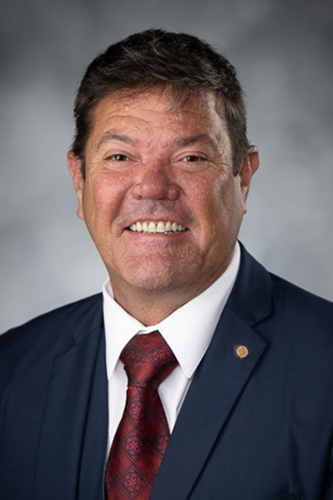
Del. Mike Hornby
Sponsored bills
Maddy summaryHB 5244 creates a two-year pilot program allowing West Virginia's four-year state colleges and universities (excluding the West Virginia School of Osteopathic Medicine) to participate in the existing "Learn and Earn" workforce development initiative. The bill directs the state education chancellor to implement this pilot starting in the 2026-2027 academic year, with funding kept separate from the program's community college funding. It specifies that any unspent funds at year-end carry forward, and administrative costs cannot exceed 5% of annual program funds. This bill directly affects public four-year institutions by expanding their access to a work-study program designed to connect education with workforce training.
Maddy summaryThis House Resolution (HR 11) encourages West Virginia's K-12 students to design a new state highway route number shield for the 2026 anniversaries of the U.S. founding (250th) and the U.S. numbered highway system (100th). It directs the West Virginia Division of Highways and Department of Tourism to hold a statewide student design competition, requiring the shield to maintain federal safety standards for legibility while incorporating West Virginia identity. The winning design would be implemented gradually on state highways starting July 2027, replacing existing signs only as they wear out, and the student designer would receive legislative recognition. The resolution is procedural and non-binding, focusing on celebration and civic engagement rather than new policy.
Maddy summaryHR 9 is a ceremonial resolution honoring the late West Virginia House Delegate Douglas John Skaff Jr. It expresses the House of Delegates' condolences to his family and commemorates his service, including his roles as a delegate representing multiple districts and as Minority Leader. The resolution has no policy impact - it is purely symbolic, acknowledging his career in public service, business, and community leadership. It was unanimously adopted by the House on February 5, 2026, the same day it was introduced.
Maddy summaryHB 5171 sets new salary schedules for West Virginia county commissioners and other elected county officials (such as sheriffs, clerks, and assessors), effective July 1, 2026. The bill establishes specific annual salary amounts based on county classification (Class I to X), with increases ranging from $5,000 to $17,000 above current rates for commissioners and similar increases for other officials. To receive these raises, counties must first have their auditor certify improved fiscal health, and individual officials must submit a written request for the increase. This directly affects all 55 counties and their elected county officials, with the new rates applying to terms beginning July 1, 2026.
Maddy summaryThis West Virginia House resolution states that the U.S. national debt (over $38 trillion in 2026) poses a national security threat, citing foreign debt ownership, projected Social Security/Medicare shortfalls, and warnings from military/intelligence leaders. It urges Congress to establish regular budgeting procedures but does not create new laws or alter federal spending. As a symbolic resolution, it has no direct legal effect on national debt policy or federal budgets. The resolution focuses on raising awareness rather than implementing concrete changes.
Maddy summaryHB 5027 amends West Virginia's eminent domain law to clarify that the state or its subdivisions cannot take private property primarily for private economic development where ownership or control transfers to a private entity (e.g., via purchase or lease). The bill prohibits such takings without the owner's consent, while preserving existing public uses like infrastructure, utilities, schools, and parks. It specifically targets cases where eminent domain would benefit private developers rather than serve a direct public purpose. This change applies to all property owners and government entities exercising eminent domain authority in West Virginia.
Maddy summaryHB 5005 requires West Virginia public schools with self-contained special education classrooms to install video cameras in those classrooms and audio recording devices in the restrooms of those classrooms. Schools must provide written notice to parents (allowing an opt-out for bathroom audio monitoring) and staff before installation, and post a notice in restrooms about the audio recording. The bill also provides liability protection for school officials and employees using these devices, meaning lawsuits against them must meet a "clear and convincing evidence" standard. This applies to county boards of education and public charter schools, directly affecting how they implement these recording requirements in special education settings.
Maddy summaryThis bill amends West Virginia law to allow parties (complainants or respondents) in Human Rights Commission (HRC) discrimination cases to transfer their cases directly to circuit court. It affects individuals or organizations involved in HRC complaints by providing an option to bypass HRC proceedings and seek resolution in judicial court. The change modifies existing procedures under §16B-17-10, enabling parties to "remove the matter" to circuit court instead of proceeding through the HRC's investigation and hearing process. This is a procedural adjustment with no new substantive policy changes.
Maddy summaryHB 4918 requires West Virginia public schools to provide a minimum of 180 instructional days per year, with specific daily minute requirements: 315 minutes for kindergarten through fifth grade, 330 minutes for sixth through eighth grade, and 345 minutes for ninth through twelfth grade. Counties may extend the school day by at least 30 minutes to meet the 180-day requirement, using the extra time for up to five days of weather-related closures or teacher professional development. The bill also mandates that noninstructional days total 20 annually, including holidays, election day, and designated days for staff training and school preparation. This directly affects all West Virginia public school districts and their annual calendars.