

Maddy summaryHB 2649 expands existing school disciplinary rules to include elementary school students, removing the current grade limitation that only applied to students in grades 6-12. The bill modifies §18A-5-1 to allow elementary teachers to exclude students for disruptive behavior and follow the same procedures for reporting and disciplinary actions as middle/high school teachers. This directly affects elementary school teachers, students in elementary grades, and school principals who must now implement these procedures for younger students. The key change is extending the existing disciplinary framework - such as classroom exclusion, electronic reporting to WVEIS, and suspension protocols - to cover all elementary school students.
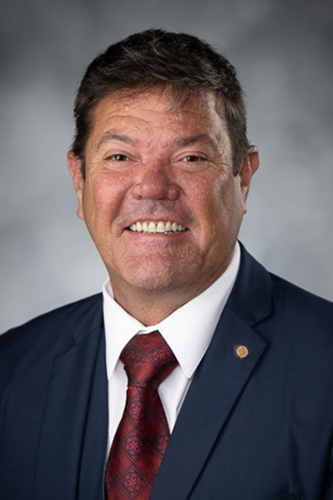
Del. Mike Hornby
Sponsored bills
Maddy summaryHB 2665 requires the West Virginia Treasurer to transfer 50% of the unspent funds in reappropriated revenue accounts (funds originally designated for specific purposes but later freed up) to the state’s General Revenue Fund within 30 days. This applies to all such accounts unless transferring would violate federal law, breach repayment agreements, or risk bond repayments. The bill directly affects state budget management by redirecting unused funds from specialized accounts into the general budget pool. It does not alter existing funding for specific programs but changes how unspent allocated funds are handled. The bill is currently in the House Finance Committee for review.
Maddy summaryHB 2652, the "Protection of Shared Physical and Digital Property from Warrantless Searches Act," requires government agents to obtain a person’s consent or a judicial warrant based on probable cause before searching or seizing digital or physical information shared with third parties (like banks, cloud services, or service providers) for goods or services. It directly affects all West Virginia residents who share personal information with third parties to access everyday services, such as financial or digital accounts. The bill defines "shared property" to include digital records and physical documents held by third parties for service provision, and explicitly rejects the current "Third Party Doctrine" that allows warrantless access to such information. It establishes that individuals retain constitutional privacy protections for shared information, requiring government action to follow standard warrant procedures. The bill is currently in the House Judiciary committee after being introduced on February 20, 2025.
Maddy summaryHB 2677 requires West Virginia's state education board to create a model policy banning K-12 students from using personal cell phones or handheld devices during instructional time, with exceptions for emergencies or contacting parents. County school boards must adopt policies consistent with this model, though enforcement details remain local. The bill directly affects all public K-12 schools and students in West Virginia by mandating a statewide framework for phone restrictions during class. It focuses on balancing academic focus with safety needs, without specifying penalties or device types beyond "personal handheld communication devices."
Maddy summaryHB 2703 requires West Virginia's Commissioner of Highways to allocate 20% of the state road fund annually to reimburse counties for local funds they spent on feeder and state local roads, with applications due by March 1 and distributions based on matching or pro rata methods if demand exceeds funds. The remaining 80% of funds must be distributed for road maintenance (based on road surface types) and construction (based on unimproved mileage) using specific formulas. The bill also mandates the Commissioner to develop a district allocation formula, hold annual public meetings, solicit input, include certain factors in the formula, and submit it to the Legislature for approval as a legislative rule.
Maddy summaryHB 2660 requires buyers of properties sold at tax auctions (by the West Virginia Auditor for unpaid taxes) to pay off any city or town tax liens before receiving a deed. Purchasers must provide the Auditor with certified proof that the lien has been satisfied by the local government. This ensures local government claims are resolved before property ownership transfers. The bill directly affects tax sale buyers and municipalities that issue lien satisfaction records.
Maddy summaryHJR 22 proposes a constitutional amendment to increase West Virginia's homestead exemption from $20,000 to $50,000. This would exempt the first $50,000 of assessed value on residential property (or mobile homes) owned by qualifying residents - those aged 65+ or permanently disabled - as their primary residence. The amendment requires voter approval at the 2025 general election to take effect. If passed, it would directly reduce property tax burdens for eligible homeowners.
Maddy summaryHB 2643 requires the West Virginia Parkways Authority to stop collecting tolls on the West Virginia Turnpike once all bonds for the project are fully paid or a trust fund for repayment is established. This applies only after the Turnpike is certified as being in good condition by the state Highway Division. Within 90 days of the final bond payment, the Authority must discontinue all tolls and remove toll facilities. The bill directly affects drivers using the Turnpike and shifts maintenance responsibility to the state Highway Division.
Maddy summaryHB 2717 would repeal all existing laws requiring mandatory vehicle inspections in West Virginia. It directly affects vehicle owners who currently must obtain state inspections to register or operate their vehicles. The bill eliminates the legal requirement for inspections by removing sections of the state code that established the inspection process, including penalties for non-compliance. This change would end the state's requirement for vehicles to undergo safety or emissions inspections. The bill does not create new provisions but removes the current inspection mandate entirely.
Maddy summaryHB 2642 establishes a Commercial Property Assessed Capital Expenditure (C-PACE) financing program in West Virginia, allowing commercial property owners to fund eligible improvements like energy efficiency, renewable energy systems, and stormwater management. The program, administered by the West Virginia Economic Development Authority with private partners, enables property owners to repay loans through special assessments added to their property tax bills. Eligible properties include most commercial real estate (excluding small residential buildings), and the special lien on the property has priority over mortgages only if subordination agreements are signed by existing lienholders. This creates a new financing tool for property upgrades without requiring new property tax assessments.