

Maddy summaryHB 4605 modifies West Virginia's school funding formula to provide additional support for public schools under specific circumstances. The bill removes restrictions on using funds for instructional programs, allowing schools greater flexibility in allocating resources for teaching and learning. It also establishes a budget limit for the Third Grade Success Act and requires the Governor to provide specific funding for the Department of Education's budget. These changes adjust how school aid is distributed to better address varying school needs as defined in the legislation.
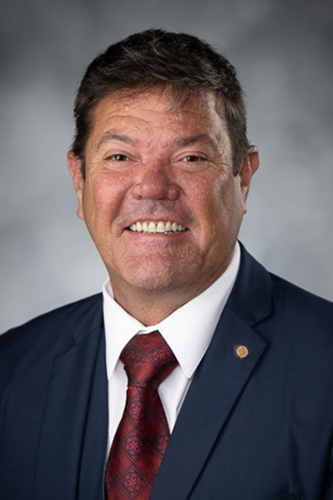
Del. Mike Hornby
Sponsored bills
Maddy summaryHB 4593 modifies West Virginia's public school physical education requirements by allowing students to opt out of mandatory PE classes if they can demonstrate five or more hours per week of outside physical activity through written evidence. The bill applies to middle and high school students, replacing required PE periods with supervised study hall for qualifying students. It maintains core PE time requirements (30+ minutes three days/week for elementary, full course credit for graduation in high school) but adds this exemption pathway. The policy directly affects students in West Virginia public schools who participate in organized sports or physical activities outside of school.
Maddy summaryHB 4550 requires the state or its agencies to provide landowners with the property appraisal they used when making an initial offer to buy land in eminent domain cases. This applies to all eminent domain proceedings, such as when the government seeks to acquire private property for public projects like roads or schools. The bill mandates that the appraisal must be shared with landowners at the time of the first offer, increasing transparency in negotiations. This change directly affects landowners facing property takings and requires the government to disclose its valuation early in the process.
Maddy summaryHB 4578 amends West Virginia education code sections related to teacher contracts and employment, directly affecting school districts and teachers. It specifies that all teachers must sign county board contracts detailing salary, establishes probationary (1-3 years) and continuing contract statuses, and requires written notice with a hearing for termination after three years. The bill clarifies procedures for dismissal due to lack of need, including preferred reemployment lists based on seniority, and ensures released time for teachers serving in the Legislature. It does not address funding differentiation or operational efficiencies as implied in its title, focusing solely on teacher contract terms.
Maddy summaryHB 4496 requires creators and distributors of AI-generated media (such as videos, audio, or images) to include clear, visible disclosures identifying the content as artificial intelligence-generated. This applies to any public-facing media created or materially altered by AI, mandating specific disclosures like a 3-second on-screen label for videos or a spoken statement for audio content. Exceptions include internal research, basic AI-assisted editing (e.g., spell-check), and privately shared personal content. Violations could result in civil penalties of up to $100,000 per day for organizations or $1,000 per day for individuals.
Maddy summaryHB 4498 clarifies West Virginia's Right to Farm Act to specifically protect urban beekeeping and residential agricultural operations. It defines "agricultural residential land" as property zoned residential where owners may keep apiaries (beehives) within municipal boundaries for food production or non-hazardous sales, while maintaining that Homeowners Associations can still restrict beekeeping per their bylaws. The bill amends the Apiary Act to clarify that the state commissioner, not local governments, has authority over beekeeping regulations, except for HOA rules. This directly affects urban residents who keep bees or grow food on residential property within city limits. The key change is legally protecting these activities under agricultural protections while preserving local HOA authority.
Maddy summaryHB 4013 establishes the "Mountaineer Flexible Tax Credit Act of 2026," creating a state tax credit program for businesses that invest in new projects or expansions within West Virginia. It directly affects qualified businesses seeking economic development incentives by requiring them to apply through the West Virginia Department of Commerce, with credits calculated based on new full-time jobs and average employer wages. Key provisions include standardized application procedures, annual reporting requirements, mandatory audits, and definitions for terms like "qualified business" and "average state wage." The bill aims to encourage private investment and job creation as part of broader economic development efforts, with the tax credit program applying to businesses meeting specific wage and employment criteria.
Maddy summaryHB 2451 exempts home-based business owners (specifically sole proprietors and independent contractors) earning under $2,500 annually in gross revenue from requiring a municipal business license, provided they don't maintain a permanent physical location within city limits. It also establishes a revenue threshold for exempting small businesses from municipal business and occupation taxes. The bill amends existing tax codes to clarify these exemptions and creates the "Small Business Protection Act" to formalize these changes. This directly affects low-revenue home-based entrepreneurs in West Virginia municipalities. The law takes effect July 11, 2025.
Maddy summaryHB 2484 clarifies the probationary period for paid municipal firefighters, directly affecting firefighters employed by local governments. The bill defines the specific timeframe during which these firefighters are considered probationary before gaining full job security. This clarification ensures consistent application of probation rules across municipal fire departments and became law as Chapter 68 of the 2025 Regular Session.
Maddy summaryHB 3338, now law as Chapter 52 of the 2025 Regular Session, allows child witnesses to testify remotely in court proceedings when a judge determines in-person testimony would be traumatic for them. This directly affects minors involved in sensitive cases, such as abuse or violence, by providing an alternative to testifying in the courtroom. The key provision gives judges the authority to decide if remote testimony is necessary for the child's well-being, without requiring a separate motion. The bill does not change existing procedures for adult witnesses or alter the legal standards for admissibility of testimony.