

Maddy summaryHB 4376, titled "Say No to Good Old Boy Governance," prohibits elected state officials from appointing family members to state or local government positions. The bill defines "family member" broadly to include spouses, parents, children, grandparents, grandchildren, siblings, and extended relatives like aunts, uncles, nieces, and nephews. This law applies specifically to elected officials holding state office (such as state legislators or governors) who have appointment authority for public roles. It aims to prevent nepotism by banning the practice of favoring relatives in government appointments.
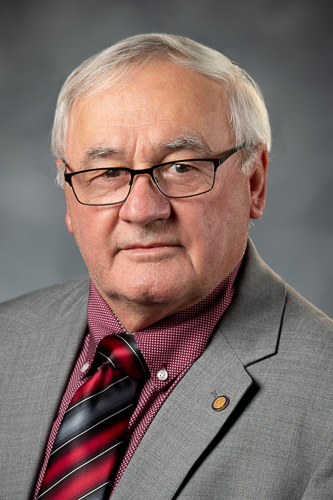
Del. George Miller
Sponsored bills
Maddy summaryHJR 11 proposes amending West Virginia's state constitution to increase the homestead exemption from $10,000 to $20,000. This change would directly affect homeowners aged 65 or older, or those permanently and totally disabled, who own their primary residence as their principal place of abode. The bill would exempt the first $20,000 of assessed value for qualifying residential property from ad valorem property taxes. This constitutional amendment requires voter approval at the 2026 general election to take effect. The current exemption amount is $10,000 under the existing constitutional provision.
Maddy summaryHB 3313 allows high school students to take community college courses while still enrolled in high school, earning both high school and college credit. It directly affects high school students in participating school districts by expanding access to college-level coursework without requiring separate enrollment. The key provision establishes a streamlined process for high schools to partner with community colleges, ensuring courses meet academic standards and transferable credit requirements. This policy change simplifies pathways for students to begin higher education earlier, reducing future college costs and accelerating degree completion. The bill was signed into law on April 25, 2025, and is now effective.
Maddy summaryHB 2402 requires healthcare providers to share a minor's medical records with parents or legal guardians upon request, unless the minor (age 14 or older) specifically asks to keep their records private. This law directly affects minors, their parents/guardians, and healthcare providers who must now follow this access protocol. Key provisions mandate that providers inform minors about their right to request record privacy and establish clear procedures for handling access requests. The bill became law on April 25, 2025, after approval by the governor.
Maddy summaryHB 2347, "The Joel Archer Substance Abuse Intervention Act," became law on April 30, 2025, without the Governor's signature. The bill establishes a new state-funded program to expand access to immediate, non-judgmental substance use disorder (SUD) treatment services for individuals in crisis, directly affecting people experiencing acute addiction challenges and their families. Key provisions require counties to develop local response teams that can connect individuals to treatment within 24 hours, with state funding covering initial assessments and placement. This law shifts focus from criminal justice involvement to health-based intervention for SUD emergencies.
Maddy summaryHCR 100 is a non-binding request to the Joint Committee on Government and Finance to study hospital pricing transparency and cooperative agreements in West Virginia. The resolution asks the committee to examine current hospital price disclosure requirements, compliance with transparency laws, hospital mergers' impact on pricing, and the role of federal oversight agencies. This study will assess whether current policies foster competition, reduce healthcare costs, and improve patient outcomes. The committee is required to report findings and potential legislative recommendations to the Legislature by 2026.
Maddy summaryHCR 88 is a ceremonial resolution honoring two West Virginia first responders nominated for the Medal of Valor. It specifically recognizes Captain Donald Lawson (New Martinsville Police) for rescuing two people from carbon monoxide poisoning despite his own hospitalization, and Darrell Lambert (Lake Volunteer Firefighter) for entering a burning building without protective gear to save a trapped resident, sustaining burns in the process. The resolution formally confirms the Legislature's approval of their award and directs the House Clerk to send a copy to Governor Morrisey. This is a symbolic honor with no new policy or funding changes, directly affecting only these two nominees. It passed unanimously in both chambers on April 3, 2025.
Maddy summaryThis resolution requests that the West Virginia Division of Highways name a specific segment of Route 20 in Webster County (from the Upshur/Webster County line to Mount Zion Road) as the "U.S. Army Sergeant Major Charles Grant Hoke Memorial Road." It commemorates Sergeant Major Charles Grant Hoke, a WWII and Korean War veteran with multiple military awards, who was born in Upshur County and raised in Cleveland, Webster County. The resolution asks the Division of Highways to install signs identifying this road segment and directs the House Clerk to forward the resolution to the agency. This is a commemorative measure with no funding or policy changes, directly affecting the named road segment in Webster County.
Maddy summaryHCR 78 is a non-binding resolution urging West Virginia's Division of Highways to prioritize completing I-73 (the "King Coal Highway") across Wayne, Mingo, McDowell, Mercer, and Wyoming counties. It requests the highway agency treat the project as a high priority to improve economic development and emergency access, especially after recent flooding exposed transportation challenges in the region. The resolution asks the state to provide necessary funding and executive support to expedite the highway's completion but does not allocate new funds or create new law. It directly affects the Division of Highways and residents of the five specified counties by formally advocating for this infrastructure project.
Maddy summaryHB 2503 establishes a clothing allowance program for children in foster care in West Virginia. It requires placement providers (foster parents, kinship caregivers, or residential care providers) to assess each child's clothing and necessity needs at initial placement, providing an initial allowance of at least $375 for an adequate wardrobe and approved necessities (non-clothing items like hygiene products), with supplementary allowances of $175 for extraordinary needs like illness or damaged items. The bill mandates that placement providers maintain a child's clothing inventory throughout care and outlines three payment methods: a reloadable instant card (issued within 48 hours), child welfare worker purchasing cards, or reimbursement for provider-purchased items. This policy directly affects children in foster care and their caregivers, ensuring consistent access to essential clothing and supplies through defined financial support.