

Maddy summaryHB 3390 would provide a 15% pay raise to non-uniformed employees working within West Virginia's Division of Corrections and Rehabilitation. The bill amends §15A-3-7 of the state code to require this specific wage increase for eligible staff, excluding uniformed correctional officers. It directly affects approximately 1,200 non-uniformed workers in the corrections system, including administrative, medical, and support personnel. The bill, introduced on March 17, 2025, is currently pending in the House Judiciary and Finance committees. This is a concrete salary adjustment with no additional requirements or mechanisms beyond the specified percentage increase.
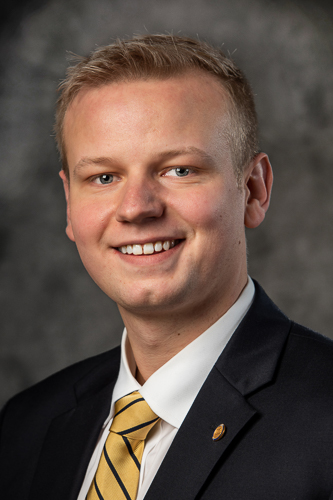
Del. John Williams
Sponsored bills
Maddy summaryHB 3392 allows West Virginia's Governor to temporarily borrow up to $50 million from the state's Revenue Shortfall Reserve Fund to support the Unemployment Compensation Fund when its balance falls below $50 million. The Governor must first confirm a projected shortfall within 30 days, and borrowed funds can only cover unemployment benefit payments. These loans must be repaid within 180 days without interest from excess funds in the Unemployment Compensation Fund, and no borrowing is permitted after September 1, 2027. The bill directly affects unemployment benefit recipients by ensuring funds remain available during short-term financial strain.
Maddy summaryHB 3393 would establish a temporary license for foreign breweries to import nonintoxicating beer (beer with less than 0.5% alcohol) into West Virginia for sale. Foreign corporations seeking this license would need to pay a $1,500 annual fee, submit corporate documentation, and comply with labeling and transportation requirements. The bill directly affects foreign breweries aiming to sell nonintoxicating beer in West Virginia, providing a temporary authorization pathway. The exact duration of the temporary license is not specified in the provided bill text.
Maddy summaryHB 3340 prohibits discrimination based on hair texture or protective hairstyles (such as braids, afros, curls, and twists) in workplaces and educational institutions. It directly affects people whose hair textures or styles are historically associated with Black communities, particularly in settings with dress codes or grooming policies. The bill allows individuals to challenge discriminatory policies by showing that safety concerns are unfounded, could be mitigated with alternative tools, or are a pretext for bias. It does not ban all hair policies but requires institutions to justify restrictions that disproportionately impact textured hair. The bill is currently pending in the House Government Organization Committee after its March 13, 2025, introduction.
Maddy summaryHB 3327 modifies West Virginia's Hope Scholarship Program to clarify eligibility requirements for nonpublic schools and education service providers. It requires these entities to submit participation notices, provide expense receipts to parents, pass background checks for staff, and certify against discrimination to accept scholarship funds. The bill explicitly states participating schools and providers are not required to change their curriculum, admission policies, or religious practices to participate. This directly affects nonpublic schools and educational service organizations seeking to offer services to Hope Scholarship students. The changes aim to formalize participation rules while preserving provider autonomy.
Maddy summaryHB 3256 would require county boards of education in West Virginia to provide full-time employees with three months of paid leave following the birth of a child, adoption, or foster care placement of a child. This leave would be in addition to any existing paid leave benefits the employee already receives. The bill amends existing law to explicitly guarantee this supplemental leave for all full-time school employees, regardless of gender. It does not replace other leave policies but adds this specific benefit for family-related events.
Maddy summaryHB 3234 requires West Virginia public high schools participating in organized sports, ROTC, or performing arts to employ a full-time licensed athletic trainer. County school districts must hire one trainer per high school (using their budget, levies, or CARES funds) or contract with a healthcare provider, ensuring consistent medical coverage for all student-athletes. The bill mandates that trainers handle specialized procedures like concussion evaluations, musculoskeletal injury management, and emergency protocols per state athletic policies. This replaces current part-time or ad-hoc arrangements with a standardized, full-time requirement for student athlete safety.
Maddy summaryHB 3235 requires health insurance plans in West Virginia to cover specific breast cancer screenings. It mandates annual mammograms for women aged 40 and older, baseline mammograms for women aged 30-39, and additional screenings (like ultrasounds) for those with dense breast tissue or risk factors like family history. Mammography facilities must also provide patients with breast density information and educational materials about associated risks and screening options. These requirements apply to all insurance policies delivered, issued, or renewed after January 1, 2025.
Maddy summaryHB 3226 updates West Virginia's laws governing living anatomical gifts (donating body parts before death for transplantation or therapy). It clarifies who can make such gifts (adults 18+), establishes requirements for valid consent, and defines key terms like "living anatomical gift" and "document of gift" (including markings on driver's licenses or donor registries). The bill specifies that authorized agents (e.g., those named in medical power of attorney) or designated "authorized persons" can make gifts on behalf of donors, with strict consent procedures. It also defines terms like "donor registry" and "disinterested witness" to ensure clear documentation and prevent conflicts of interest in the donation process.
Maddy summaryHB 3255 would authorize West Virginia counties to establish public daycares through a voter-approved process. Counties needing to fund daycares would require a petition signed by at least 10% of registered voters to trigger a countywide referendum on creating and funding the facility. If approved, counties could fund daycares through local taxes, fees, or levies, or choose to operate without new funding. The bill also allows adjacent counties to jointly create shared daycare services. This legislation directly affects county residents, particularly parents seeking affordable childcare, by providing a structured process for local governments to develop these services.