

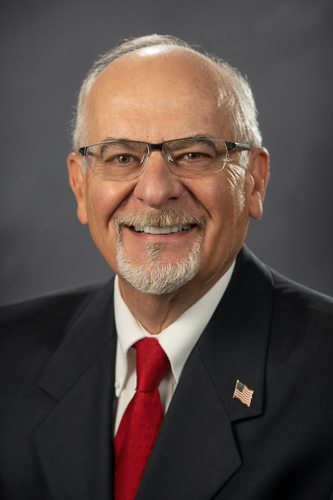
Maddy summaryHB 5384 authorizes West Virginia's Higher Education Policy Commission (HEPC) to annually adjust the required composite ACT/SAT scores for the PROMISE scholarship program. This change directly affects West Virginia students applying for PROMISE scholarships, which cover tuition costs at state colleges and universities. The bill allows HEPC to modify the minimum test score thresholds each year to maximize the number of eligible students, without altering the $4,750 award cap or other eligibility requirements like GPA or citizenship. The goal is to ensure scholarship funds are distributed to the highest number of qualifying students based on annual testing data.
Del. Phil Mallow
Sponsored bills
Maddy summaryHB 5331 amends West Virginia law to allow municipalities with paid firefighters to join the Municipal Police Officers & Firefighters Retirement System (MPFRS) without requiring prior approval. This directly affects cities and towns that currently cannot participate in MPFRS for their full-time firefighters. The bill removes existing barriers by revising eligibility rules in the retirement system statutes, enabling these municipalities to enroll their paid firefighters in the existing retirement program. The change provides a structured pathway for local governments to offer retirement benefits to municipal firefighters under MPFRS, which currently serves some fire departments but not all.
Maddy summaryHB 5029 extends the payment period for fees charged by county fire prevention units from 75 days to 180 days. It directly affects property owners or responsible parties who must pay for firefighting, rescue, or debris cleanup services provided by these units. The bill maintains the $1,500 cap for single incidents (except for hazardous materials or complex rescues), requires written itemized billing, and keeps the 90-day deadline for initiating court action if payment isn't received. This change provides more time for responsible parties to settle charges without altering fee limits or service requirements.
Maddy summaryHB 4624 allows West Virginia county commissions to lease, rent, or permit the use of county-owned wireless towers (or parts of them) to private companies or organizations, while requiring them to provide free access to public safety operations (like 911, police, and fire departments), the West Virginia Department of Highways, and other state agencies. Counties may charge fees for tower use by non-exempt entities but cannot levy charges for the specified public safety and state agency uses. The bill also permits counties to establish rules for managing such leases and optionally create panels to oversee tower allocations. This legislation directly affects county governments, private wireless providers, and state/local public safety agencies by clarifying tower leasing authority and access requirements.
Maddy summaryHB 5207 strengthens animal welfare protections in West Virginia by requiring owners to confine unspayed female dogs during heat cycles and establishing a clear duty of care for companion animals. The bill creates new criminal penalties for animal hoarding and unlawful confinement, increases fines for repeat cruelty offenses, and mandates humane officers to report suspected abuse of vulnerable humans (like children or elderly adults) to relevant agencies. It also updates facility requirements for stray and abandoned animals, including public access to shelters, and revises humane officers' duties and enforcement procedures. These changes directly affect pet owners, animal shelters, law enforcement, and courts handling animal welfare cases.
Maddy summaryThis House Resolution (HR 11) encourages West Virginia's K-12 students to design a new state highway route number shield for the 2026 anniversaries of the U.S. founding (250th) and the U.S. numbered highway system (100th). It directs the West Virginia Division of Highways and Department of Tourism to hold a statewide student design competition, requiring the shield to maintain federal safety standards for legibility while incorporating West Virginia identity. The winning design would be implemented gradually on state highways starting July 2027, replacing existing signs only as they wear out, and the student designer would receive legislative recognition. The resolution is procedural and non-binding, focusing on celebration and civic engagement rather than new policy.
Maddy summaryHR 9 is a ceremonial resolution honoring the late West Virginia House Delegate Douglas John Skaff Jr. It expresses the House of Delegates' condolences to his family and commemorates his service, including his roles as a delegate representing multiple districts and as Minority Leader. The resolution has no policy impact - it is purely symbolic, acknowledging his career in public service, business, and community leadership. It was unanimously adopted by the House on February 5, 2026, the same day it was introduced.
Maddy summaryHB 5215 limits landowner liability when all-terrain vehicles (ATVs) are operated for recreational purposes on their property. It specifically protects landowners from legal responsibility if the ATV use qualifies as "noncommercial recreational activity" under the bill - meaning no charge exceeding $50 per year per participant is collected. The law defines "recreational purposes" to explicitly include ATV riding, while excluding commercial operations or activities charging more than the $50 annual limit. This policy change modifies West Virginia's liability laws to shield landowners from lawsuits related to ATV accidents during permitted recreational use.
Maddy summaryHB 4446 establishes a four-year pilot program in Kanawha, Ohio, Mineral, and Raleigh counties to provide free Fire Fighter I and II training through community colleges. It directly affects eligible high school and college students in those counties by covering tuition and fees for courses meeting West Virginia State Fire Commission standards. The program requires each county to provide at least one certified fire service instructor, funded by the Higher Education Policy Commission, with annual reports tracking participation, certifications earned, costs, and student employment. The pilot runs from July 2026 through June 2030, with mandatory evaluations to determine future expansion or termination.
Maddy summaryHB 5167, the Taxpayer Accountability for Public Service Act, requires candidates for any elected local, state, or public office in West Virginia to prove they have paid all personal property taxes or are in an approved payment plan. It mandates that candidates submit tax compliance certification when filing to run, and election officials must verify this with tax authorities before certifying candidates for the ballot. Exceptions allow candidates with approved payment plans or pending tax challenges to run. The bill takes effect immediately upon passage, with disqualification for false filings and removal from ballots for unpaid taxes without valid exceptions.