

Maddy summaryHB 3175 prohibits public utilities (such as gas, water, and electric companies) from using funds paid by ratepayers to make political contributions or charitable donations. The bill bans these contributions to political candidates, campaigns, political action committees, and charitable organizations. Violations would be classified as criminal offenses with penalties. This applies to all public utilities operating in West Virginia under the state's regulatory code.
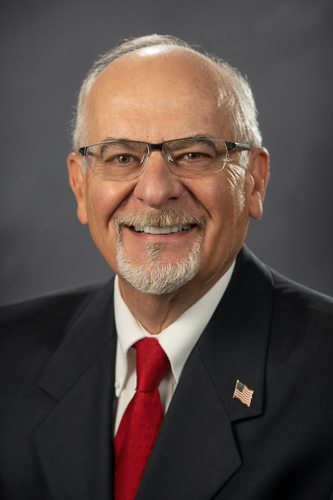
Del. Phil Mallow
Sponsored bills
Maddy summaryHB 3178 would amend West Virginia law to allow female inmates to work on state convict road crews, currently restricted to males. The bill removes the existing provision stating "no road crew assembled under this article shall be composed of both male and female persons" from §17-5-1 of the Code. This change would directly affect female inmates in state correctional facilities who are currently ineligible for these road maintenance and construction jobs. The policy shift makes all inmates, regardless of gender, eligible for this specific work program under the state road commissioner's supervision.
Maddy summaryHB 3114 prohibits lobbyists from receiving compensation for lobbying West Virginia state officials on behalf of designated "foreign adversaries," such as governments of China, Russia, Iran, Cuba, and other entities listed in the bill. It requires lobbyists representing these entities to self-identify as agents of foreign adversaries and creates penalties including civil fines, court-ordered return of payments ("disgorgement"), and injunctive relief for violations. The bill defines "foreign adversaries" broadly to include specific countries, terrorist organizations, and entities controlled by them, with the list updated annually by the Secretary of Homeland Security. It directly affects lobbyists and lobbying firms working with these designated foreign entities within West Virginia. The bill is currently in the introduction phase, having been filed with the House Judiciary Committee on March 4, 2025.
Maddy summaryThis House Resolution (HR 8) is a symbolic request from the West Virginia House of Delegates asking Congress to pass the federal National Concealed Carry Reciprocity Act (HR 38). It states that West Virginia residents with valid concealed carry permits should be able to carry concealed weapons in any state that allows concealed carry, without needing to verify if that state recognizes their West Virginia permit. The resolution does not change any laws itself but urges Congress to enact HR 38, which would require all states to honor out-of-state concealed carry permits, similar to how driver's licenses are recognized across state lines. It directly affects West Virginia permit holders traveling to other states.
Maddy summaryHB 3138 would create a 25-foot buffer zone around first responders (including police, firefighters, and emergency medical personnel) while they are lawfully performing their duties. It makes it unlawful to approach within 25 feet after receiving a verbal warning, specifically to impede their work, threaten them with harm, or harass them. Violators would face misdemeanor charges with fines of $50-$500 or up to one year in jail. The bill directly affects anyone near first responders during emergency operations and aims to protect them from interference. (Note: The bill is in early stages, having been introduced on March 4, 2025.)
Maddy summaryHCR 49 is a West Virginia legislative resolution (not a bill) requesting the Maryland General Assembly reject proposed changes to the North Branch Potomac River's water classification. It argues that designating the river as "Cold Water Aquatic Life" (instead of "Warm Water") would require West Virginia industrial facilities to install costly thermal controls like cooling towers to meet stricter discharge standards, imposing unnecessary costs. The resolution claims this would violate the U.S. Constitution's dormant commerce clause by unduly burdening interstate commerce, citing Supreme Court precedents like *Sporhase v. Nebraska*. It asks Maryland to withdraw the proposal and directs West Virginia's Attorney General to investigate the constitutional issues. (Note: This is a procedural resolution, not a law affecting policy changes.)
Maddy summaryHB 3048 limits new permits for wind power facilities in West Virginia and requires that for each new wind project approved, the tax burden on existing and new coal-fired power plants must decrease proportionally. The bill directly affects wind energy developers (by restricting new projects) and coal power plant operators (by mandating tax offsets). Key provisions include capping wind power permits, defining wind turbines as pollution control facilities for tax purposes, and requiring that tax reductions for coal plants match the scale of new wind development. The bill cites coal as the only reliable power source during emergencies like storms, though this rationale does not create new emergency rules.
Maddy summaryHB 3101 mandates that public schools in West Virginia must begin the instructional term no earlier than the Tuesday after Labor Day and end no later than the Friday before Memorial Day, starting with the 2025-2026 school year. This bill directly affects all public school districts and county boards of education across the state by setting fixed calendar boundaries for the school year. The legislation specifies that the instructional term must include at least 180 separate instructional days, with defined minimum daily instructional minutes per grade level (e.g., 345 minutes for high school). It also includes provisions for handling weather-related closures through alternative instruction methods and adjusts noninstructional day allocations, but does not alter the required instructional time per day.
Maddy summaryHB 2870 amends West Virginia's DUI statute to clarify that fleeing the scene after driving while impaired is treated as part of the DUI offense itself, not a separate violation. This change directly affects drivers who flee after being stopped for DUI, as it will subject them to enhanced penalties under existing DUI sentencing structures. The key mechanism adds fleeing while impaired to the definition of the offense, ensuring it triggers the same license revocation periods (up to life) and jail terms (e.g., 2+ years for bodily injury) as a standard DUI. The bill does not create new penalties but corrects a legal gap where fleeing was previously not counted toward DUI sentencing.
Maddy summaryHB 2986, introduced in West Virginia's 2025 legislative session, creates a central purchasing program to reduce costs for volunteer fire departments and emergency medical services (EMS) first responders. The bill amends state code to authorize department secretaries to develop rules enabling bulk or discounted purchasing of essential supplies. This program would directly affect volunteer fire and EMS organizations by potentially lowering their operational costs through centralized procurement. The bill focuses on administrative implementation rather than new funding, requiring departments to establish the purchasing mechanism through rulemaking. It remains in committee referral as of March 2025.