

Maddy summaryHJR 5 proposes a constitutional amendment to increase West Virginia's homestead exemption for property taxes. The current exemption of $20,000 would be raised, providing tax relief to eligible homeowners who are 65 or older, permanently and totally disabled, and own their primary residence. This change would require voter approval in the 2028 general election to take effect. The amendment directly affects homeowners meeting these age or disability criteria who qualify for the exemption under current law.
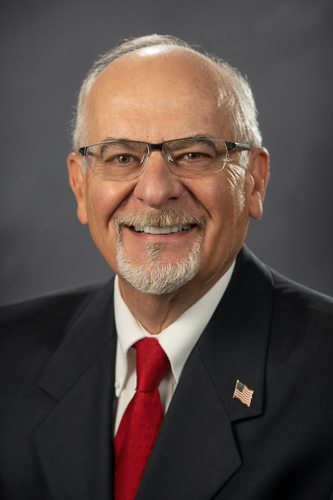
Del. Phil Mallow
Sponsored bills
Maddy summaryHB 4034 requires all West Virginia public elementary and secondary schools to display a specific version of the Ten Commandments in every classroom starting in the 2026-2027 school year. The bill mandates a durable poster or framed copy at least 16x20 inches, using the exact biblical text provided in the bill (including phrases like "I AM the LORD thy God"), legible from anywhere in the classroom. Schools must accept private donations meeting these standards if they lack compliant displays, and may replace non-compliant existing displays using public funds or donations. The law does not permit additional content on the displayed text.
Maddy summaryHB 4033 requires public service district boards serving multiple communities to include at least one member from each community they represent. This applies to boards managing utilities like water, sewer, or stormwater services across jurisdictional boundaries. The bill directly affects multi-community public service districts by mandating local representation on their governing boards. It does not change service policies or funding but ensures each community has direct voice in district decisions. The bill is currently in committee review after introduction on January 14, 2026.
Maddy summaryHB 4037 requires West Virginia's 55 county school districts to consolidate into no more than 27 regional or area districts by July 1, 2029, addressing shared challenges like funding, geography, and population. The bill mandates the State Board of Education to study consolidation options and submit recommendations by October 31, 2026, with assistance from a newly created School District Unification Committee. This committee, composed of 11 members including school superintendents, teachers, and union representatives, must meet monthly to develop a transition plan. The State Board is also authorized to establish rules for the consolidation process to ensure orderly implementation.
Maddy summaryHB 4041 proposes amending West Virginia law to establish mandatory minimum sentences for assaults on specific professionals acting in their official capacity. The bill would require a minimum 3-year prison term (up to 15 years) for malicious assaults on law enforcement officers, health care workers, emergency personnel, utility workers, or correctional employees, and a minimum 2-year term (up to 5 years) for unlawful assaults on these same groups. The bill's title incorrectly references "animal" and a 25-year sentence; the actual proposed penalties are 3-15 years for malicious assault and 2-5 years for unlawful assault. This is a proposed amendment (introduced January 14, 2026, to the Judiciary Committee) to West Virginia Code §61-2-10b, not yet enacted law.
Maddy summaryHB 4134 establishes a state-funded subsidy program to help volunteer fire departments and emergency rescue personnel cover increases in their workers' compensation insurance premiums. The State Auditor will administer the program, distributing funds based on a formula that calculates the difference between current premiums and a base year (2010-2011), with subsidies capped at 100% of the premium increase. To qualify, departments must register with the Auditor’s Office at least 30 days before premium due dates, maintain good standing with the State Fire Marshal, and agree to have subsidies paid directly to their insurance carrier. The program applies to premiums for services like fire fighting, emergency medical response, and ambulance services, using state appropriations designated for this purpose.
Maddy summaryHB 4097, the "Protection of Shared Physical and Digital Property from Warrantless Searches Act," requires government agents to obtain a warrant based on probable cause or a person’s consent before accessing information shared with third parties (like banks or cloud services) when obtaining goods or services. It directly affects West Virginia residents whose personal data is held by third parties for commercial purposes, such as financial records or online accounts. The bill defines "digital property" and "physical property" to include information shared for services, and prohibits warrantless searches of this shared information, overturning the "Third Party Doctrine" that previously allowed government access without warrants. This law would take effect upon passage, creating a new legal standard for government access to shared personal data.
Maddy summaryHB 4092 requires all new law enforcement officers hired in West Virginia to provide proof of U.S. citizenship as a condition for state certification. The bill applies to all new hires by law enforcement agencies, state institutions, hospitals, or the Public Service Commission, effective upon the law's passage. Existing officers already employed as of the effective date are exempt from this requirement. The bill does not affect commercial vehicle enforcement officers hired before July 1, 2007, who were previously certified under different rules.
Maddy summaryHB 4099 prohibits West Virginia from recognizing driver's licenses issued by other states to individuals who cannot prove lawful presence in the U.S. (such as licenses marked for undocumented immigrants or issued exclusively to them). It makes these licenses invalid for driving in West Virginia, requiring law enforcement to issue citations for driving without a valid license when such a license is presented. The state’s motor vehicle department must maintain an online list of out-of-state license types deemed invalid under this law. This bill directly affects undocumented immigrants who hold out-of-state licenses and would be unable to legally operate vehicles in West Virginia under this policy.
Maddy summaryHB 4049 replaces West Virginia's existing Contraband Forfeiture Act with a new Criminal Forfeiture Process Act specifically for property used in or derived from felony drug crimes (violations of the Controlled Substance Act). It establishes a criminal court process for forfeiture (replacing civil forfeiture), defines key terms like "contraband" (unlawful items such as drugs without prescription) and "innocent owner" (a person unaware of property use in crime), and prohibits offering seized property to federal agencies for federal forfeiture. The bill clarifies that courts handling the underlying criminal case have jurisdiction over forfeiture proceedings, and it explicitly states no property rights exist in contraband. This procedural bill directly affects law enforcement agencies, criminal defendants, and property owners involved in drug-related felony cases.