

Maddy summaryHCR 78 is a non-binding resolution urging West Virginia's Division of Highways to prioritize completing I-73 (the "King Coal Highway") across Wayne, Mingo, McDowell, Mercer, and Wyoming counties. It requests the highway agency treat the project as a high priority to improve economic development and emergency access, especially after recent flooding exposed transportation challenges in the region. The resolution asks the state to provide necessary funding and executive support to expedite the highway's completion but does not allocate new funds or create new law. It directly affects the Division of Highways and residents of the five specified counties by formally advocating for this infrastructure project.
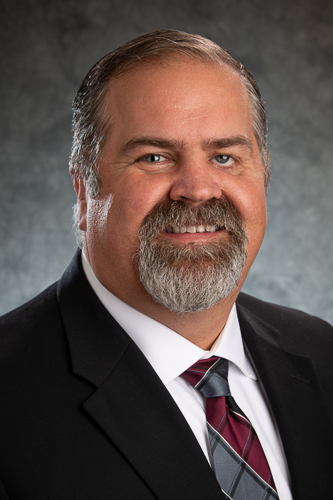
Del. Clay Riley
Sponsored bills
Maddy summaryHB 2456 establishes the West Virginia Mothers and Babies Pregnancy Support Program under the Bureau for Public Health to provide state funding to pregnancy help organizations (excluding abortion industry organizations). The program funds capital improvements, new services, compliance with licensing standards, and staff training for eligible organizations. Funding is distributed through a fee-per-service model, with specific rates set by the managing agency. This bill directly affects pregnancy help organizations by providing targeted financial support for operational needs.
Maddy summaryHB 3387 creates a pilot program allowing West Virginia's State Board of Education to establish regional school districts that combine neighboring county school districts. It directly affects county districts facing shared challenges like funding gaps, rural population issues, and geographic barriers. The bill authorizes regional districts to consolidate schools, make financial decisions, and supersede county boards within their area, starting July 1, 2025. It also permits the State Board to develop rules for a smooth transition during consolidation. The program aims to address operational inefficiencies through regional planning while maintaining the same powers as current county boards.
Maddy summaryHB 2146 would exempt slaughterhouses from collecting West Virginia's Consumer Sales and Service Tax when processing beef, pork, or lamb for individual livestock owners (e.g., farmers or ranchers processing their own animals). This amendment adds the specific exemption to the state's tax code, removing tax liability for this service when performed for personal ownership. It applies only to individual owners, not commercial businesses or slaughterhouse operations. The bill does not alter other existing tax exemptions or affect general meat processing services.
Maddy summaryHB 2158 removes the expiration dates (sunset clauses) for additional registration fees on pet food in West Virginia. Specifically, it eliminates the temporary deadlines (June 30, 2027 for bulk pet food and June 1, 2027 for smaller packages) that currently require businesses to pay extra fees. These fees - $50 per product for bulk pet food and $35 per product for smaller packages - will now be permanently collected. The funds will continue flowing into the West Virginia Spay Neuter Assistance Fund, which supports spay/neuter services provided by licensed veterinarians statewide. This change directly affects pet food manufacturers and distributors who must register their products.
Maddy summaryThis bill (HCR 11) is a concurrent resolution requesting the West Virginia Division of Highways to rename Bridge Number 54-014/00-013.22 (locally known as the Fifth Street Bridge) in Wood County as the "Thomas A. Azinger Memorial Bridge." It directly affects the bridge signage and official designation for the structure carrying WV 014 over the Little Kanawha River. The resolution, adopted by the House and referred to the Senate, formally commemorates Delegate Thomas A. Azinger, a former West Virginia House member who served from 1994-2012 and 2018, and passed away in July 2024.
Maddy summaryHCR 35 is a commemorative resolution requesting the West Virginia Division of Highways to name a specific road segment in Fayette County as the "U.S. Air Force Sergeant Thomas Madison Oxley Memorial Road." It directly affects the portion of Main Street East between Patterson Avenue and Lochgelly Road (with specified coordinates) and honors Sergeant Oxley's military service, community leadership, and contributions to West Virginia. The resolution asks the highway department to install signs at both ends of the road segment to identify the memorial name. This is a procedural request without policy changes, currently pending in the Senate Transportation Committee.
Maddy summaryHB 2659 creates a new "Class S4N" permit allowing qualified non-profit organizations (under WV Code §31E-1-1) to sell liquor, wine, nonintoxicating beer, and nonintoxicating craft beer at events held exclusively in municipal-approved private outdoor areas. To qualify, non-profits must secure municipal approval for their outdoor space, pay a $1,500 annual fee (prorated in the first year), and submit event dates 60 days in advance. The permit requires operations to stay within municipal-designated outdoor areas and comply with all state alcohol laws. This bill directly affects non-profits seeking to serve alcohol at outdoor events without needing a standard liquor license.
Maddy summaryHCR 94 is a request for the Joint Committee on Government and Finance to study establishing an artificial intelligence (AI) elective course in West Virginia public high schools. The study would assess current AI education programs, identify gaps in student access, evaluate funding options, analyze AI’s impact on future industries, and recommend legislative or partnership actions. If implemented, the proposed course would teach foundational AI concepts (like machine learning), practical applications in fields like business and defense, and hands-on tool usage. This resolution does not create the course but asks for a study to inform future decisions. The committee must report findings by the 2026 legislative session.
Maddy summaryHB 2635 sets specific classroom size limits for West Virginia public schools in kindergarten through sixth grade, requiring counties to maintain ratios of no more than 20 students per teacher in kindergarten (with one aide for classes over 10 students) and 25 students per teacher in grades 1-6 (with aides for grades 1-3 starting 2023-2026). It mandates that if classrooms exceed these limits, they must be split into two equally sized classes by the 2025-2026 school year to preserve aide coverage and individualized teacher time. County boards must implement these changes or use full/part-time interventionists as alternatives, and teachers in oversized classrooms face additional pay based on the excess student count. The bill directly affects K-6 public schools, teachers, and aides across West Virginia, with compliance deadlines phased through 2026.