

Maddy summaryHCR 93 is a concurrent resolution requesting the West Virginia Division of Highways name a 4.3-mile bypass segment on US 33 in Roane County the "Scott Miller Bypass Road." It specifically asks the Division to install signs at both ends of the bypass to identify the road, honoring W. Scott Miller (for whom the area was named) and his grandson Scott W. Miller, a WWII soldier killed at Normandy who received a Purple Heart. This resolution has no policy or funding impact - it solely requests a ceremonial road name change. The resolution was adopted by the House on March 27, 2025, and referred to the Senate Transportation Committee.
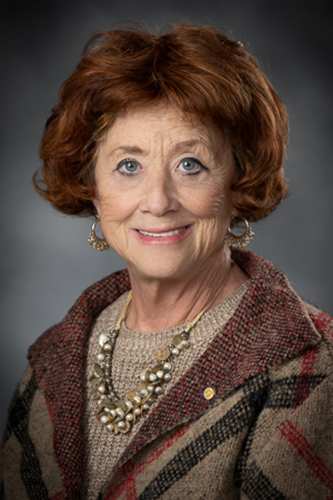
Del. Mickey Petitto
Sponsored bills
Maddy summaryHB 2780 would require West Virginia's child care department to provide state-funded child care subsidies for the children of employees working at least 20 hours per week in licensed child care centers or certified family child care homes. This directly affects child care workers in these settings, regardless of their household income level. The bill eliminates income requirements for eligibility, ensuring all qualifying employees can access subsidized child care for their children. The key mechanism is a direct state subsidy administered by the department for child care services provided to these employees' children.
Maddy summaryHB 2730 proposes a three-year pilot program to make childcare more affordable for working parents in West Virginia. The bill would require the state, employers, and employees to each pay one-third of childcare costs for children under 18, targeting households earning 150-250% of the Federal Poverty Level who don’t qualify for existing subsidies. The program would launch in 2025 across three urban and two rural counties, with the Department of Human Services developing guidelines and reporting annually on participation and outcomes. If successful, it could lead to a statewide expansion of this cost-sharing model. The bill focuses on improving childcare access, stability, and quality without changing existing subsidy programs.
Maddy summaryHB 3086 establishes a minimum net enrollment requirement of 1,200 students for West Virginia counties to receive full state school funding. It directly affects smaller counties with fewer than 1,400 students, requiring their enrollment numbers to be adjusted upward to meet this minimum for funding calculations. The bill amends the school aid formula to ensure counties below 1,400 students receive funding based on the adjusted minimum, using a population density calculation to determine the adjustment amount. This policy change modifies how state education funds are distributed to counties with low student populations.
Maddy summaryHB 3382 establishes a central reception center to provide short-term shelter (max 72 hours) for foster children disrupted from placements, offering behavioral assessments, case coordination, and medical support. It also creates "emergency resource homes" to provide immediate overnight care, requiring specialized training for caregivers, financial incentives, and prioritized recruitment for adolescents, justice-involved youth, and children with special needs. The bill mandates the Department of Human Services to contract with at least two 24/7 reception centers and expand emergency foster homes statewide, eliminating the current practice of placing children in hotels due to placement shortages. Annual reports on child placements, success rates, and recruitment progress must be submitted to the Legislative Oversight Commission.
Maddy summaryHCR 71 is a concurrent resolution requesting the West Virginia Division of Highways name a specific bridge in Roane County the "U.S. Army Technician Fifth Grade Leonard N. Miller Memorial Bridge." It directly affects bridge number 44-010/00-001.09 (locally known as MT Olive Bridge), which carries Reedyville Road over Left Fork Reedy Creek. The resolution cites Leonard N. Miller's military service in World War II (including his 11th Airborne Division service and awards) and post-war life in West Virginia as the reason for the memorial. The request asks the Division of Highways to install signage identifying the bridge with this new name.
Maddy summaryHCR 72 designates March 20, 2025 as "Black Lung Awareness Day" in West Virginia. It honors coal miners affected by black lung disease (coal worker's pneumoconiosis), a preventable occupational lung condition caused by coal dust exposure. The resolution does not create new laws, funding, or policy changes - it serves as a ceremonial observance recognizing the disease's impact and existing protections like the Black Lung Benefits Act. It follows the Federal Coal Mine Health and Safety Act's emphasis on miner safety without altering current regulations.
Maddy summaryHJR 40 proposes a constitutional amendment to change how members of the West Virginia State Board of Education are selected. It would replace the current system of nine appointed members with a hybrid model: five members elected on a partisan basis from five geographic regions (serving staggered four-year terms), and four members appointed by the Governor with Senate consent. The amendment would require the Board to submit any rules or policies they create to the Legislature for review, approval, amendment, or rejection. If approved by voters in the 2026 general election, these changes would take effect with the 2028 general election, modifying the current appointment system for the Board.
Maddy summaryHB 3416 requires oil and gas operators to secure funds for plugging new wells before they are permitted, effective July 1, 2026. Operators must provide either a single-well bond covering full plugging costs or set aside money in an escrow account managed by the state treasurer. This prevents "orphaned wells" - unplugged wells left on land without a responsible operator to pay for closure, which currently threaten landowners' property, safety, and groundwater. The law directly affects new well operators and protects surface landowners from future liabilities. It replaces outdated bonding methods that contributed to thousands of unplugged wells in West Virginia.
Maddy summaryHB 3415, the Orphan Well Prevention Act of 2025, requires oil and gas operators to secure financial guarantees before obtaining new well permits or transferring existing wells. For new wells (after July 1, 2025), operators must provide either a bond or an escrow account to cover future plugging costs. For transferred wells, the previous operator remains liable until the new owner provides a similar financial guarantee. This directly affects oil and gas companies and landowners by preventing wells from becoming "orphaned" (unplugged with no responsible operator), reducing state or community costs for cleanup. The bill aims to address West Virginia’s thousands of existing orphaned wells by making operators financially accountable upfront.