

Maddy summaryThis is a commemorative House resolution honoring former West Virginia House Speaker and Chief Justice Timothy P. Armstead following his passing. It memorializes his service, names a conference room in the House as the "Speaker Tim Armstead Memorial Conference Room," and extends condolences to his family. The resolution does not create new laws or affect policy - it formally recognizes his legacy and contributions to West Virginia.
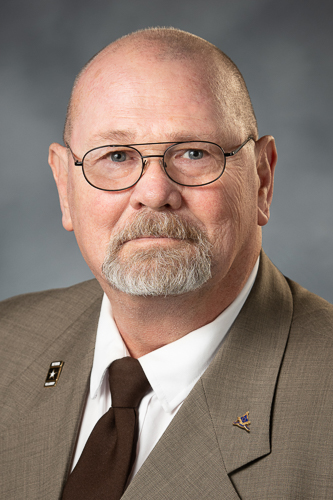
Rep. Chuck Sheedy
Sponsored bills
Maddy summaryHB 5550 amends West Virginia law to clarify and strengthen the definition of proper shelter for tethered or roaming free dogs. It requires shelters to be four-sided, roofed, moisture-proof, windproof, and ventilated with suitable bedding (like hay or straw), while prohibiting inadequate options such as cardboard boxes, vehicles, or exposed porches. The bill also limits tethering outside to 30 minutes during extreme weather (85°F+ heat, 32°F or below cold, or severe storms) unless the dog is a working dog inspected as safe by animal control. These requirements directly affect dog owners and animal control officers, ensuring dogs have adequate protection from weather conditions.
Maddy summaryHB 5460, the Construction Cost Relief Act, provides a sales tax rebate for construction materials used in new single-family homes built for residential ownership in West Virginia. The rebate covers up to 30% of the home's sale price (or construction loan amount if the builder occupies the home), calculated using a county-specific housing index relative to the state average. Homeowners and builders must claim the refund within one year of construction completion using state forms, and the refund cannot be transferred to another party. This law applies only to new construction starting on or after July 1, 2026.
Maddy summaryHB 5455 directs all mandatory fees from special license plates in West Virginia to the State Road Fund for road maintenance. It adds a voluntary donation option at registration or renewal, allowing drivers to contribute to programs related to their plate's theme (e.g., military, education, or environmental causes). Donations must be clearly marked as optional, separate from fees, and distributed only to the designated program. The bill requires the DMV to disclose these details to applicants and report annual fee and donation totals to the legislature. This affects all drivers purchasing special license plates and ensures road funding remains primary while offering optional support for themed causes.
Maddy summaryHB 4531 would require West Virginia to provide homeless U.S. citizens residing at shelters with free identification documents, including photo ID cards, replacement driver’s licenses, and birth certificates. To qualify, applicants must live at a shelter, use the shelter’s address on their application, and have shelter staff verify their residency via an affidavit. The state would confirm U.S. citizenship using documents like birth certificates, passports, or naturalization certificates. Each eligible individual could receive only one document per 30-day period.
Maddy summaryHB 5389 creates a 30% transferable tax credit for nonprofit organizations that convert existing hotels, motels, or commercial buildings into housing for homeless veterans. The credit covers 30% of qualified redevelopment costs (like renovation and infrastructure) but excludes land acquisition, and can be applied against corporate income, personal income, or business franchise taxes. Nonprofits can sell or transfer the unused credit to other taxpayers to generate funding, with credits carrying forward up to 10 years. This aims to incentivize supportive housing without creating new state spending or entitlements, targeting veterans facing homelessness through adaptive reuse of underutilized properties.
Maddy summaryHB 5422 makes the Municipal Home Rule Program permanent and prohibits participating municipalities from creating local anti-discrimination ordinances that cover protected classes beyond those defined in state law. Municipalities in the program must pay an annual $2,000 fee to fund the Home Rule Board's operations, with unused funds carrying over to future years. This directly affects cities and towns that have joined the home rule program by limiting their ability to expand local protections beyond state requirements. The bill also establishes a dedicated fund for the Home Rule Board, ensuring ongoing program funding without requiring annual legislative appropriations.
Maddy summaryHB 5355 requires West Virginia public school districts to place any teaching position held by an uncertified individual up for public bidding every school year. This applies directly to school districts and teachers currently working without valid teaching certification. The bill mandates that such positions remain open for bid annually until filled by a certified educator, ensuring only qualified staff occupy teaching roles. It does not change certification requirements but adds a recurring annual bidding process for uncertified positions.
Maddy summaryHB 5374 prohibits telemarketers from using auto-dialing systems (robo-calls) to make unsolicited sales calls for Medicare benefits, auto insurance, warranties, or charitable donations in West Virginia. The bill directly affects consumers who receive these unwanted calls and telemarketers who currently make such solicitations. It bans all phone calls using auto-dialing technology to sell insurance-related products, warranties, or solicit donations for charities. The law would apply to all locations, including workplaces, and aims to reduce nuisance calls without exempting political or non-commercial communications. The bill is currently in the House Judiciary Committee after being introduced on February 9, 2026.
Maddy summaryHB 5377, the Burial Equity Act, expands eligibility for burial in West Virginia's state veterans' cemetery to include former National Guard and military reserve members (such as IMA, AGR, ART, and TR) who served at least four years, were West Virginia residents for two years before death, or served in the West Virginia National Guard, with retroactive application to deaths after March 15, 2022. It creates a Burial Equity Grant Program administered by Veterans Affairs, providing up to $1,000 per family to cover burial costs on a first-come, first-served basis. The bill also establishes a dedicated Burial Equity Fund in the state treasury, initially funded with $50,000 from the legislature, plus federal funds and private donations, to sustain the grant program without annual budget reversion.